Why Do Italians Still Take Their Evenings Into the Streets?
The quiet tradition of the passeggiata — and what it tells us about the Italian way of living
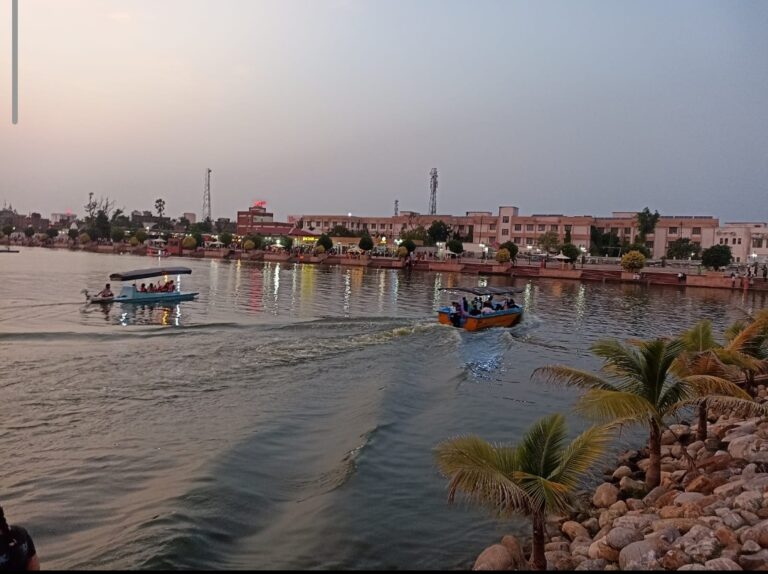
For me, coming from India, the idea of taking the evening outdoors is not foreign at all. Because in many Indian towns and villages evening has traditionally been a social hour. Markets and chowks become lively during this time. But what made me deeply curious about Italian Passeggiata was its being deeply human: “when day’s work is over, people want to see other people.” It is not simply Italians going for a walk. It is connected to public spaces, social visibility, historical town design and a long tradition of taking part in community life and, yes, of course – showing off your nice cloths! Truly art is the part of Italy. So here at Thelifespeaks, I take you along to overhear how life speaks during Italian Passeggiata !
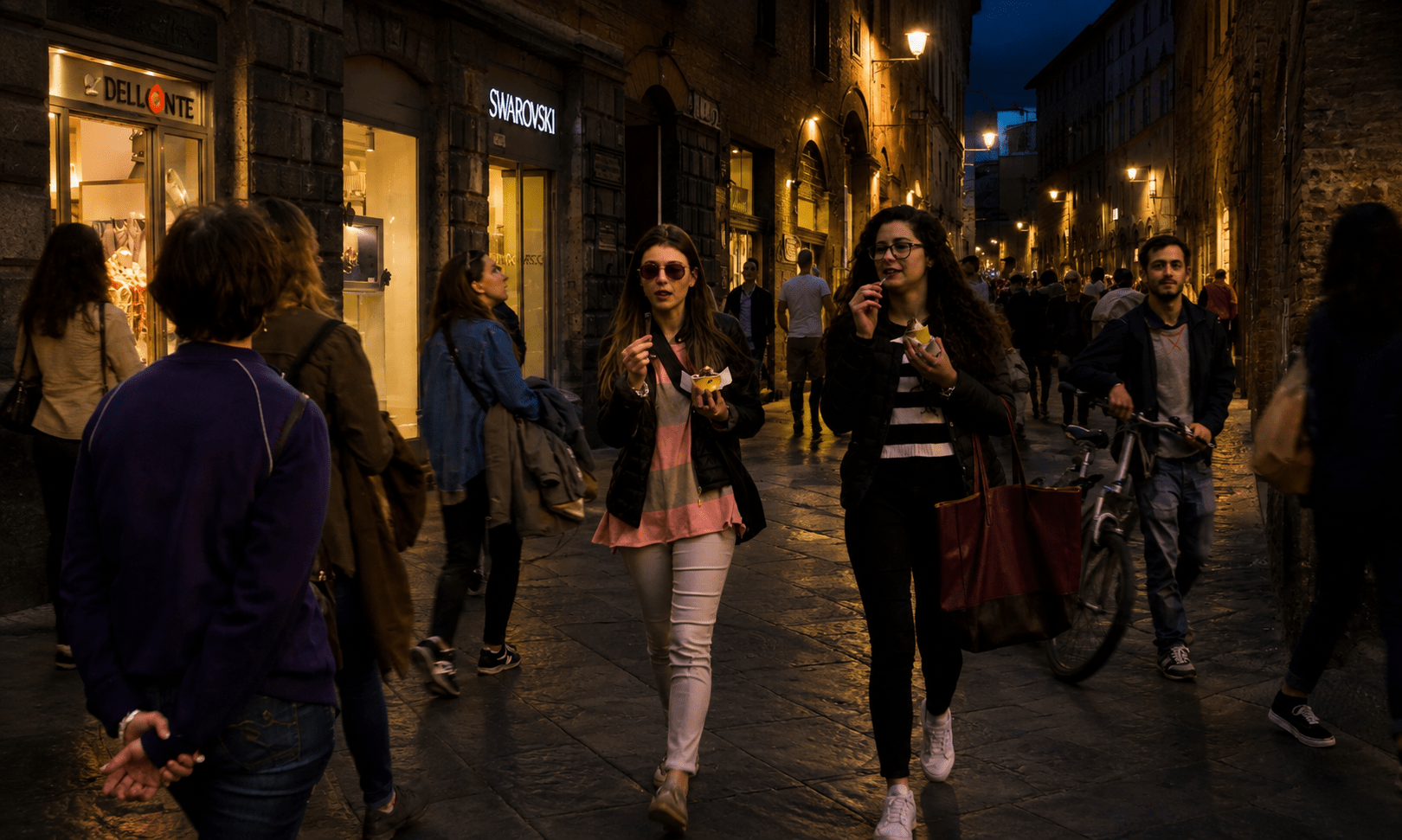
How It Appears Before You
There is a particular moment in an Italian town when the day seems to change its character.
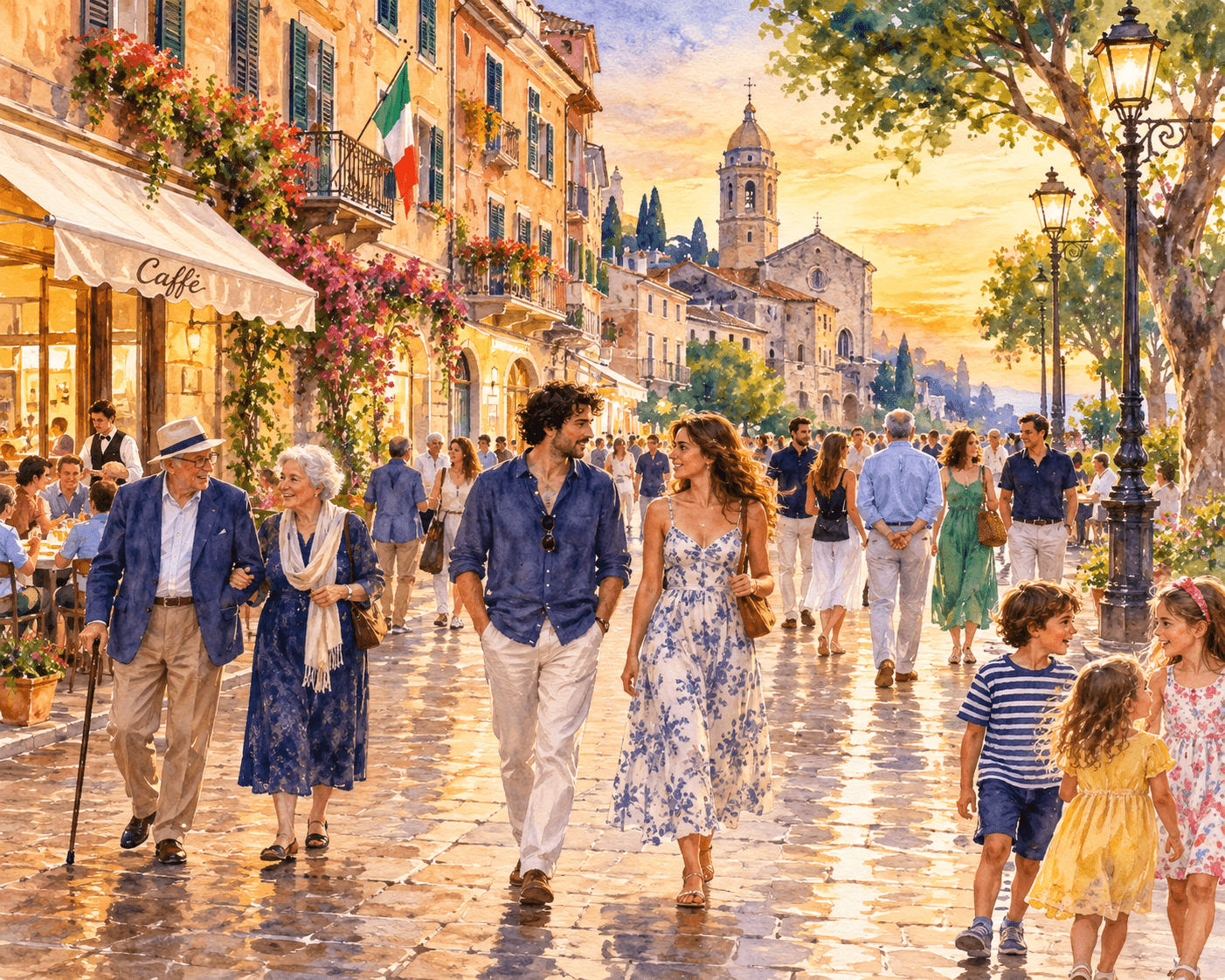
Between 5 p.m. to 8 p.m. the shops begin to close. The heat of the afternoon softens. Doors open. Children appear. Older people come out slowly. Young people gather in small groups. Couples walk beside one another.
And then, almost without announcement, the streets begin to fill.
Nobody appears to be in a hurry.
Some are walking towards the piazza. Some are returning from dinner. Someone stops to greet an old neighbour. Someone else pauses for a gelato. A group of teenagers occupies a corner. An elderly man sits watching the movement around him.
The town has come outdoors.
This is the passeggiata.
Literally, it means a walk or stroll. But translating the word is easy; understanding the habit is more difficult.
Because the Italian passeggiata is not really about getting somewhere.
It is about being somewhere — together.
A Walk Without a Destination
In a world that has become accustomed to measuring almost everything, the passeggiata seems wonderfully inefficient.
There may be no appointment. No destination. No fitness target. You simply walk.
You may walk along the corso, through the historic centre, around the piazza, beside a river or along a seafront. You may meet somebody you know. You may stop for a conversation. You may continue walking.
And then, perhaps, you walk home.
The tradition is particularly associated with the evening, although its timing varies considerably from place to place and season to season. It is often described as a collective social ritual — a time when people come into public space to stroll, interact and, quite simply, see and be seen.
That last expression is important.
The passeggiata is not entirely private. It is public life performed at a human scale.
Before There Were Smartphones, There Were Piazzas
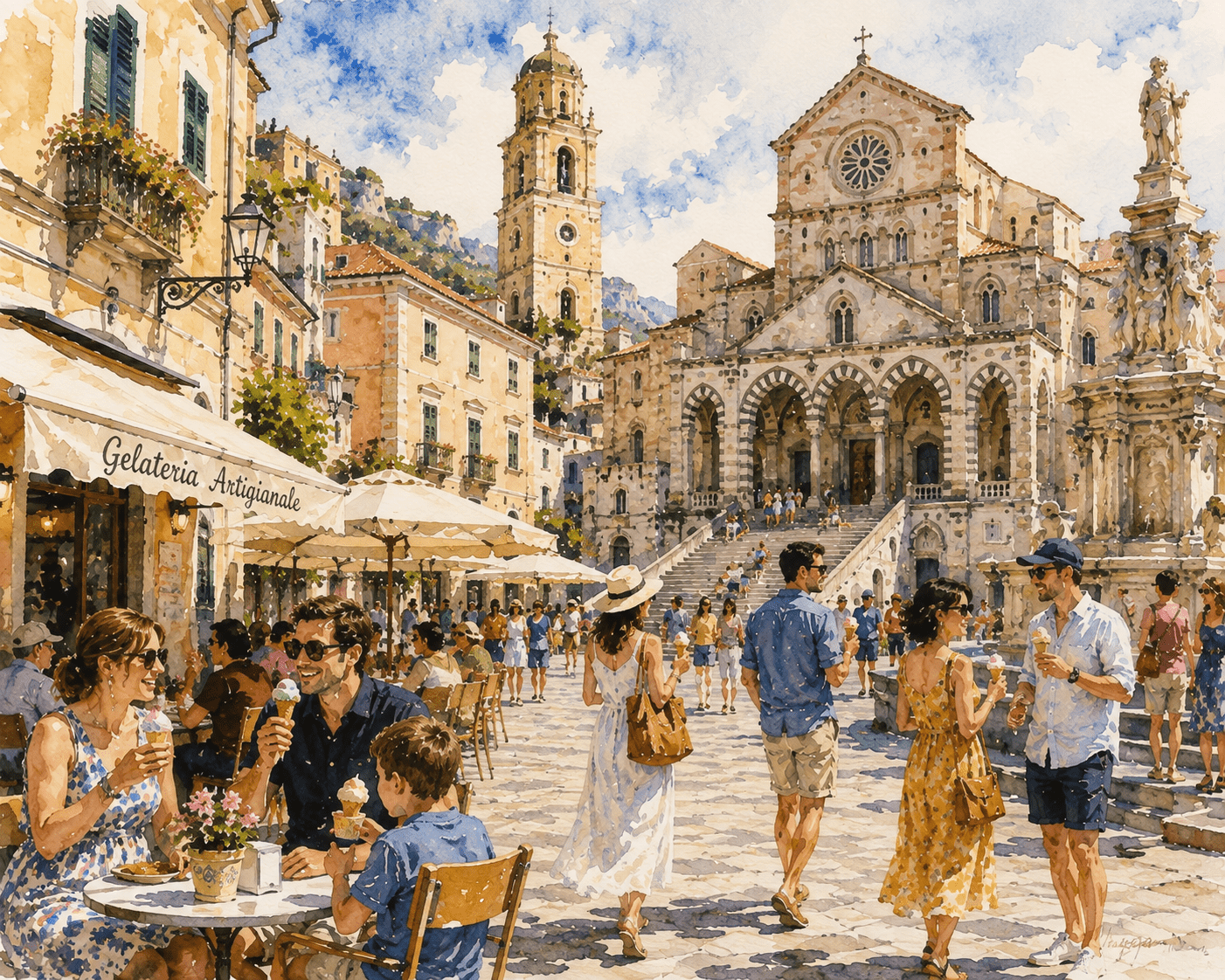
Perhaps we understand the passeggiata better if we look at the places where it happens.
The Italian town did not traditionally organise all social life inside private houses. It built spaces for people to encounter one another. The piazza is perhaps the finest example.
A piazza could be a marketplace, a meeting place, a political space, a place for religious celebrations, a setting for performances — and simply somewhere to sit and watch the world go by.
In cities such as Rome, historic squares continue to function as meeting places in the evening. Piazza Navona, for example, is simultaneously an architectural monument and a place for strolling, cafés, street artists and social life.
In smaller towns, the relationship between square and community can be even more intimate.
The architecture provides the stage. But the people provide the life. And that distinction matters. A beautiful square without people is merely architecture. A beautiful square filled with generations of people becomes a community.
The Tradition Has Deeper Roots Than We Might Imagine
The Italian habit of walking in public has a long history.
Walking had an important social role in Roman society, while historians of the passeggiata often trace the development of its recognisable form through later Italian history, particularly the Renaissance and Baroque periods.
In Renaissance cities, walking through public spaces could be a way of displaying clothing, status and social identity. Later, grand avenues and urban spaces provided settings for public promenading. Renaissance humanism viewed that internal virtues should go hand in hand with external beauty. Dressing poorly in public, in those days, was seen as low self respect and lack of respect for the city.
But something interesting happened over the centuries.
What may once have contained elements of display gradually became something much more ordinary. Today, the passeggiata does not require magnificent clothes or social status. A grandmother can participate. So can a child.A shopkeeper. A student. A retired man. A young couple.
The ritual survived partly because it stopped belonging to one particular class.
It became part of everyday life.
And Then There Is the Italian Evening
Much of Italy has traditionally experienced hot summers, particularly in the south. The afternoon can be a time when activity slows, while the evening becomes far more pleasant. May be this climate would have encouraged it, but the passeggiata exists primarily because of Italian public spaces, town layouts and social customs which have historically made it natural for people to move outdoors and encounter one another.
And the evening has another advantage.
The working part of the day is beginning to release its grip.
You are no longer the employee. No longer the shopkeeper. No longer the student sitting at a desk. You are simply yourself. And you are among other people who have also finished their day’s obligations.
The Street Becomes a Living Room
This may be the most beautiful way to understand the Italian evening.
The street becomes an extension of the home. A piazza becomes an outdoor sitting room. The corso becomes a long community corridor. A café becomes a place not merely to consume something but to participate in the life around you.
Italy’s official tourism site still describes historic squares in cities such as Viterbo and Pistoia as important meeting places where people gather, stroll, talk, shop and spend time together.
This tells us something about urban design.
A town is not only a collection of houses.
It is also the spaces between the houses.
And those spaces can determine how much opportunity people have to meet one another.
The Elderly Are Not Pushed Out of the Picture
There is another feature of the passeggiata that deserves attention.
It is intergenerational.
The young do not necessarily disappear into one part of town while older people remain at home. Different generations can occupy the same public space.
A child plays.
A teenager talks with friends.
Parents meet neighbours.
Grandparents watch everything.
The result is a subtle form of social continuity. Young people grow up seeing older people as part of ordinary public life. Older people remain connected with the rhythms of the community. Nobody needs to organise a special “intergenerational activity.”
It happens naturally.
That may be one of the quiet strengths of the tradition.
It Is Also a Way of Knowing Your Town
There is something else that happens when you walk the same streets repeatedly.
You begin to know them.
The baker.
The old building whose shutters are always closed.
The tree that changes with the seasons.
The café where the same people sit.
The neighbour who always stops to talk.
The child who has grown taller since last summer.
A place becomes familiar through repetition.
And familiarity creates belonging.
Perhaps this is one reason modern life can sometimes feel strangely disconnected.
We can know thousands of people through screens and yet barely know the people who live around us.
The passeggiata quietly reverses that arrangement.
It says:
Go outside. See who is there.
Not Everything Has to Be Productive
There is another lesson hidden inside this old Italian habit.
We have become very good at turning leisure into productivity.
Walking must improve our fitness.
Reading must improve our knowledge.
A holiday must become an experience.
A hobby must become a skill.
Even relaxation sometimes requires a purpose.
The passeggiata resists this slightly obsessive need to justify everything.
You walk because the evening is pleasant.
You walk because somebody else is walking.
You walk because you want to talk.
You walk because you have nowhere particularly important to go.
And perhaps that is enough.
What Modern Life May Be Losing
The greatest threat to the passeggiata may not be that Italians suddenly stop liking walking.
The greater threat is the gradual disappearance of the kind of town that makes walking meaningful.
If streets become dominated by traffic, if public spaces become commercialised, if people spend their evenings behind closed doors and screens, the spontaneous social life of the street becomes harder to sustain.
Yet the tradition continues in many parts of Italy.
And perhaps its survival tells us something important.
People still need places where they can meet without making an appointment.
They still need public spaces where different generations can coexist.
They still need occasions when nothing particularly important is happening.
Because sometimes nothing important happening is exactly what makes an evening valuable.
When the Streets Begin to Speak
Imagine an Italian town just after sunset.
The stones beneath the feet have begun to cool.
The church bell has disappeared into the evening air.
A child runs ahead.
Two elderly men are talking.
A young couple walks slowly.
Someone is carrying a small bag home.
A café has placed chairs outside.
The piazza is gradually filling.
Nobody has announced a community meeting.
Nobody has sent an invitation.
Nobody has created a WhatsApp group.
And yet the community has assembled.
Perhaps this is why Italians still take their evenings into the streets.
Not because they have nowhere else to go.
But because the street itself is somewhere worth going.
The passeggiata reminds us that a good life is not made only inside our homes, workplaces and screens.
Some of it happens in the spaces between them.
On a pavement.
Under an old balcony.
Beside a fountain.
Across a village square.
During that unhurried hour when the working day has ended but the night has not yet properly begun.
And perhaps there is a small lesson here for all of us.
We do not always need to go somewhere special.
Sometimes we simply need to step outside and become part of the evening.
A Final Thought
Maybe the Italian secret was never the walk itself.
Maybe it was the decision, repeated over generations, that life should remain visible.
People should be seen. Neighbours should meet. Children should play where adults can see them. Older people should remain part of the scene.
A town should have somewhere to gather.
And an evening should occasionally be allowed to pass without being measured.
Perhaps that is why, even in the age of smartphones, streaming and endless digital entertainment, the Italian streets can still fill after sunset.
The old ritual survives because it answers an old human need.
To walk slowly.
To meet people.
To belong somewhere.
And, for a little while, simply to be alive together.
Sources & Further Reading
- Italy Magazine, “Want to Prioritize Your Mental Health? Start With a Passeggiata.” — a useful contemporary account of the tradition and its historical background.
- Italy Magazine, “It’s All About the Sustainable Stroll” — discusses the passeggiata as a collective social ritual and its place in Italian public life.
- Italia.it, official Italian tourism portal — examples of historic piazzas functioning as contemporary meeting places.
TheLifeSpeaks Editorial Note
The passeggiata is not important because it is an Italian “lifestyle trick.” Its deeper value lies in what it reveals about the relationship between history, architecture, public space and everyday human life.
That is the lens through which TheLifeSpeaks approaches the story.