When the Weekend Itself Has a Rhythm: An Indian’s Look at an Ordinary German Weekend
I have been trying to understand Europe in a slightly different way.
Not through its castles.
Not through its cathedrals.
Not even through its famous cities.
I have begun wondering about something much more ordinary:
What does an ordinary family do when the working week ends?
It is a surprisingly interesting parameter.
Because a weekend is never just a weekend. It tells us what a society eats, how it uses its homes, how it relates to nature, how it spends time with family, how seriously it takes rest—and sometimes even what it believes a good life should feel like.
I, living in India, have tried to look into the life of an ordinary European through internet research and my own cognitive skills. And among the countries to follow, Germany is the first.
So let us imagine an ordinary weekend in Germany.
Just a Friday evening followed by an ordinary Saturday and Sunday.
And perhaps, as we travel through those two days, we will discover something about Germany that a guidebook cannot easily tell us.
Friday Evening: The Week Begins to Let Go
Friday evening arrives.
The working week is almost over.
And gradually, something changes.
The urgency of the week begins to disappear.
This is one of the first things that strikes me as an Indian. We are very good at carrying the working week into the weekend.
A telephone call on Sunday?
Why not.
An office message during dinner?
We will answer it.
A little work left unfinished?
We can probably do it tomorrow.
German life seems, in many situations, to place greater value on boundaries.
Work has its time.
Private life has its time.
And Sunday, especially, has traditionally been given a special place.
Perhaps this is one reason the German weekend feels different even before Saturday has properly begun.
Saturday Morning: Bread, Butter and the Mood of Reflection For Some
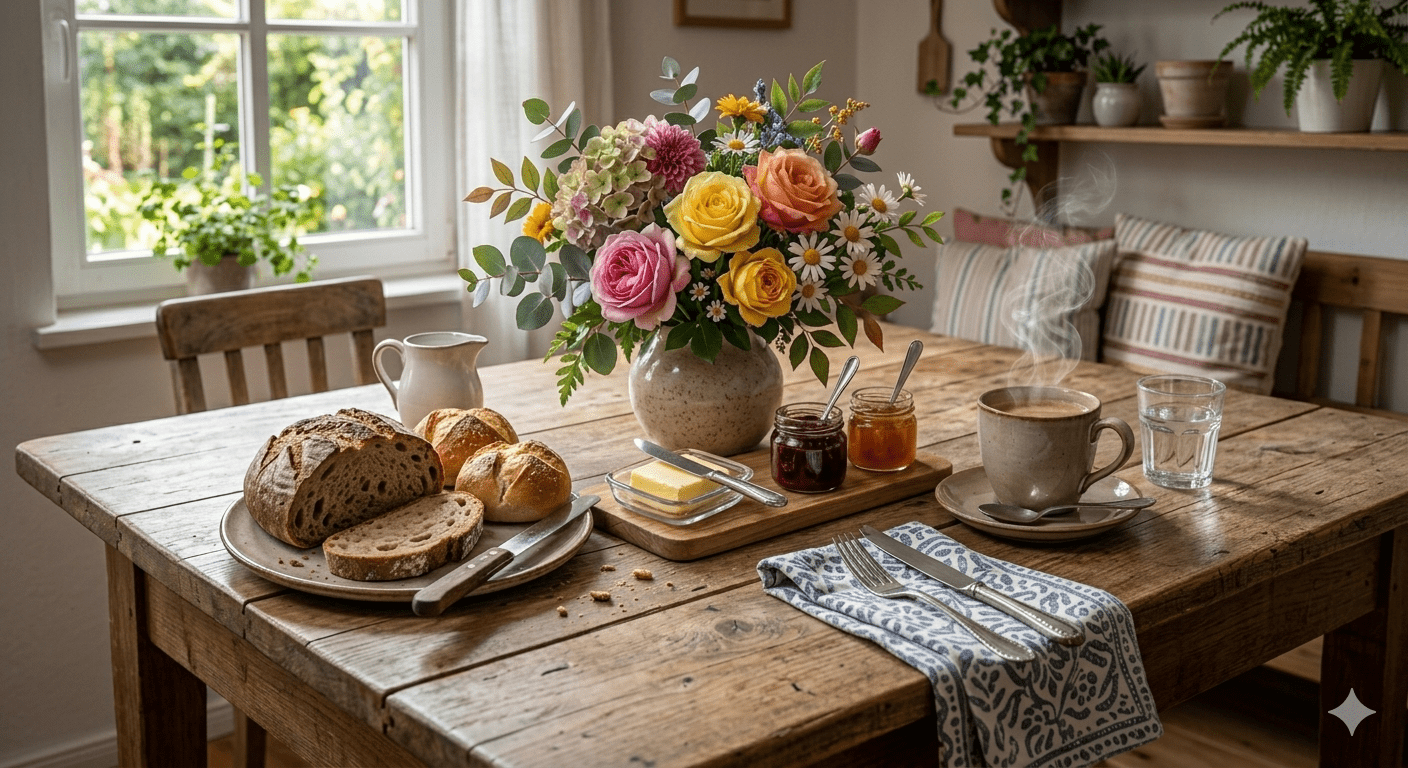
Saturday morning begins rather simply.
Perhaps with bread.
Germany’s bread culture is extraordinary, with an enormous variety of regional loaves, rolls and baked goods. There may be Brötchen—small bread rolls brought home fresh from the bakery. Butter. Cheese. Jam. Perhaps cold meats. Coffee.
Nothing spectacular.
And yet there is something beautiful about the ordinary breakfast table.
The bread itself tells a story.
Germany’s climate and agricultural history helped shape a food culture in which grains—particularly rye and wheat—became fundamental.
The dark, dense rye breads that a visitor may encounter are not simply culinary curiosities.
They belong to a landscape.
They belong to a climate.
They belong to centuries of baking tradition.
And suddenly breakfast is no longer just breakfast. A loaf of bread has become a small piece of geography sitting on the table. And here I feel again, that, landscape does not always remain outside the window. Sometimes it arrives at the breakfast table. And these are the weekends when you can reflect on them in this way.
And similarly, thinking in this way I notice that breakfast table. It also has enough of geography, history and human emotions in side it. Perhaps it is made of oak or beech. Not necessarily expensive. Not necessarily antique. But it has a history. It ages. It acquires marks. And it has become part of family’s biography. It has witnessed years of Sunday breakfasts, children’s homework, birthday cakes and cups of coffee.
The Saturday Errands
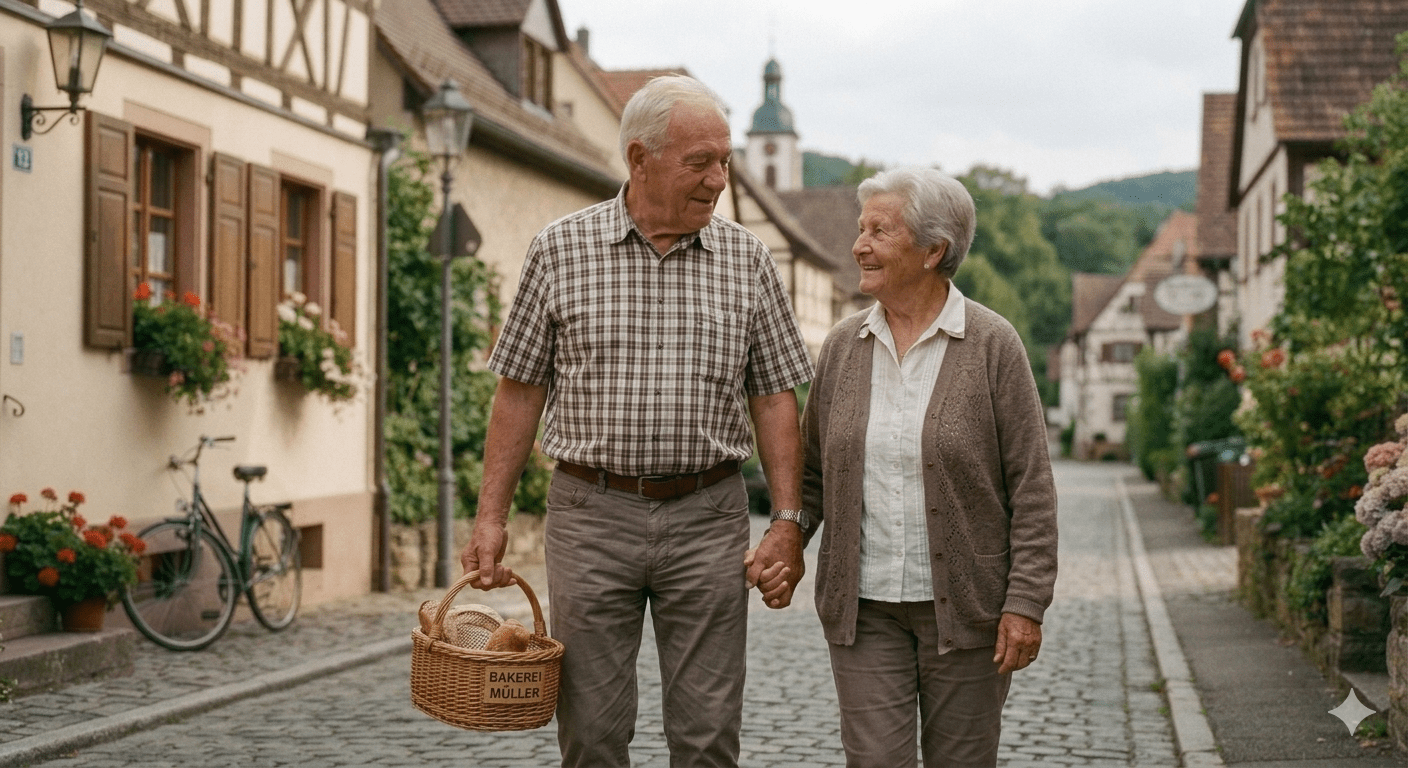
After breakfast, Saturday gets busy.
There is shopping to do.
Perhaps groceries.
Perhaps something for the house.
Perhaps a visit to the weekly market.
Perhaps a repair that has been postponed during the week.
This is the practical side of the German weekend. It is not all romantic walks through forests.
A home has to be maintained.
A refrigerator has to be filled.
The garden needs attention.
The bicycle may need repairing.
Children may have sports or other activities.
And here again, there is a sense of rhythm.
Saturday is often the day for things that need doing.
Sunday is different.
That distinction is important.
Germany’s restrictions on ordinary Sunday shopping have traditionally helped preserve this difference, although the exact rules and exceptions vary from place to place.
Coming from India, where one can often buy almost anything on almost any day, this feels unusual and perhaps good as well.
Saturday Afternoon: When the Landscape Calls
By afternoon, the errands may be finished.
Now comes the part of the German weekend that I find especially appealing.
The walk.
The Spaziergang.
It is simply a walk taken for the pleasure of walking.
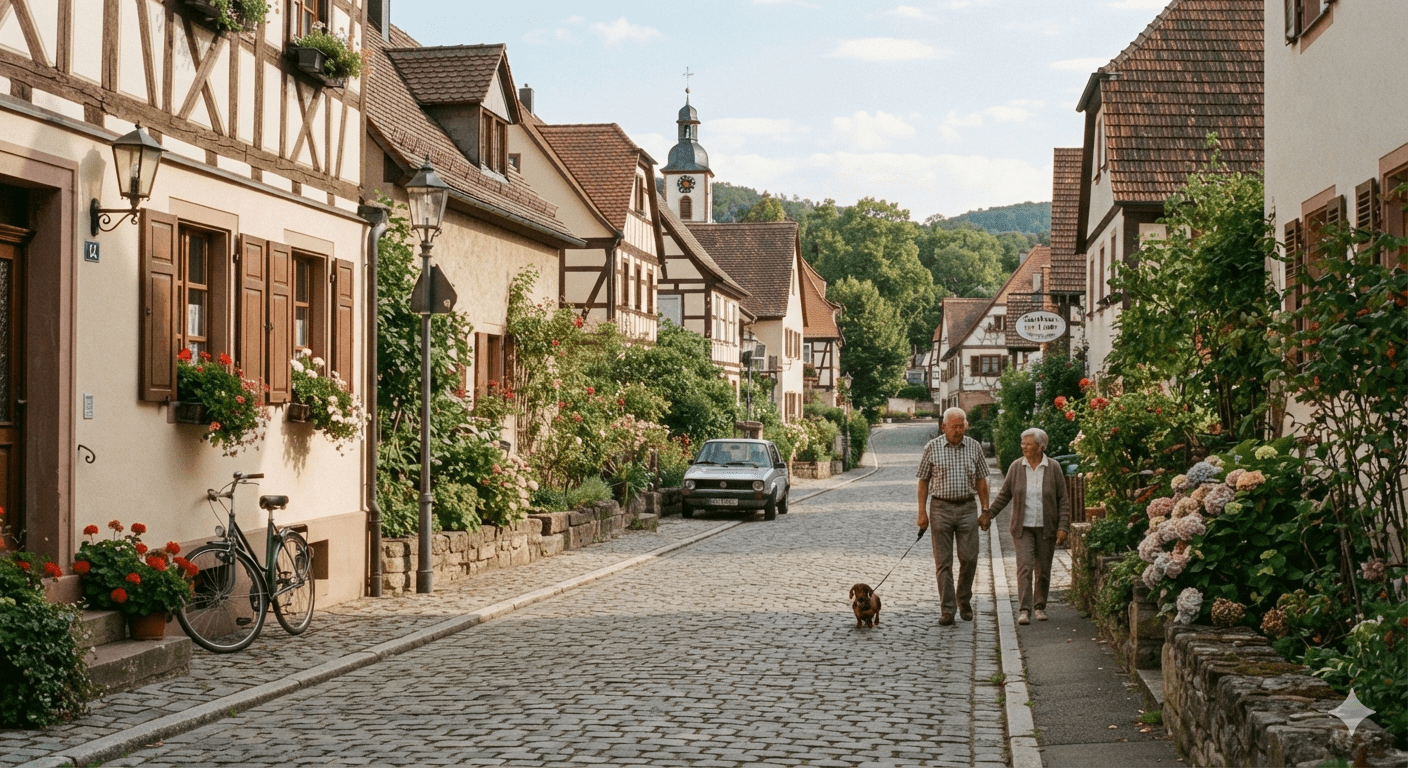
Through a park.
Along a river.
Around a village.
Through a forest.
Perhaps with the family.
Perhaps with a friend.
Perhaps alone.
The Germans have another wonderful word associated with this relationship with nature:
Wald—forest.
Germany’s forests have influenced its literature, folklore, imagination and everyday recreation for centuries.
But the modern German does not need to turn every visit to the forest into an expedition. One can simply walk.
And that tells me something.
Perhaps we have become so accustomed to making every activity productive that we forget the pleasure of doing something which produces nothing.
And yes, I can guess people might be interested in taking a walk to nearby Kleingärten—small allotment gardens. These are the places in cities where people may cultivate small plots where they grow flowers, vegetables and fruit. The garden becomes a little piece of countryside inside an urban environment.
Saturday Evening: Food Without a Performance
By evening, people may meet friends or relatives.
Perhaps there is a meal.
Perhaps a restaurant.
Perhaps something much simpler at home.
And German food, like German landscapes, is more regional than the stereotype. Potatoes are important. Bread is important. Cabbage appears in many traditional dishes. And in spring, asparagus becomes almost a cultural event in many parts of Germany. The famous Spargelzeit—asparagus season—shows how strongly food can remain connected to the calendar. For a few weeks, a vegetable becomes almost a celebration. This is something an Indian can understand immediately.
Sunday Morning: The Country Becomes Quiet
And then comes Sunday.
This is where the rhythm changes.
The shops are largely closed.
The streets in some places become noticeably quieter.
There is less commercial activity.
People sleep longer.
Families stay home.
Some go to church.
Some do not.
Some visit relatives.
Some go walking.
Some simply sit with a cup of coffee.
It is worth remembering that the Christian history of Sunday is very old. But modern Germany is far more secular than it once was. And yet an old cultural rhythm remains and yes it should. A society can become modern without completely erasing the rhythms inherited from its past.
Sunday Lunch: A Table Becomes a Family
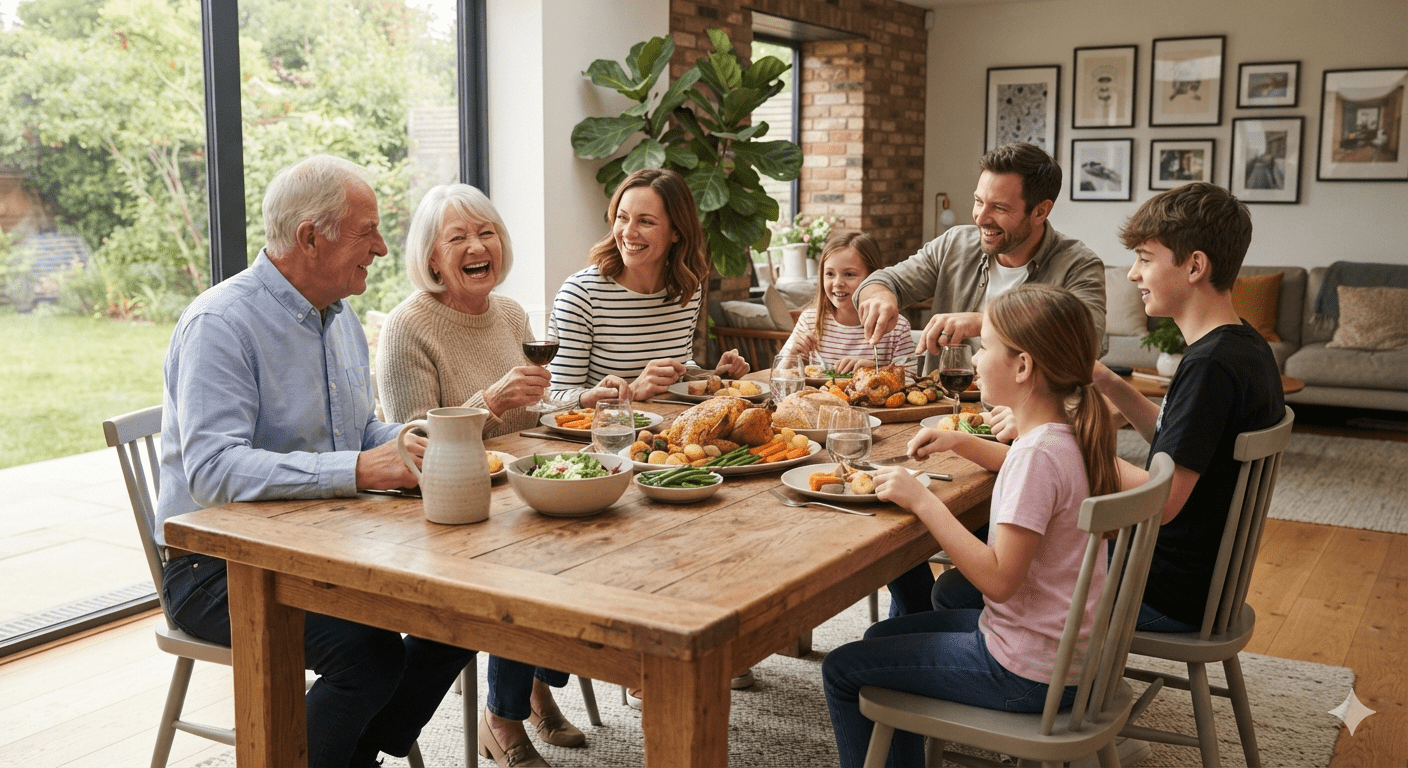
Perhaps this is the heart of the German weekend.
Sunday lunch. The food need not be extravagant.
A traditional roast.
Potatoes.
Vegetables. Perhaps a regional speciality. Perhaps something much simpler.
What matters is that people sit down together. And here, as an Indian, I feel immediately at home. This I can understand easily. Food gives people a reason to sit together. And perhaps that is one of the oldest social technologies in human history.
Kaffee und Kuchen
Then, somewhere in the afternoon, comes another beautiful German tradition: Kaffee und Kuchen. Coffee and cake. It sounds almost too simple. And that is precisely why I like it.
A slice of cake.
A cup of coffee.
A conversation.
Perhaps family.
Perhaps friends.
Perhaps a quiet Sunday afternoon.
Again, there is no need for spectacle.
The pleasure lies in giving an ordinary moment enough time.
Perhaps this is one of the deepest differences I sense between a culture of constant activity and a culture that has preserved small rituals of pause.
The cake does not need to be extraordinary.
The coffee does not need to be fashionable.
The moment itself is enough.
Some years back, I remember, I proudly used to say, “I am not obsessed with tea but with the moments of sitting together which it brings with it everyday in my home.”
What Might Be on the Bookshelf?
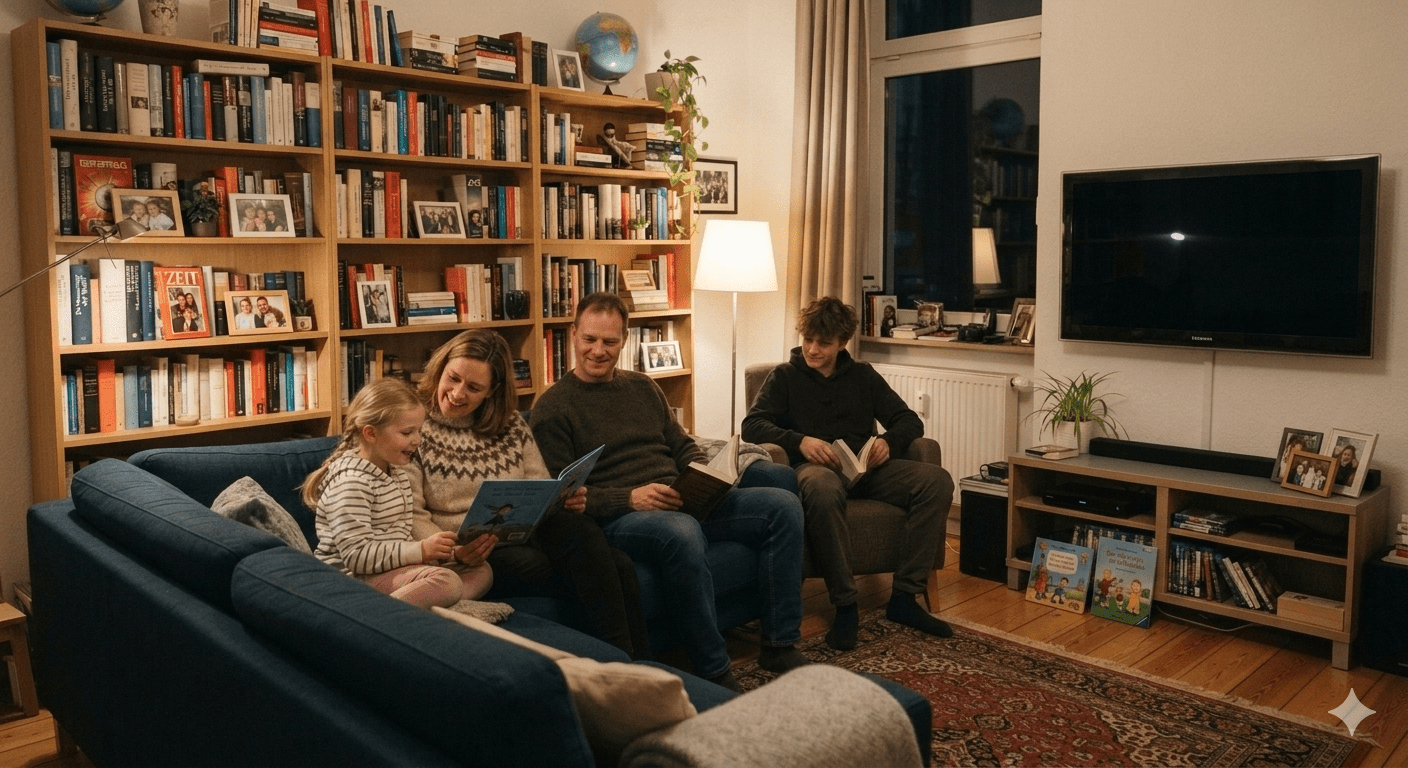
After coffee, perhaps someone reads.
This is another small detail I would love to notice inside a German home.
A bookshelf.
Not because every German household is filled with books—no country can be reduced to such a stereotype—but because reading has a long and important place in German cultural life.
There may be novels.
History.
Travel.
Children’s books.
Cookbooks.
Local stories.
Perhaps a newspaper.
Perhaps a book that someone has owned for twenty years.
And here again, the home begins to tell us something.
A house is not merely where people sleep.
It is where they keep their memories.
And Somewhere, the Television Is On
Of course, modern German life is not an endless sequence of books and forest walks. The same modern world that surrounds the rest of us surrounds Germans too.
There is television. The internet. Social media. A family might watch a film together. Someone may follow football. And the long-running crime series Tatort has become one of Germany’s most recognisable television traditions, with episodes set in different cities and regions. It is interesting because even television can become part of a shared national rhythm.
The country may be divided into different regions, accents and local identities. Yet millions of people can still recognise the ritual of sitting down for a familiar programme. Modern technology changes. But rituals survive.
Sunday Evening: The Week Slowly Returns
Eventually, Sunday evening arrives.
The quiet weekend begins to fold itself away. Monday begins to appear on the horizon.
And I imagine that someone looks out of the window.
The same trees.
The same street.
The same houses.
But the mood has changed.
The weekend is ending.
Tomorrow the rhythm of work will return.
And yet perhaps the weekend has done what it was supposed to do.
It has given people something that cannot be measured in productivity.
Time.
And Now I Find Myself Looking Towards Sweden
After spending time inside an ordinary German weekend, I am curious about Sweden.
Because Sweden seems to share some of Germany’s respect for order, nature, family life and work-life balance.
But I suspect the rhythm will be different.
Perhaps the Swedish home will tell us something different through its wood, light and windows.
Perhaps the landscape will enter everyday life in another way.
Perhaps food will tell another story.
Perhaps coffee will take us somewhere else entirely.
We may discover that Europe has many different answers to the same human question:
How should an ordinary person spend the precious hours when work is over?