Mithila Haat: A Place Where Culture and the Contemporary Walk Together
June’ 2026. State of U.P. (our neighbouring State in North India) had its schools closed for summer vacation. And my sister’s children have come their Naani’s home ( maternal grand mother’s home) at Birpur – a small township on Indo- Nepal border in state of Bihar, again a North Indian State. Mango tree in our campus awaits for them every year this time to hear their giggles, quarrels and the craving twinkles in their eyes for its delicious fruit. But this year our Mango tree became somewhat sick; obviously due to an overdosed spray of insecticide over it. Still, hiding its agony, our benevolent mango tree delivered mangoes in a quantity that didn’t let the smile at these children’s face fade. And on one fine Sunday morning while relishing the truly divine pulps of these fresh mangoes, we made a plan to visit this evening to Mithila Haat about 100 km away from our place – just to peep into how culture and the contemporary walk together here, holding their palms!
Actually in North Indian Plains the word “Haat” means a periodic rural market. And the word “Mithila” is the name of a cultural region in Bihar and adjoining portions of Nepal. Geographically it is surrounded by Himalayas in the North, and flanked by rivers Kamla and Kosi in the West and East respectively. To its far south flows River Ganga.
Idea of Mithila Haat
Park your vehicle in a neatly delineated parking space, purchase your ticket, and enter this world called Mithila Haat.
I curiously tread toward its administrative building and ask for information brochure they have, if any. And fortunately they had it! The first hand information that I gathered, made me extremely thankful to visionary Sanjay Jha, a cabinet minister in the Nitish Kumar led government in Bihar. He came up with an idea to clean and revive a dead, dirty local big pond (“Badki Pokhair” as the local people knew it) and groom it in to a viable beautiful pond. Around the sparkling waters of this pristine pond, again thanks to Sir Sanjay Jha’s enterprise and dedication, now breathes the ancient culture of glorious Mithila; with its aged hands firmly held by modernity.
Mithila Region And Culture
Mithila culture traces back its existence to the days of epic Ramayana. Goddess Sita took birth from earth of Mithila and later married to Lord Sri Rama. She was daughter of Mithila King Janak, with his capital based at Janakpur, now in territory of Nepal.
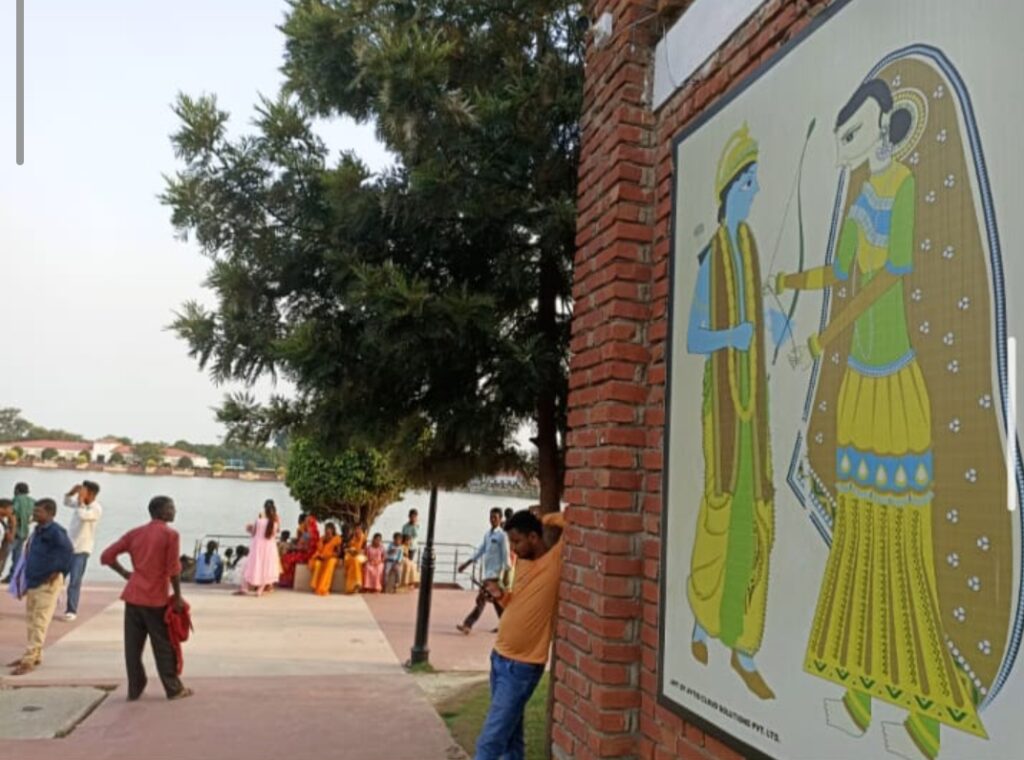
Situated in the foothills of Himalaya and surrounded by the rivers like Kamla, Kosi and Ganga, this region almost remained impregnable to outside influences and large scale immigrations. Thus a long term undisturbed human adaptation with its soil, climate and drainage features led to the growth of a distinct cultural which is now widely known as Mithila Culture. Collective human sensibilities negotiated with the natural attributes ( numerous ponds flourishing with aquatic life, distinct rainfall regime, flood plains, food crops, flora and fauna) of this region. And the emotions that arouse out of such negotiation got synthesized in to its signature folk songs, folk music, its distinctive style of painting, delicacies and festivals.
Vulnerabilities of the Cultural Realms
Under modern democratic regimes and due to modern economic growth policies, there has been greater penetration of infrastructural facilities in all areas. A greater mixing and intermingling of population, cutting across different regions, has taken place; making ancient cultural realms more vulnerable. Mithila culture is no exception to it.
A foresightedness to identify, preserve and nurture the ancient cultural attributes of a community is quite urgent. People must not forget their roots, their crops, their aquatic and forest produce, their traditional attire, music, art and craft, cuisine, and their literary history.
Priorities of modern life have reduced humans in to a myopic career conscious entity with little or no time to think about their past and cultural roots. Concept of nuclear family has further accentuated this problem. Families are not able to transfer the traditional knowledge of their culture to the next generation.
Role of Mithila Haat
Place like Mithila Haat invites people of its soil and taps deep into their subconscious to make them pause, think and contemplate about their traditions, lets them breath their history and connect to their past.
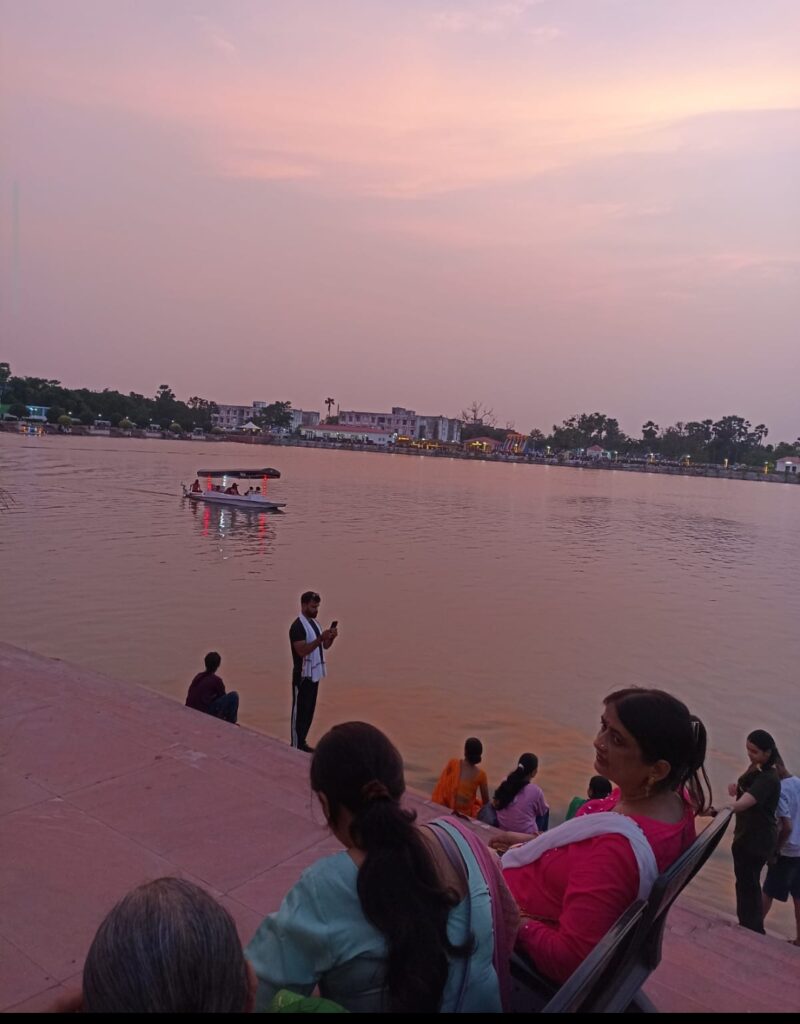
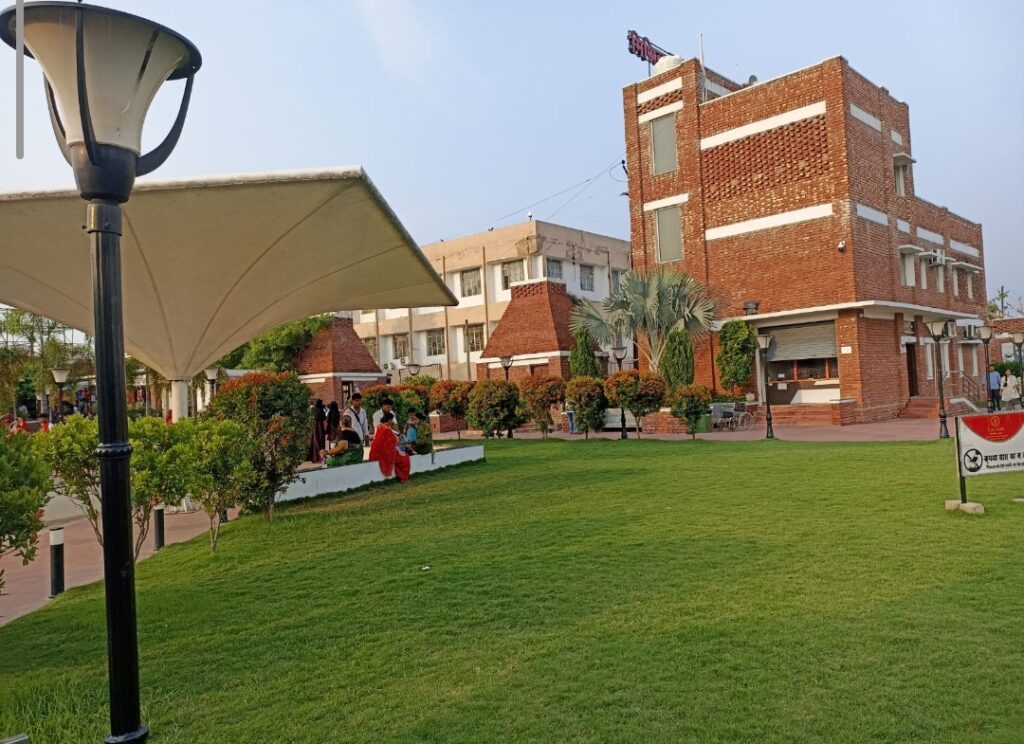
Mithila Haat beckons you to the emotional corridors of this ancient culture. Around its pathways, green lawns, and all along the Ghats (Stepped stairs leading downward towards the pond water) around its pond; blows the air, aroma and folklore of distant past. The ultra modern restaurants, kids zone, toy train, lighting, and boating facilities may give you sensory pleasure but the likes of Bhansa Ghar ( word used in Maithili language for house kitchen), open air theatre, cultural motifs created on red bricked walls and its art and craft bazaar create a connect with your deeper intellect. This union of your soul with the cultural past of Mithila sends you in a different sky!
Bhansa Ghar Is Something Different!
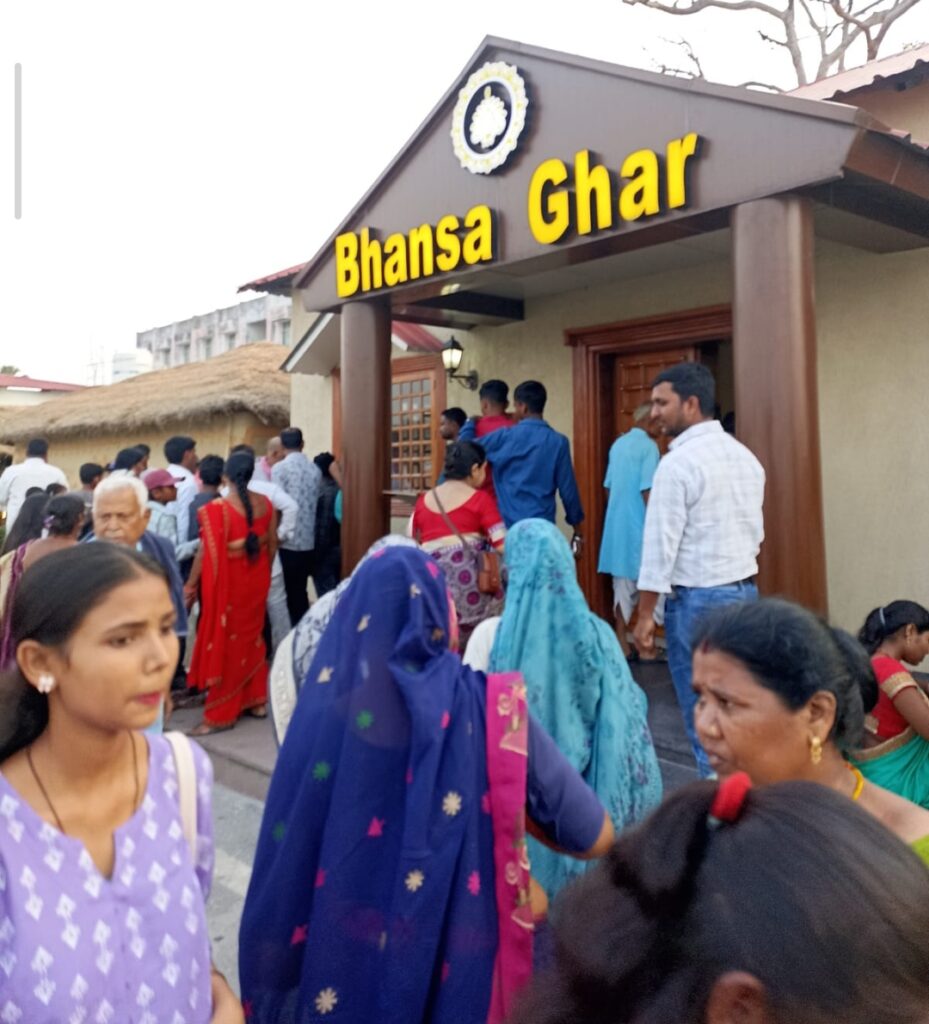
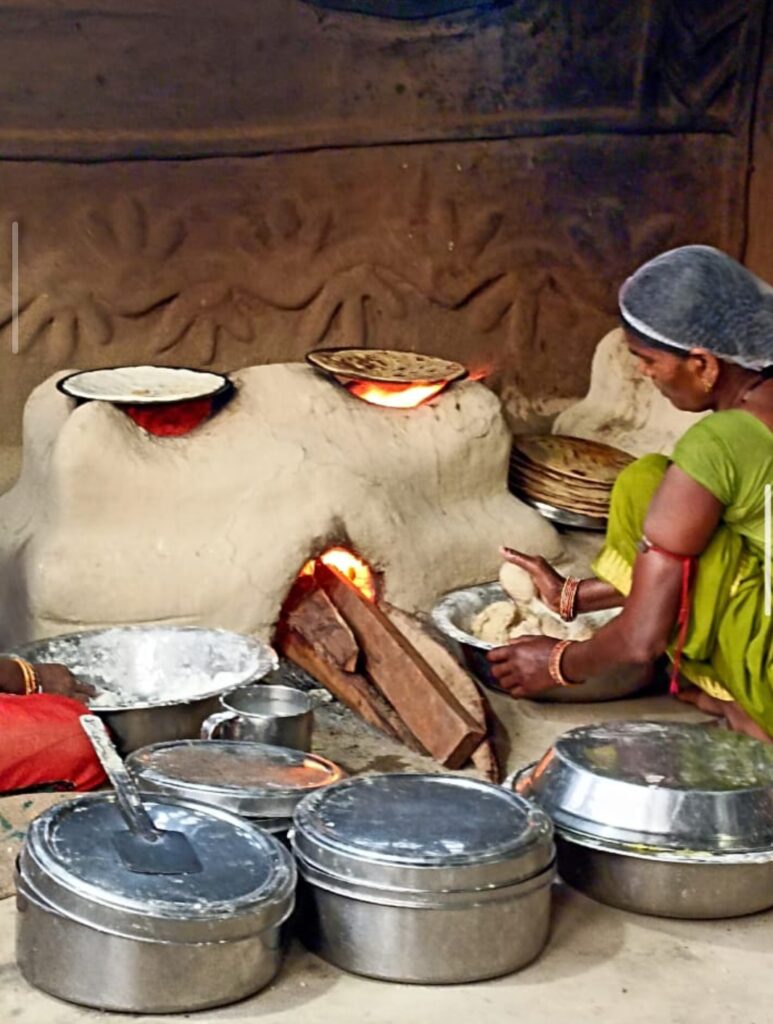
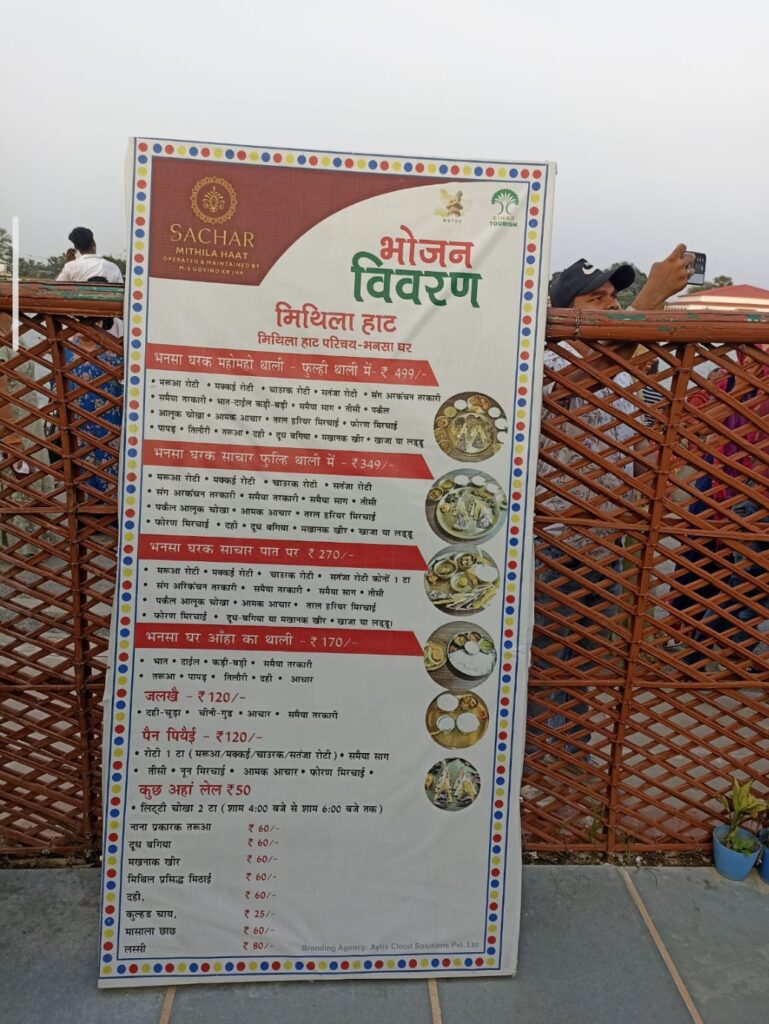
Bhansa Ghar at Mithila Haat is a live kitchen. Watching the preparation of signature dishes of ancient Mithila by traditional methods can be a unique experience which certainly you would not like to miss out. Women chefs here, in their traditional attire, cook the food on traditional countryside earthen stoves using traditional fuel like Sunbaked cow dungs and fire woods. The traditional healthy dishes served here satiates your mind and the palate. It is really an intensely pleasing culinary experience when you observe how innovation and tradition has become a attraction here. Here people feel a sense of pride for their ancient culture and culinary tradition and appreciate this endeavor to exhibit them.
Art & Craft Bazaar/ Mithila Painting
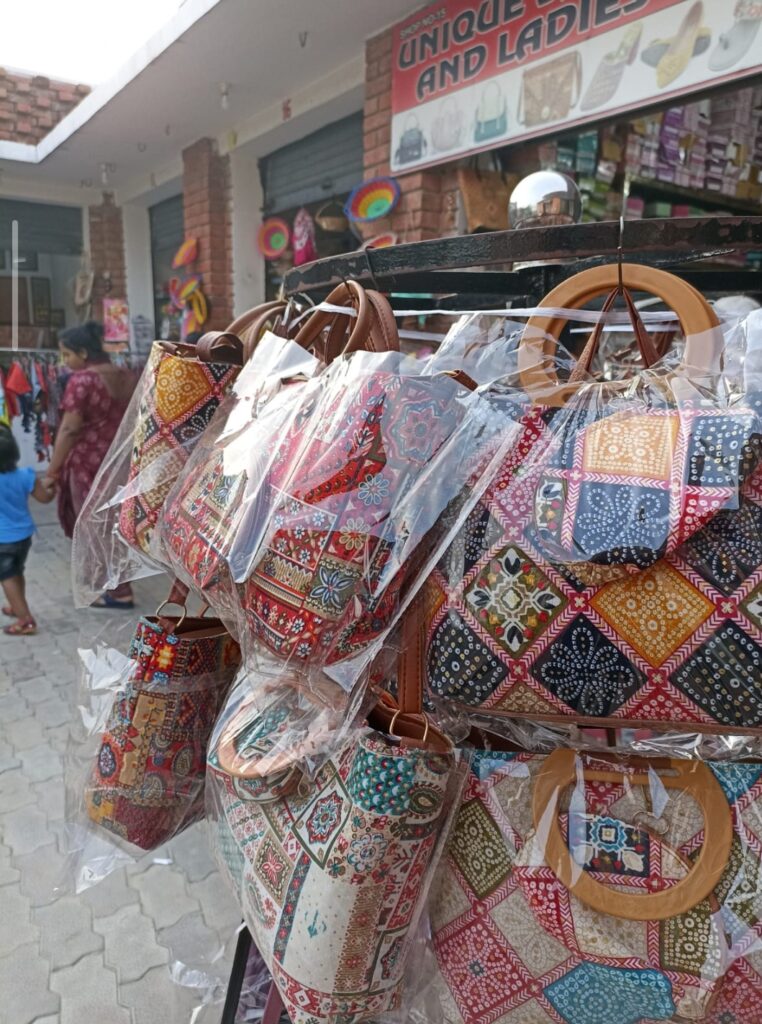
Art and craft bazaar at Mithila Haat promotes traditional items and provides reasonable price to the produce of artists and artisans.
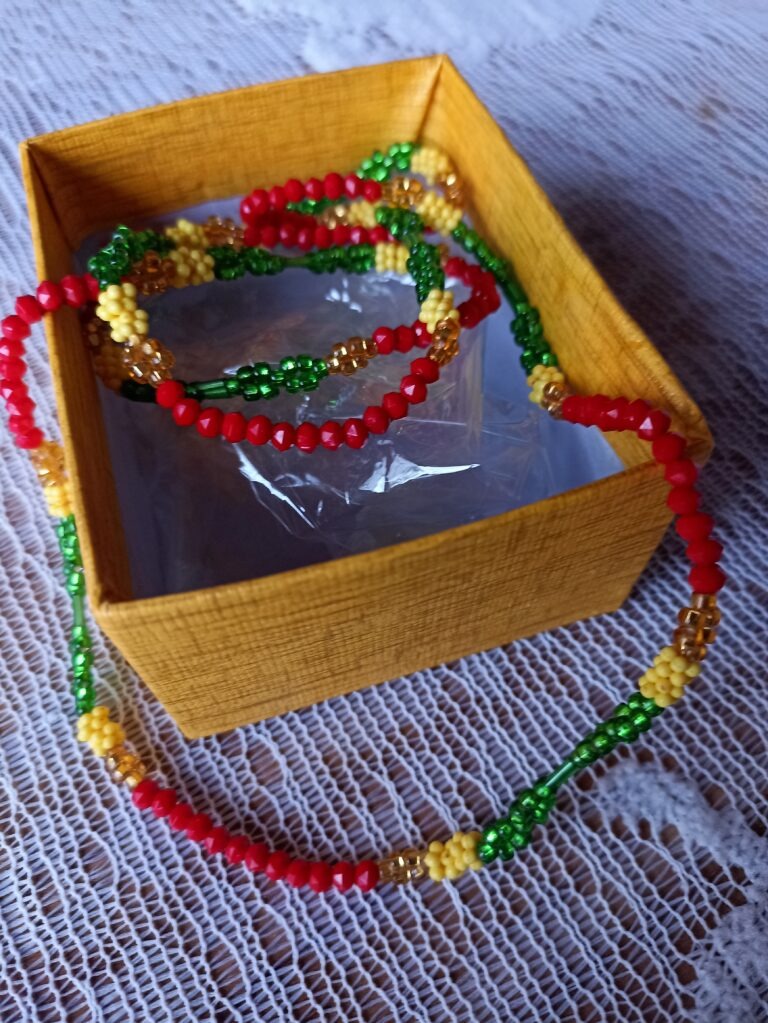
Unlike mass-produced goods, each handicraft piece or work receives individual attention. The creator’s personal touch makes every item unique. And that’s why connoisseurs of these items buy them even if they are costly. Artisan creations can range from strictly decorative pieces (sculpture, Mithila Painting) to functional, everyday items (pottery, furniture, clothing). Mithila Haat, in this way, honours and promotes local artists and artisans.
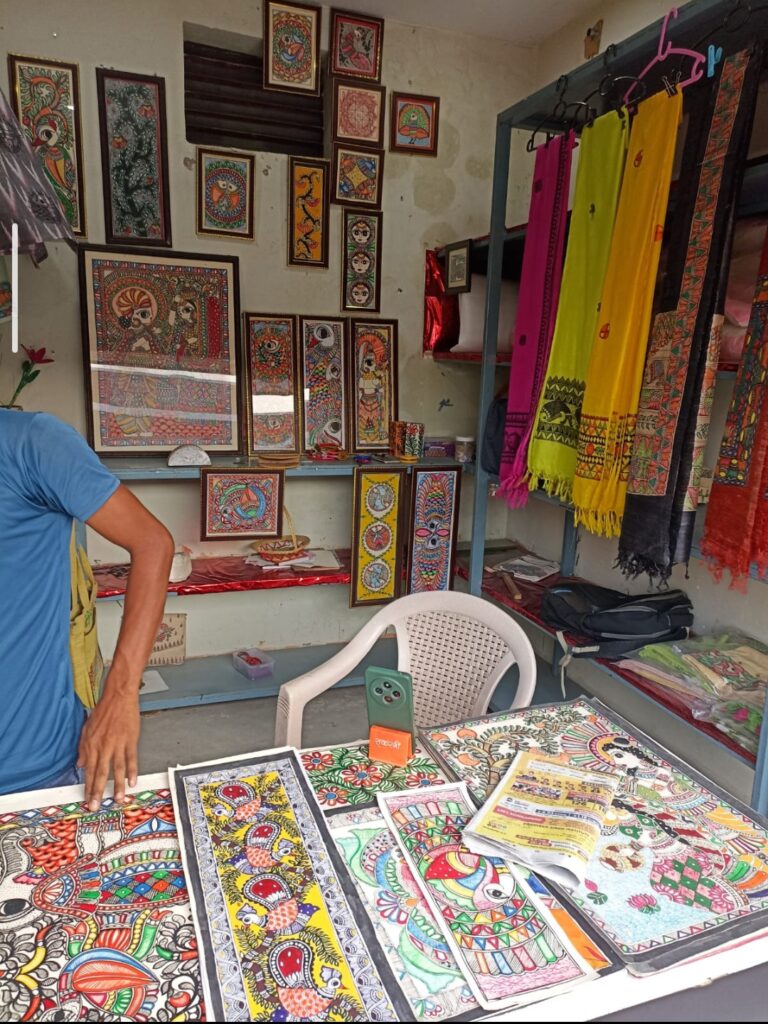
Mithila Haat lets you explore the rich folk art (famously known as Mithila Painting) of this region. Watching directly the expert artisans making traditional motifs, geometrical patterns, and natural brush techniques is altogether a different experience. Women are specially more expert in making these paintings. Mithila Haat has proved a place to showcase their works to potential buyers and develop a lucrative business.
Open Air Theatre
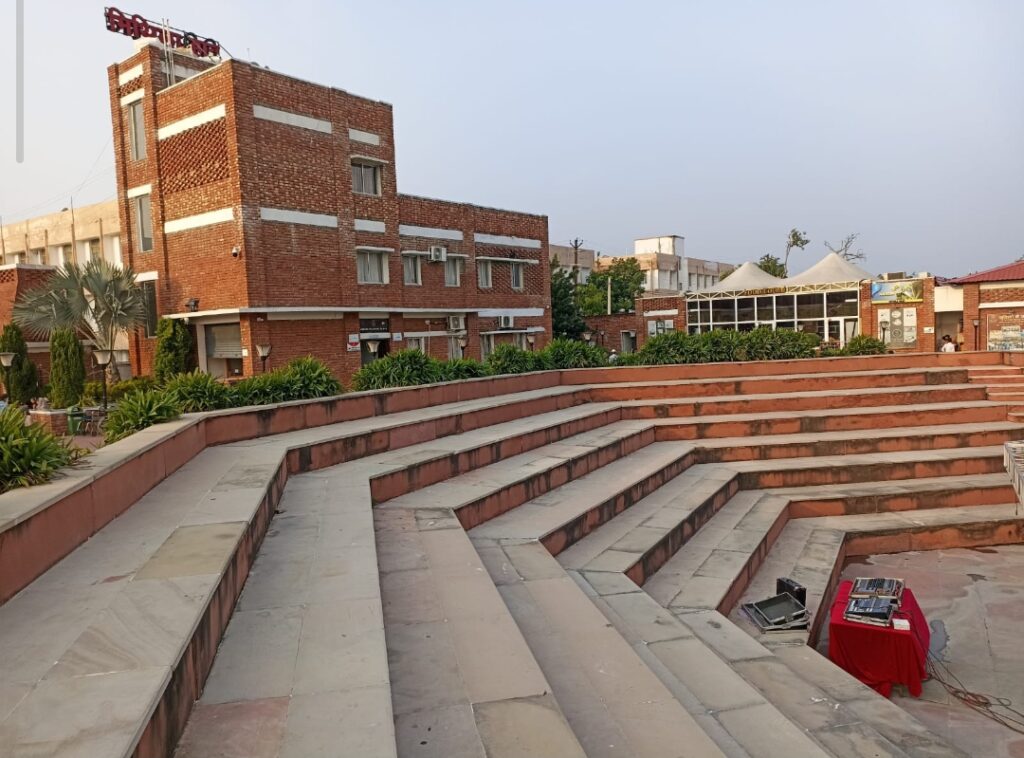
Open Air Theater here provides ample opportunity for singers and artists of Mithila to perform and showcase their talents to a wide audience originating from far flung places. Assigning yourself to the tunes of these folk songs may be a healing experience!
Beautiful Pathways and the Beautiful Lake
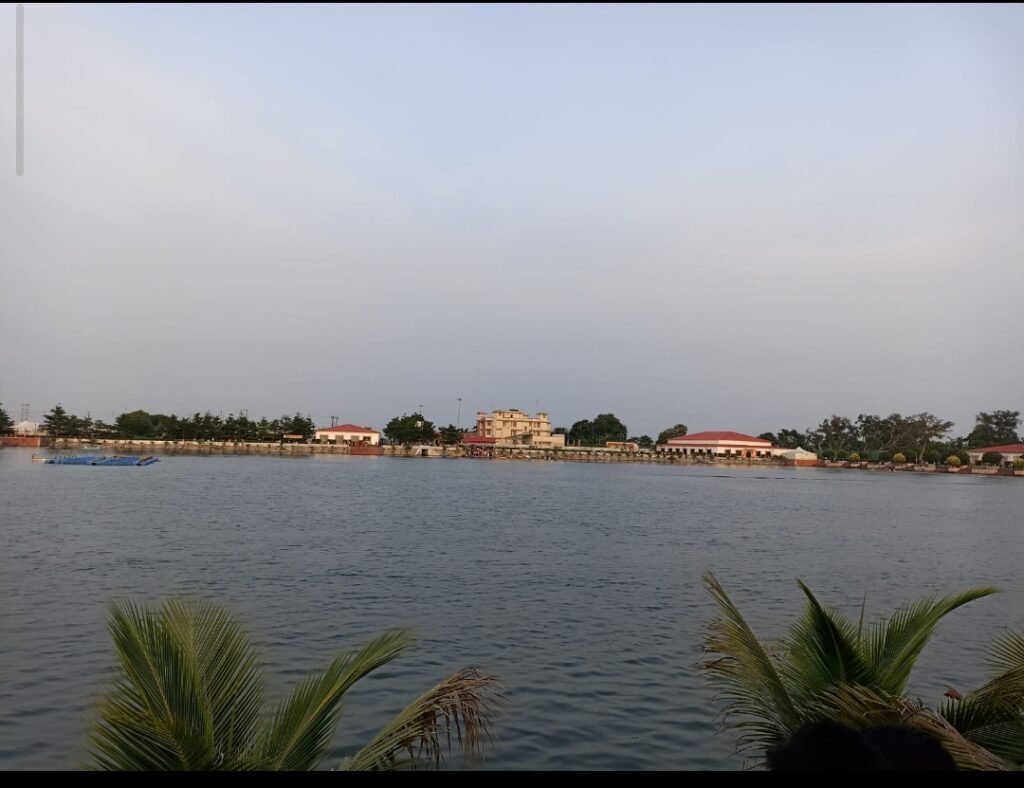
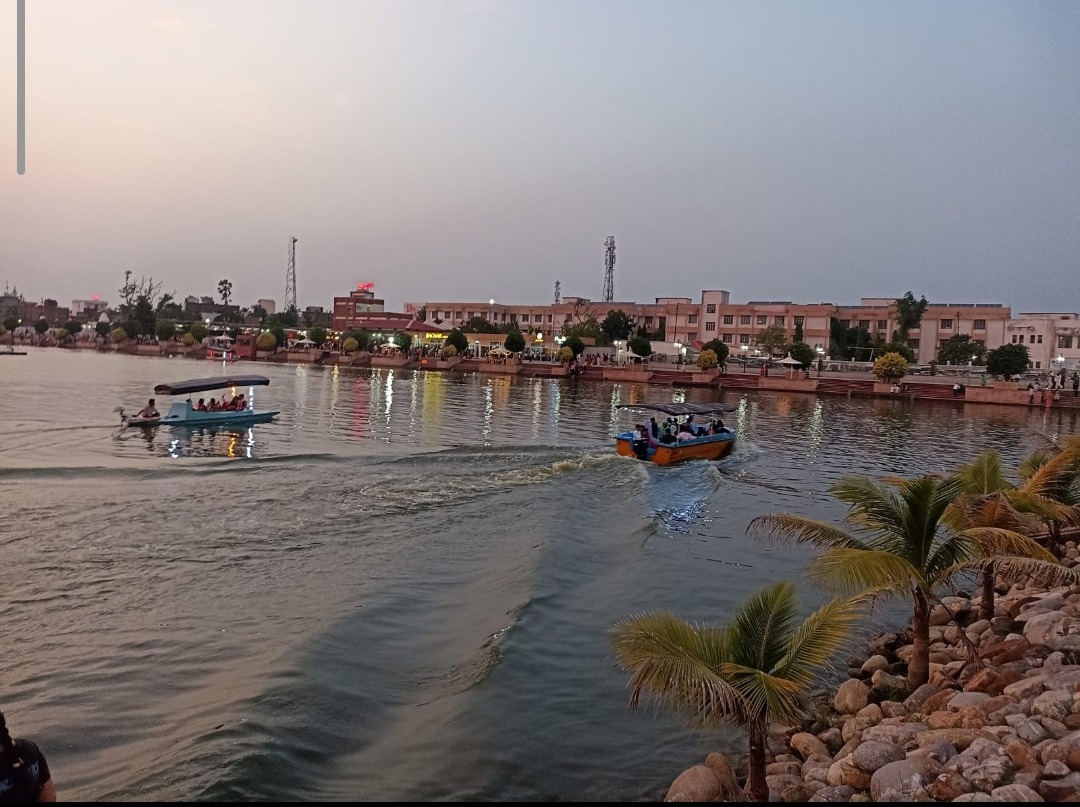
Stroll along winding pathways beautifully flanked by ornate, glowing lampposts that cast a warm, golden reflection onto the water. And at the heart of this Mithila Haat lies this vast, tranquil lake, where crisscrossing boats leave gentle ripples across the surface, transforming the evening into an unforgettable memory of light and motion. And against this vista plays the Maithili language folk songs which completely absorbs you. People of all age group and strata find some meaning here, which they lock in their memory.
Elements of Modern Life Style
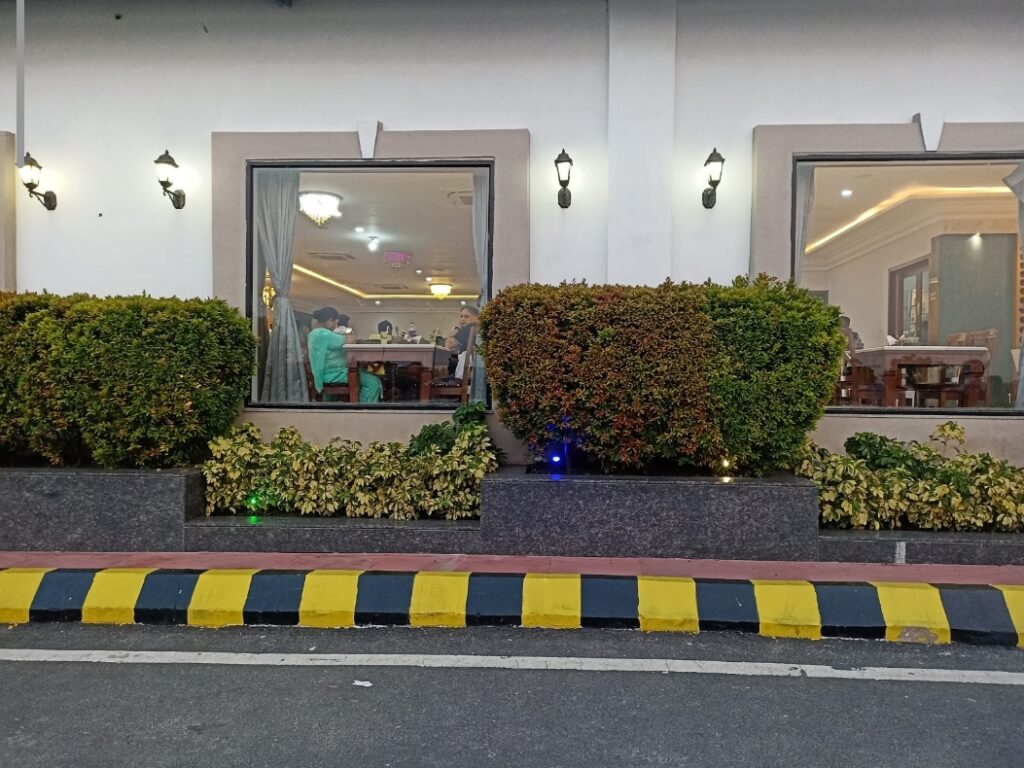
Elements of modern life are also here just a thought away. Modern food courts, restaurants, gym, spa, selfie zone make your day even more charming and engaging.
Finally
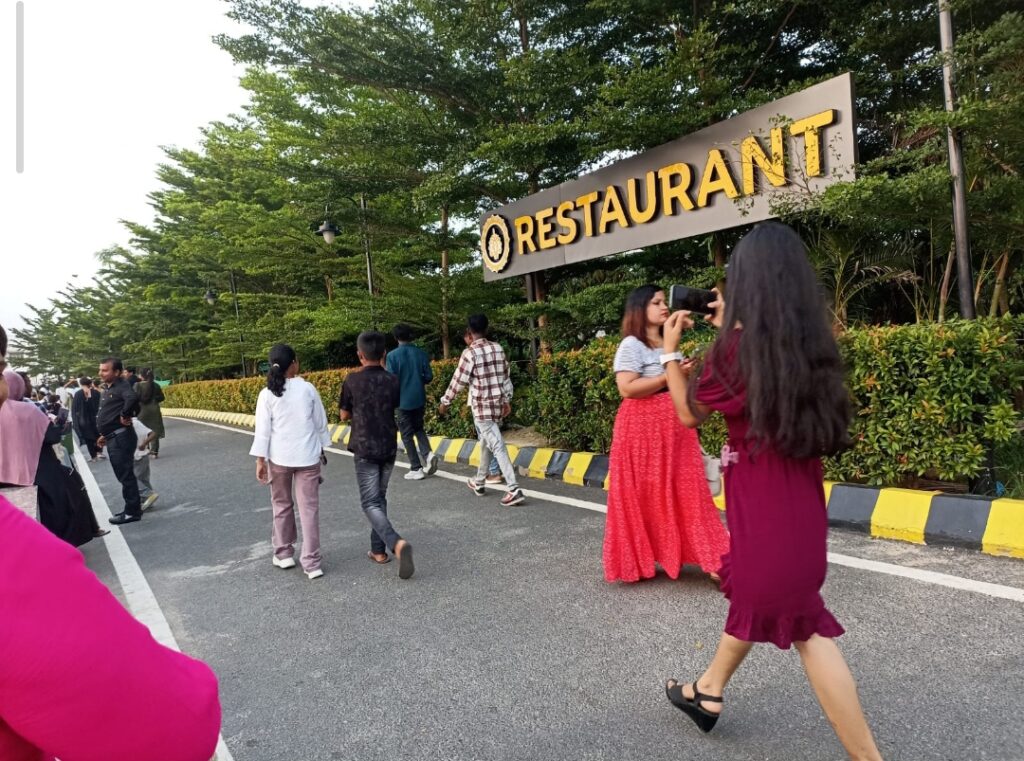
Mithila Haat genuinely features a unique cultural tour where modernity and traditions integrate seamlessly. At Mithila Haat it feels like travelling across the whole Mithila and many centuries in a single afternoon. Here heritage, living traditions and artistic creations are in ideal unison. History comes alive here. Modernity orchestrates with history here.