The Cloud That Chose Another Horizon: Reflections from a Rooftop
Some stories arrive quietly.
They do not announce themselves with thunder, lightning, or dramatic events. They begin with something as ordinary as a glance through a balcony door on a hot afternoon.
Such a story unfolded before me today on 17th of June in Birpur, the small town on the Indo–Nepal border where I live.
The first monsoon shower had already visited our region. The earth had tasted rain and the trees had regained some freshness. Yet summer had not completely loosened its grip. That afternoon was still warm and heavy, one of those days when even the breeze seems reluctant to move.
I was indoors watching my favourite travel programme on television. Exotic landscapes were passing across the screen, but outside my own window another journey was beginning.
Something felt different.
The light in the room seemed slightly dimmer than before.
It was not enough to alarm anyone. It was merely a subtle change in the quality of daylight, the kind of change that many people might overlook.
But nature often sends small signals before revealing her larger plans.
Curious, I stepped onto the balcony and looked toward the western sky.
What I saw immediately lifted my spirits.
A cloud had appeared.
Not an ordinary cloud drifting lazily across a blue sky, but a substantial monsoon cloud whose edges were already beginning to cover the afternoon sun. Behind it rose larger masses of vapour, bright and towering, like mountains slowly forming in the atmosphere.
In a region where the arrival of rain can transform both landscape and mood, such clouds are never merely clouds.
They are promises.
Within moments I found myself climbing the stairs to the rooftop.
The transformation happening above was remarkable.
The cloud seemed to grow before my eyes.
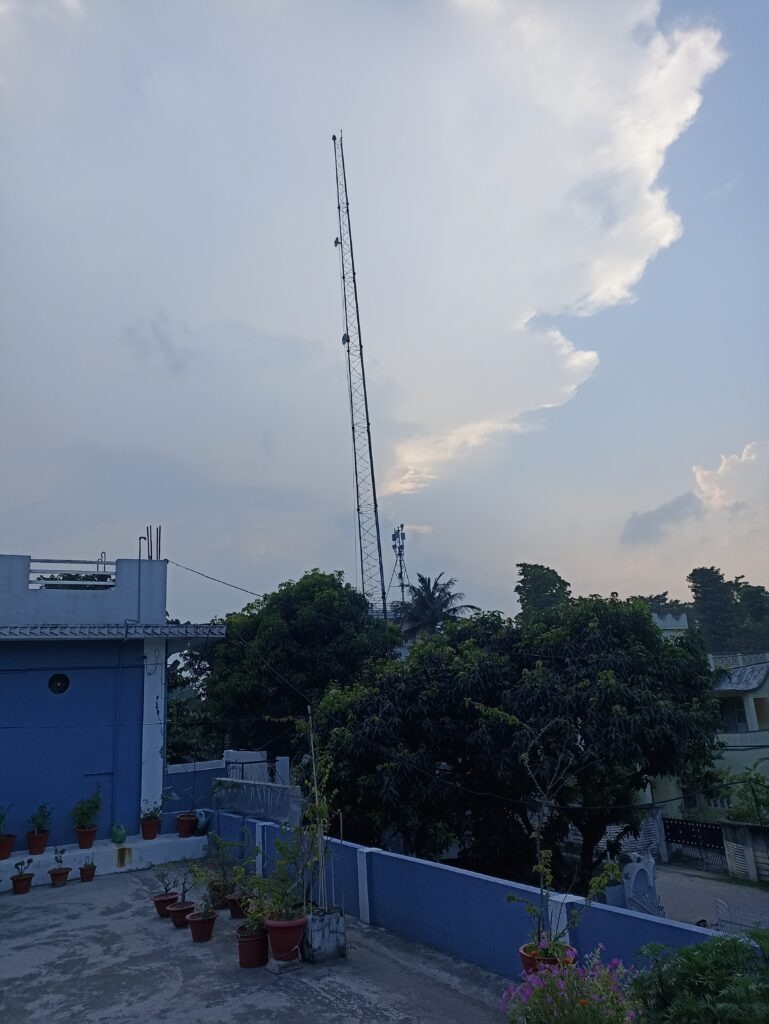
What had appeared as a modest patch of shade from the balcony now revealed itself as a vast structure stretching across the western horizon. A tall communication tower in the distance stood beneath it, looking tiny compared to the enormous wall of cloud gathering overhead.
The sky had begun constructing a cathedral.
Grey towers rose behind white towers.
Sunlight filtered through hidden openings.
Layers upon layers of vapour climbed into the atmosphere.
I stood watching, fascinated.
One of the great pleasures of monsoon season is that it reminds us how alive the sky truly is.
During much of the year we treat the heavens as a backdrop. We notice it only occasionally.
But during the monsoon, the sky becomes a living character. It changes expression every few minutes. It persuades, threatens, comforts, and surprises.
As the cloud expanded, its influence spread across the neighbourhood.
Looking down from the rooftop, I noticed that the streets had acquired a softer appearance. Buildings no longer glared under harsh sunlight. Trees seemed darker and richer in colour. Shadows stretched gently across walls and roads.
The world looked calmer.
It is amazing how quickly a cloud can alter not just a landscape but also the emotional atmosphere of a place.
People began looking upward.
Birds changed their movements.
The air carried a new expectation.
Everyone sensed the possibility of rain.
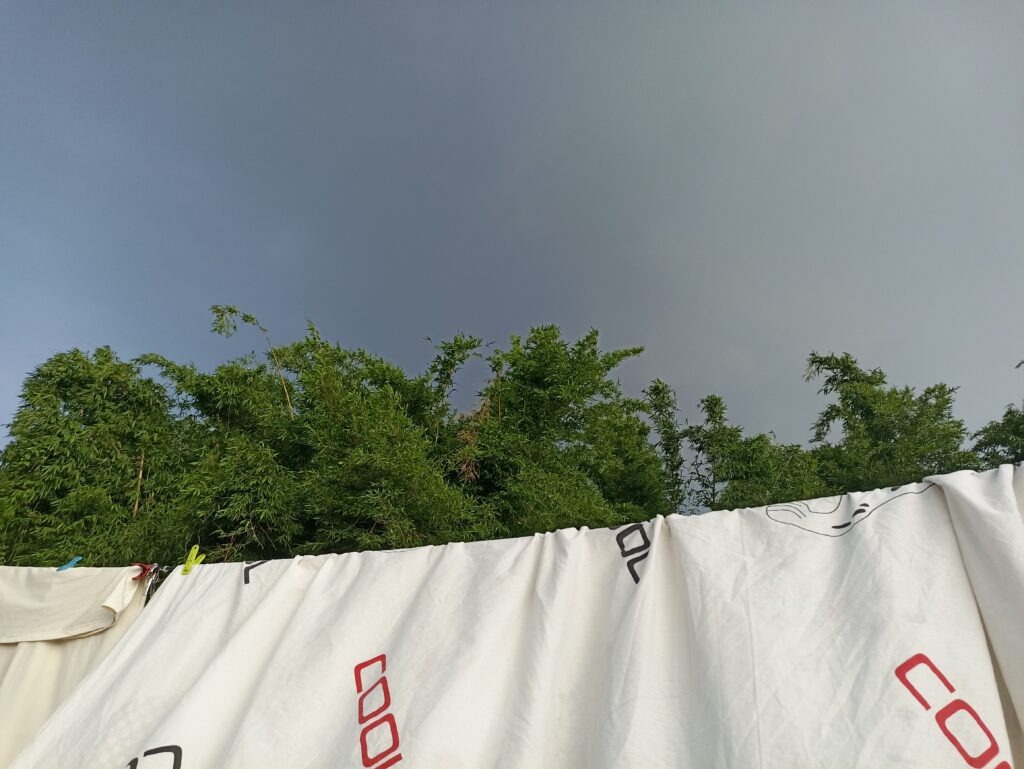
Then came one of my favourite moments of the afternoon.
A large white bedsheet hanging on our clothesline suddenly caught the breeze.
For hours it had hung motionless beneath the summer sun, quietly drying. Now it billowed and swayed against the darkening sky like the sail of a ship.
Behind it stretched a curtain of grey clouds.
The scene lasted only a few minutes, yet it possessed a strange beauty.
The bedsheet seemed to embody the mood of the entire household—hopeful, animated, and responding to the approaching weather.
Soon practical considerations replaced admiration.
The family hurried to gather clothes from the line.
Anyone who has lived through Indian summers and monsoons knows this familiar ritual.
The first sign of rain triggers a race against time.
Clothes that have spent the day drying in sunlight must be rescued before the shower arrives.
Hands move faster.
Voices become more urgent.
Eyes remain fixed on the sky.
It is one of those ordinary domestic moments that quietly connects generations.
Our grandparents did the same.
Our parents did the same.
And now we do the same.
Meanwhile, the heavens continued their performance.
The clouds thickened.
The blue sky retreated.
The afternoon gradually surrendered to shades of silver and grey.

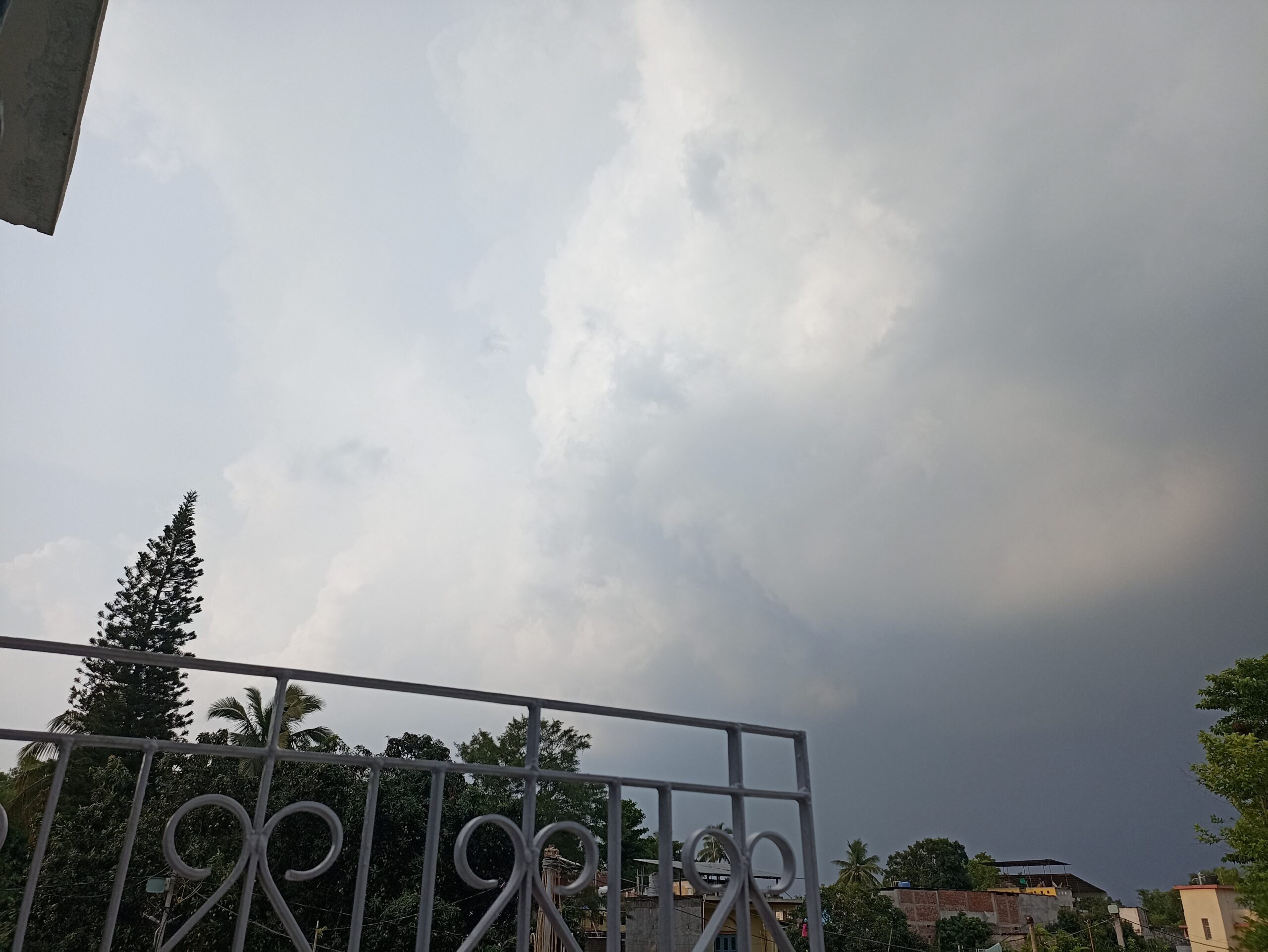
At one point, standing near the clothesline, I looked upward and saw a sky that appeared completely committed to rain. The dark clouds seemed to hang low above the green bamboo and trees surrounding our neighbourhood.
The atmosphere had changed so dramatically that rain now felt inevitable.
Hope spread naturally.
Family members began discussing the weather.
The birds seemed restless.
The trees swayed more confidently.
Even the temperature felt slightly kinder.
It was as if the entire neighbourhood had entered into an unspoken agreement with the sky.
The rain would arrive shortly.
But nature has never promised to fulfil human expectations.
Far above our heads, invisible winds were shaping a different outcome.
The upper atmosphere had its own intentions.
Slowly, almost unnoticed at first, the great cloud mass began changing direction.
The giant structure that had marched toward us all afternoon now started drifting away.
North-eastward.
Away from our rooftops.
Away from our waiting trees.
Away from our hopes of a generous shower.
A few drops fell.
Only a few.
Not enough to wet the earth meaningfully.
Not enough to justify the anticipation that had filled the previous hour.
And then it was over.
The cloud continued its journey elsewhere.
Later, looking toward the horizon, I noticed something beautiful.
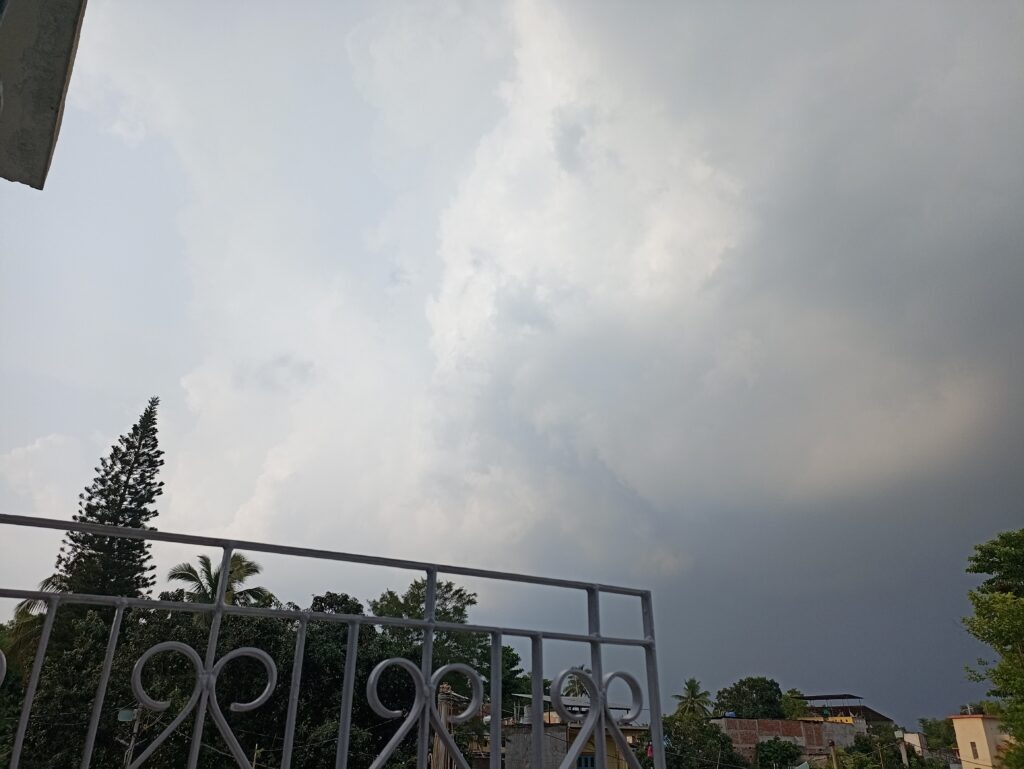
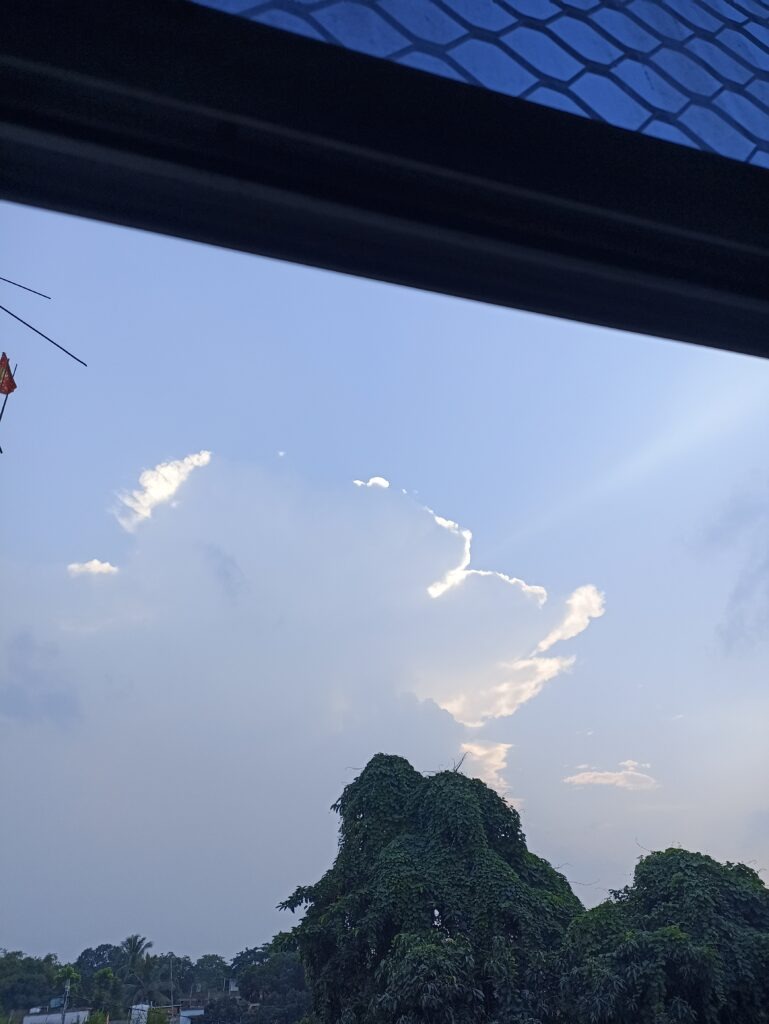
The departing cloud had developed a bright silver edge where sunlight touched it from behind. The same cloud that had promised rain now appeared almost luminous as it moved away.
For a moment I forgot my disappointment.
The sky had transformed the cloud’s departure into a farewell gift.
Standing there, I found myself thinking about life.
Perhaps this is why people have always looked toward the sky when reflecting on human existence.
Clouds understand us.
Like dreams, they gather unexpectedly.
Like ambitions, they grow larger than we imagined.
Like hopes, they seem certain of fulfilment.
And like many plans in life, they sometimes choose another horizon.
Every person carries memories of clouds that never rained.
A desired opportunity.
An expected success.
A cherished relationship.
A long-awaited change.
Something appears within reach, and we begin arranging our future around it.
Then unseen currents intervene.
The direction changes.
The promise drifts elsewhere.
The rain falls in another place.
Yet there is another lesson hidden within such moments.
The value of the afternoon did not disappear simply because the rain failed to arrive.
The growing cloud was beautiful.
The cooling breeze was real.
The fluttering bedsheet was real.
The conversations were real.
The shared anticipation was real.
The joy existed, even if the outcome changed.
Perhaps we spend too much of our lives judging experiences solely by their results.
Nature suggests a different measure.
Sometimes the waiting itself contains meaning.
Sometimes the gathering clouds are as valuable as the rain.
Sometimes hope enriches life even when it remains unfulfilled.
As evening approached, the sky gradually cleared.
The great cloud became a distant memory travelling somewhere beyond Birpur.
Life returned to its ordinary rhythm.
Yet something remained with me.
The image of that towering cloud.
The sight of the white bedsheet dancing in the wind.
The darkened streets.
The silver-lined farewell.
And a simple realization:
Human beings survive because they continue looking toward the horizon.
One cloud passes.
Another forms.
One hope fades.
Another is born.
The sky knows this.
That is why it never stays empty for long.
And perhaps that is why we keep dreaming.
Not because every cloud will rain, but because somewhere beyond the horizon another one is already gathering.