When Cloth Clips Take a Holiday
What a Rainy Morning in the Courtyard Quietly Whispered About Taking Rest
There are mornings that arrive with purpose.
The sun reports to duty early, shadows stand in disciplined formation, and even ordinary household objects seem to know what is expected of them. Clothes must dry. Time must move. Work must be completed.
And then there are mornings like today.
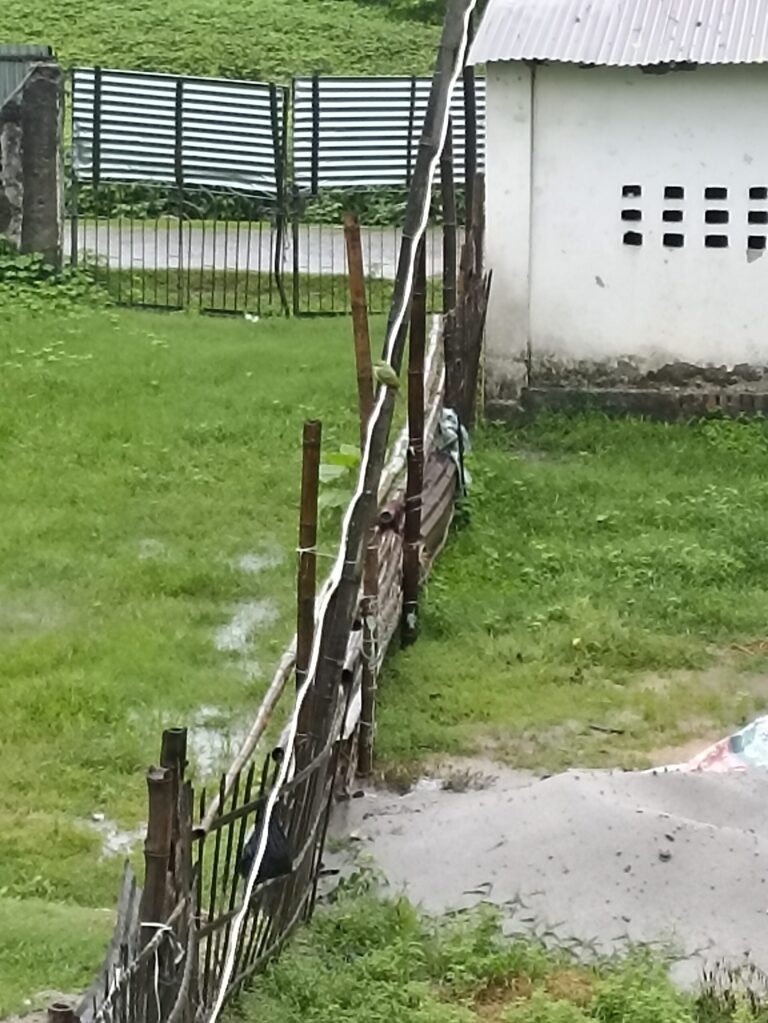
The sky woke up undecided — wrapped in clouds, carrying neither the sharp authority of summer sunlight nor the urgency of clear weather. The courtyard looked softened, almost thoughtful. Rain had settled over the morning like an unfinished sentence.
The clothesline in my courtyard, usually burdened with domestic responsibilities, looked strangely unoccupied.
No freshly washed shirts fluttered anxiously. No cotton sarees stretched under the discipline of sunlight. No hurried household rhythm demanded service.
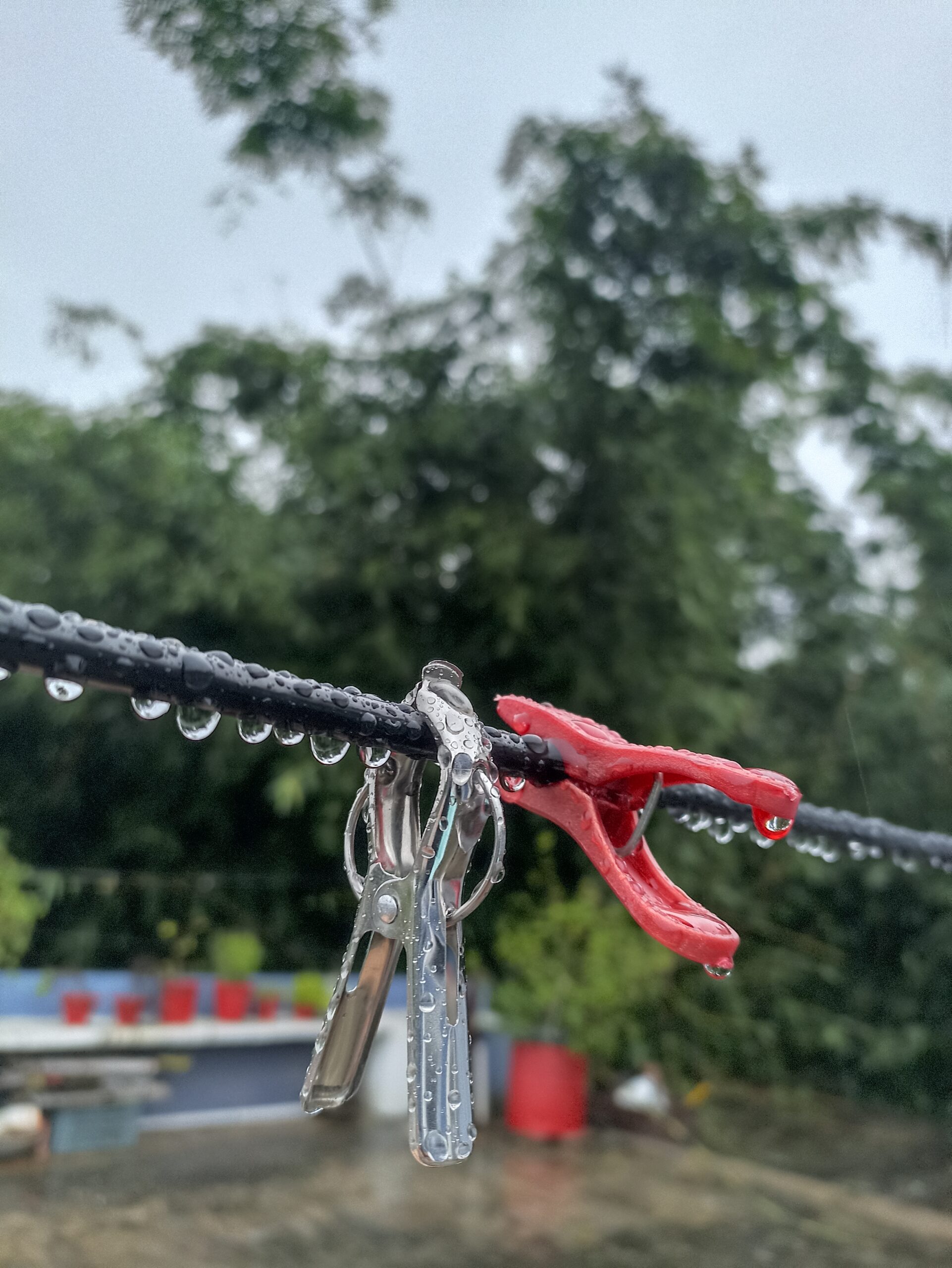
And there they were — the cloth clips.
Idle.
Resting.
Perhaps, for the first time in days, without a task.
Usually these humble sentinels cling tightly to wet clothes, bearing silent responsibility. They hold garments against impatient winds until they are dry enough to leave for another journey — to the ironing board, the wardrobe, and eventually back into the theatre of human routines.
But not today.
Today, they seemed to have declared a quiet holiday.
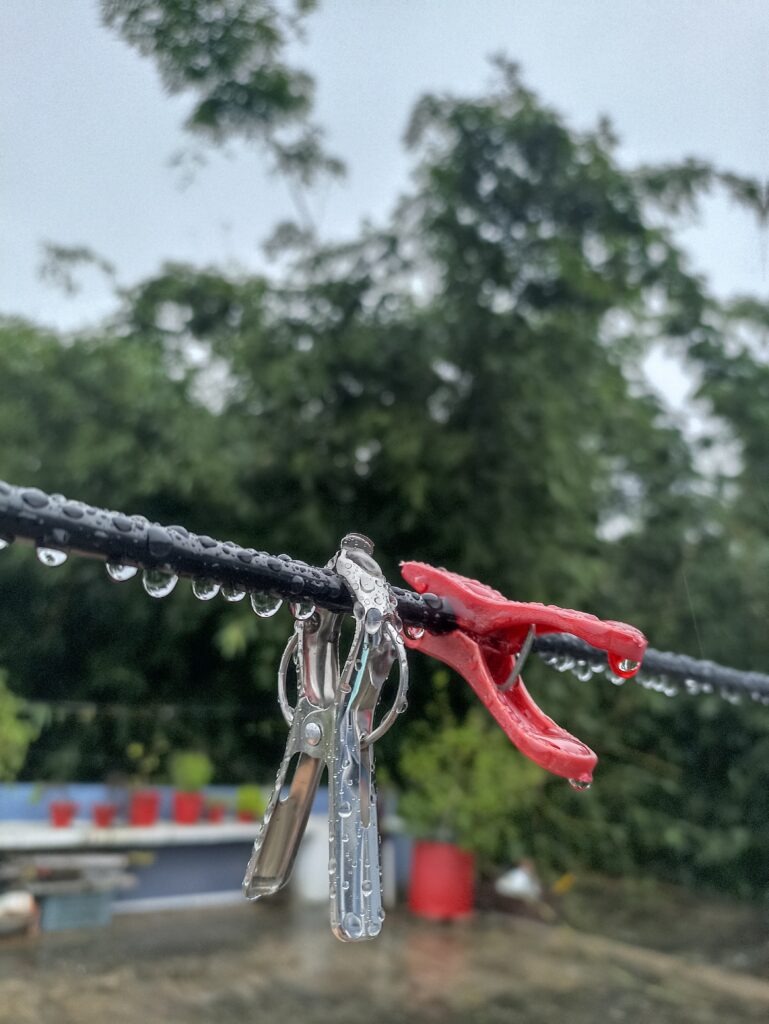
Hanging side by side upon the rain-soaked line, they swayed gently in the cool breeze. A metallic clip leaned companionably beside a red one, as if old colleagues had unexpectedly found free time together after a demanding season of work.
There was no hurry in them.
No anxiety.
No purpose pressing against their tiny springs.
Only stillness.
Only the comfort of simply hanging there beneath a diffused grey sky.
When Ordinary Things Begin to Speak
I found myself standing longer than necessary, looking at them.
The strange thing about ordinary objects is this: when life slows down, they begin to speak.
Not loudly, of course.
But quietly enough for attentive eyes.
The rain had decorated the clothesline with droplets that clung delicately along its length — little luminous beads suspended between sky and earth. Some rested upon the clips themselves, glistening like tiny ornaments.
Yet “droplets” suddenly felt too ordinary a word.
They looked more like pearls.
Or perhaps innocent souls.
Travellers, maybe.
After all, where had they come from?
Across layers of atmosphere, drifting through restless clouds, gathering themselves in invisible congregations before finally descending into this humble courtyard — only to alight upon a clothesline beside two unemployed clips on a rainy morning.
What stories they must carry.
Perhaps one had travelled above forests. Another above distant rivers. One may have floated silently over villages waking to tea kettles and bicycle bells. Another perhaps crossed city rooftops where hurried people barely looked upward.
And now they rested here, transparent and serene, quietly sharing companionship with these cloth clips — their immediate neighbours in this brief pause of existence.
The scene felt oddly comforting.
As if the world, despite all its noise, still remembered how to be gentle.
The Forgotten Wisdom of Pausing
Across cultures, human beings have long known the wisdom hidden inside pauses.
In Japan, there exists a delicate awareness of life’s fleeting beauty — the appreciation that certain moments become meaningful precisely because they are temporary. A blossom falls. Rain passes. A quiet afternoon dissolves into memory.
Not everything beautiful announces itself loudly.
Sometimes beauty merely hangs from a clothesline.
The old Europeans, too, had their slow rainy afternoons. Many childhood memories are stitched together not by grand adventures but by moments of unplanned idleness — watching rain gather on windowpanes, hearing distant church bells softened by mist, reading while weather quietly rearranged the mood of the day.
And across many homes in the East, monsoon days have always carried permission.
Permission to pause.
To sip tea more slowly.
To postpone unnecessary urgency.
To let the world breathe.
Perhaps somewhere along modern life, we misplaced this permission.
Today, even our holidays have become strangely exhausted.
We plan them with military precision. Flights, bookings, itineraries, photographs to upload, experiences to collect, places to conquer before Monday returns.
We travel hundreds of miles, yet forget to arrive inside ourselves.
Rest has become another performance.
Even leisure now demands achievement.
Perhaps Holidays Were Meant for Something Softer
But what if holidays were meant for something gentler?
What if they were meant to resemble these cloth clips?
Not abandoned.
Not useless.
Simply released, for a while, from the burden of doing.
Just hanging there beside companions.
Feeling cool wind pass through.
Listening to silence without guilt.
Allowing thoughts to settle like rainwater.
There is a quiet dignity in things that know how to pause.
The older one grows, perhaps the more one realises that life is not built only from milestones and accomplishments. It is equally shaped by unnoticed intervals — afternoons that asked nothing of us, conversations without urgency, windows opened during rain, pauses that restored something invisible inside us.
Yet to notice such moments requires an internal arrangement.
A kind of inner stillness.
Because beauty often arrives disguised as something ordinary.
A rainy clothesline.
A silent courtyard.
A pair of clips with no work to do.
The world rarely shouts its wisdom.
It prefers whispers.
And perhaps that is the real invitation of holidays — not escape, but attention.
To become available again to small things.
To rediscover forgotten capacities: noticing, lingering, wondering.
To feel the coolness of a day without immediately asking what productivity it serves.
Standing there in the courtyard this morning, watching the clips sway gently beside their pearl-like companions, I felt an oddly reassuring thought arrive.
Maybe rest does not always require distant mountains, expensive resorts, or elaborate plans.
Maybe sometimes rest begins when we allow ourselves to simply remain — like cloth clips on a rainy morning — suspended between purpose and peace, quietly learning again how to enjoy the passing breeze.