This New Year, Let’s Revive an Ancient Value: When Strangers Meet, Humanity Wins
As another New Year dawns we often search for ourselves fresh goals to chase. It is a time drenched in resolutions, promises, and the pursuit of better versions of ourselves. But this year, wouldn’t it be an interesting idea to become innovative in a different way, i.e. by diving into those broad ancient values that helped ancient civilizations survive. And one such amazing value that I find today is – “When strangers meet, humanity wins.” And, yes, human instinct to help the needy whoever he or she is, – is at its base.
Across continents and centuries, humans have turned uncertainty into opportunity, fear into trust, and isolation into survival—not because they shared language, religion, or skin color, but because they shared something deeper – the instinct to help the people in need.
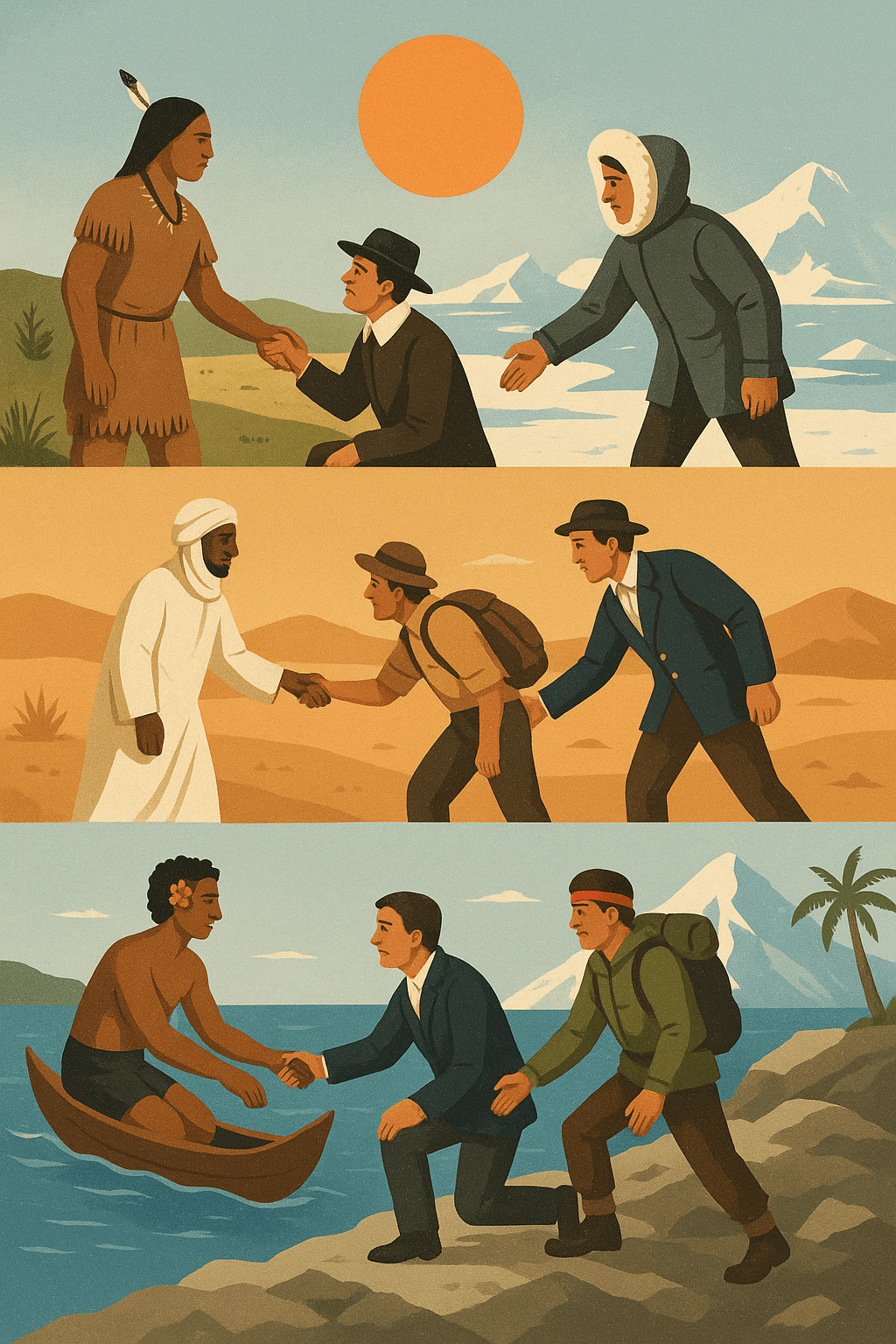
Across continents, across ages, and across conflicts, humanity has repeatedly shown that our greatest victories did not always come from weapons or wealth—they came from wisdom shared, knowledge transferred, and compassion offered. Whether on chilly coasts, golden deserts, icy horizons, or soaring mountain trails, humanity has thrived because someone chose not to walk away when a stranger appeared.
This pattern—this invisible thread of human solidarity—connects civilizations that never met. Let us travel through time and space to understand how strangers turned survival into a shared story, shaping cultures and continents in the process.
The Wampanoag and the Pilgrims: A New World, An Ancient Lesson
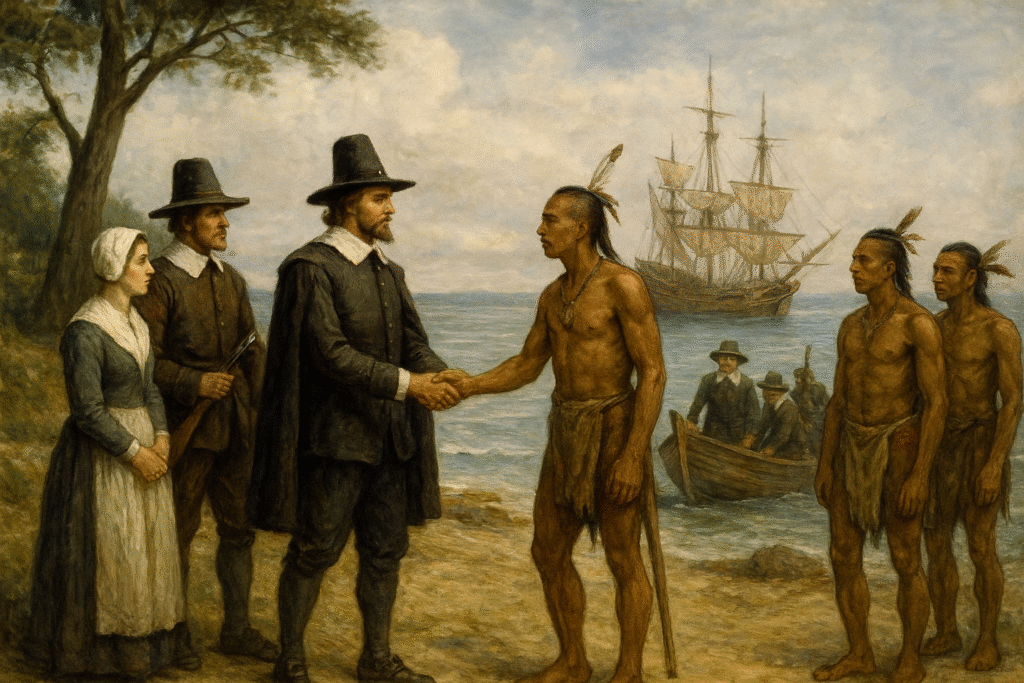
In 1621, English settlers known as Pilgrims staggered onto the unfamiliar shores of North America. Hungry, cold, and lost, they knew little about the land that now lay before them. Winter had nearly claimed them, and death felt closer than hope.
Then arrived the Wampanoag people—not invaders, not colonizers, but keepers of the land. Though cautious of these newcomers, they extended something priceless:
- How to plant maize in harsh soil
- How to fish the abundant rivers
- How to interpret forests and seasons
Their wisdom turned strangers into survivors. The first Thanksgiving wasn’t born from feasts and fanfare—it began from a moment of shared humanity. The Wampanoag didn’t teach Europeans to celebrate; they taught them to live.
This story isn’t unique to America. What happened on that coast has happened many times elsewhere—under different skies, in different sands, but always with the same heartbeat.
The Inuit People and the Europeans: Wisdom in a World of Ice
Imagine a world where the sun barely rises, where snow is not a blanket but a force that consumes entire horizons, and where one wrong step can freeze destiny.
European explorers entered the Arctic believing technology could conquer nature. But compasses turn shy near the poles, and guns don’t warm frostbitten fingers. Survival here demanded humility, not arrogance.
The Inuit, experts of ice and intuition, offered:
- Igloo architecture that traps warmth like a secret
- Sleds that glide faster than ambition
- Knowledge of seals, fish, and the rhythm of frozen seas
Once again, strangers became teachers, and survival became shared history.
This was not charity—it was culture recognizing vulnerability, and humanity responding.
The Berbers of the Sahara: Hospitality Older Than Sand
Shift scenes from ice to fire—the Sahara Desert, a golden mirror reflecting the sun. European travelers crossed dunes thinking maps could master mirages. But the desert laughs at certainties.
Berbers, born of dust and wind, knew the language of dunes:
- Where water hides like treasure
- Where the sand shifts but paths remain
- Where survival rests in community, not competition
Their code of hospitality was so sacred that even enemies received water. In the Sahara, a stranger was never abandoned—because to do so was to betray humanity itself.
The Polynesians: Reading a Sea Without Maps
The Pacific Ocean, too vast for imagination, swallowed European ships in endless blue. Yet for Polynesians, the sea was not a danger—it was scripture.
Without compasses, they navigated using:
- Stars that whispered direction
- Waves that revealed islands
- Birds whose flight patterns served as signposts
Their generosity transformed lost sailors into navigators. Here again, strangers met—and humanity prevailed.
The Sherpas of the Himalayas: Guardians of the Sky
The final echo of this global story resonates in the Himalayas. When climbers ventured into these mountains, ambition outweighed understanding. They wanted to conquer peaks; they forgot the mountains didn’t owe victory to anyone.
Sherpas knew better. They taught:
- How to breathe where oxygen is a myth
- How to build trust with a mountain
- How to respect a summit before reaching it
Every flag planted atop Everest carries an invisible truth:
No one stands on the world’s roof without Sherpa footsteps beneath them.
One Thread, Many Continents
The phrase humanity across continents isn’t poetic exaggeration. It is a real, traceable force that has shaped human history, silently saving lives while empires fought loudly elsewhere.
In a world divided by algorithms and opinions, this recurring truth feels more urgent than ever:
We survive not because we compete, but because we care.
A stranger helped the Pilgrims. A guide saved a traveler in the Sahara. A Sherpa led a climber to the sky. None of them asked, “Who are you?” before they asked, “What do you need?”
That is the echo we must not lose.
If stories of human connection across continents interest you, explore how these ancient instincts still shape our festivals and our everyday lives.