Maritime Traditions : Secret of Europe’s Naval Success
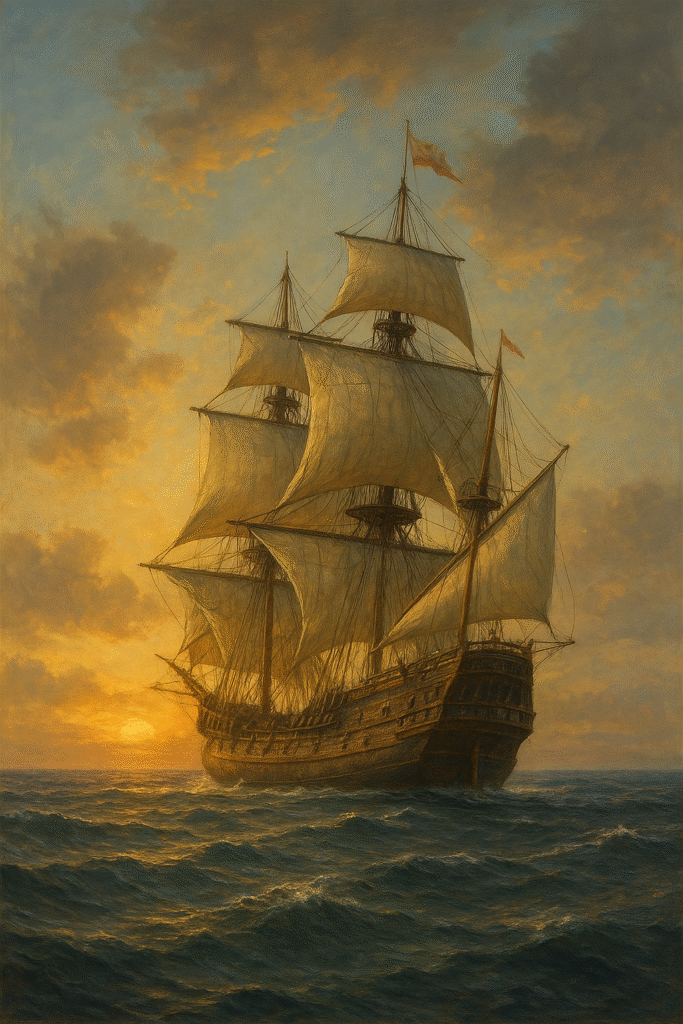
“… I came across a patch of lush green grass, and I knew there had to be water here.” This sentence from Ruskin Bond’s Nature Stories book somehow got deeply seated inside me, and, resurfaced lately to act as an analogy, suggesting – if the naval success of Europe was a reality, then, there must be present some traditionally trained human resource and other conducive elements that fed to this success.
Guided by this analogy, this post, I hope, would take you to dive into the traditions and practices that were already present among these coastal population of Europe and which paved way for their gigantic voyages to the distant lands – almost half world away!
When we imagine the great naval powers of Europe between 16th and 18th centuries – England, Spain, Portugal, and the Netherlands – we often get lost in the pictures of their grand fleets of galleons, their admirals in fine coats, or their treasure laden convoys.
However, at the core of all this shine of Europe’s rise to naval power, lie the maritime traditions brewed in the salty waters of sea, the seafood, and all those elements of maritime ecosystem which produced those ordinary looking enduring men, who carried sea in their blood : fishermen, shipwrights, pilots, gunners, and traders.
A boy mending nets on the windy coast, or loading barrels at a river dock suddenly finds himself bound for the Indies, The Americas, or a battle at sea. How was that possible ? The answer lies, to a great extent, in the maritime traditions of European coastal life.
And also, the readers of thelifespeaks.com know how intensively we care for life elements hidden behind the dry facts of history, culture and social life!
Portugal – Where Fishermen Turned Pathfinders.
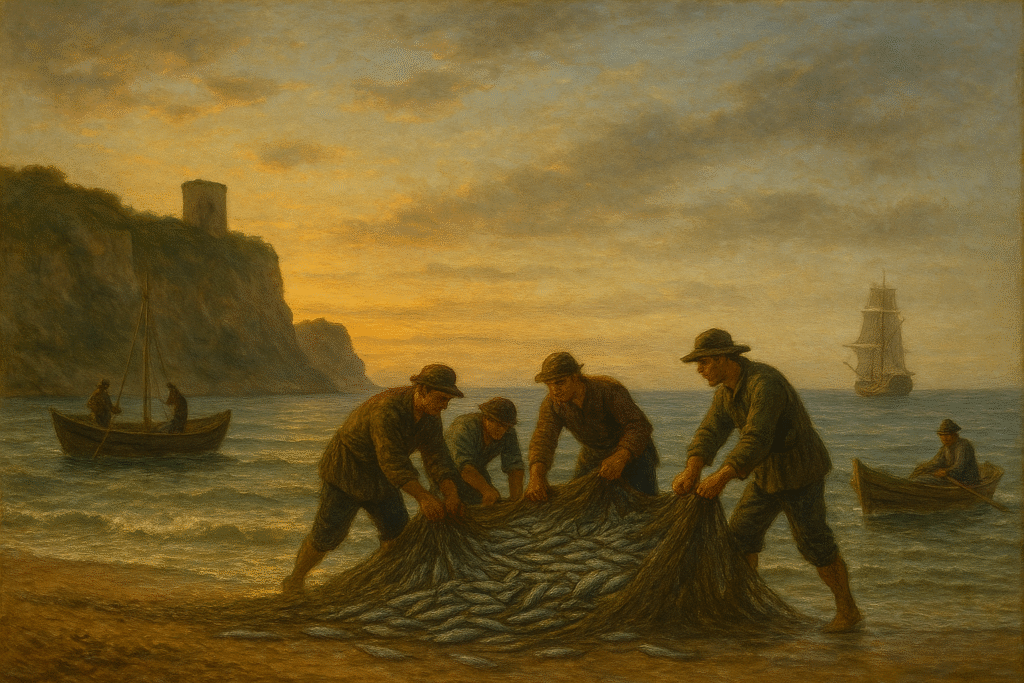
A dawn in 15th century Algarve, Portugal ! Imagine a fisherman pulling in sardines in his net – the same old occupation his ancestors did. This fishing for him was not simply a livelihood – it was a school in making, that tested and perfected the human instincts and experiences at sea which gradually galvanized into expertise – the expertise to recognize the mood of Atlantic, to endure the bite of salt winds, to master the art of patience of waiting out storms ! These expertise got groomed to appear as tradition, distinct to these coastal lands.
Prince Henry of 15th century, thus, gathered no scholars around him, but practical men of such expertise and tradition, like, pilots who sailed to Madeira, fishermen who knew Atlantic currents, craftsmen who could rig a sail with their eyes closed ! (Rigging systems on a sea vessel effectively capture the wind and provide propulsion and control.)
From their rough experience grew a new professionalism : trained navigators, cartographers, long distance sailors.
Soon these fishermen’s sons were steering caravels around Africa, laying the human ground work for Portugal’s far reaching empires. For many, the promise was not glory – but – bread, steady wages, a chance to escape the hunger at home, and sometimes, the dream of returning home with gold dust from Guinea or spices from India and Java.
Story of Spain : From Mediterranean to Americas
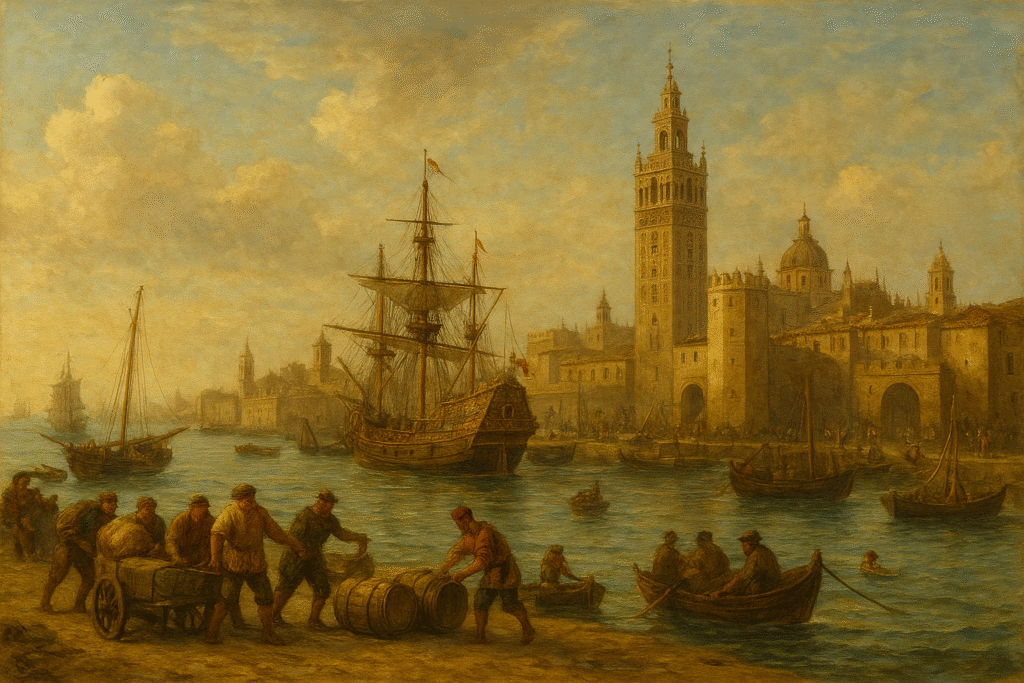
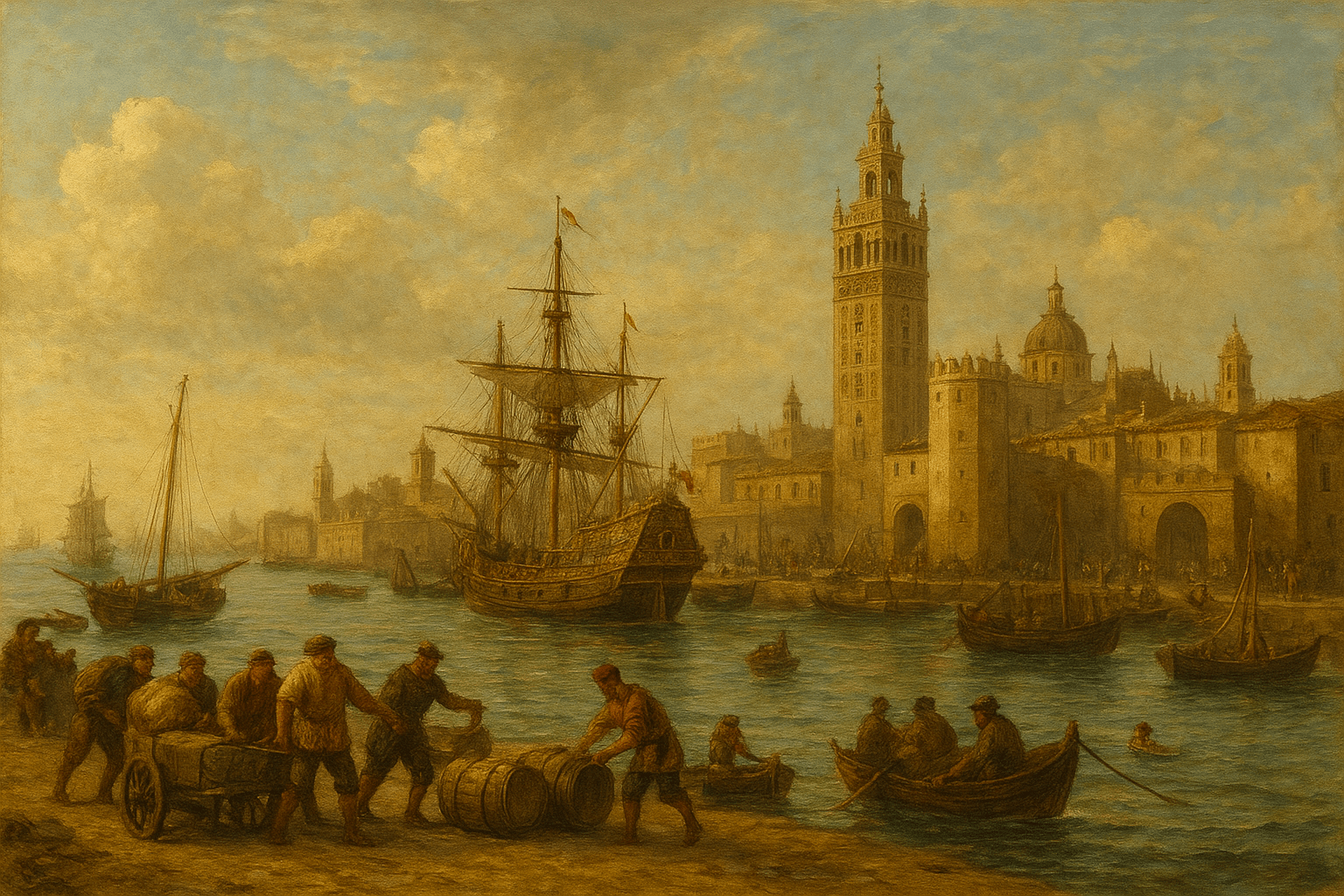
After understanding the Portugal naval roots and its growth into a professional navy, I was very curious about what was happening in Spain in those times.
I came to know that if Portugal voyaged through Atlantic, Spain, over the centuries, became successful in setting its foot in Mediterranean sea region. Here, Spanish sailors had to fight the corsairs (i.e. pirates on southern shores), Ottoman galleys and rivals along their own coast.
These struggles gave them a different experience. And with passage of time they employed this experience in establishing the shipyards at Basque, which produced sturdy vessels and trained shipwrights ( i.e. skilled professionals who were responsible for the construction, repair, and maintenance of ships, boats, and other water vessels). Gradually ports like Seville and Cadiz emerged, which buzzed with traders and seamen. By the time Columbus sailed west, Spain had already cultivated a tradition of professional piloting and navigation.
And friends, talk of Spanish naval journey is incomplete without having a glance at the Casa de Contraction in Seville. It functioned as both school and registry – keeping detailed maps and charts and memories of Spanish seafaring.
The ordinary fisherman of Spain, who once rowed galleys, were now crewing mighty galleons bound for the Americas.
Here, being an Indian, I am tempted and at the same time amazed to visualize that India in those times, being rich in agricultural and mineral resources, and , with its fertile lands, forests, perennial rivers and world class artisanship and craftsmanship; never realized the need to look outward towards seas, though it had vast coast line. For Indian rulers, oceans majorly meant a maritime boundary. But for Europe, which was not so rich and so affluent at that time, resorted to courage, technological innovation, and various naval expeditions; to reach new lands for better earnings and amass wealth. Anyway, all I can conclude here is that every limitation prompts man to explore and open the doors of new opportunities. This is a universal fact ! Thus prosperity in India, kept it looking inward; while on the other hand, resource crunched 15th century Europe, mastered sea waves to push their boundaries beyond in to distant continents.
Okay, now let’s return to our discussion on Spain’s naval activities and talk about the life onboard the Spanish sea vessels. Research on internet show that life aboard the ship was harsh. Hunger, disease and storms killed more sailors than enemy fire. Still, Spain’s lure of silver and gold kept its seamen volunteering for voyages. An Andalusian youth might leave his village to join fleet, not out of romance, but because the Americas promised wages, which might bring them above the poverty, he had known all his life !
The Netherlands – Herring Boys to World Traders
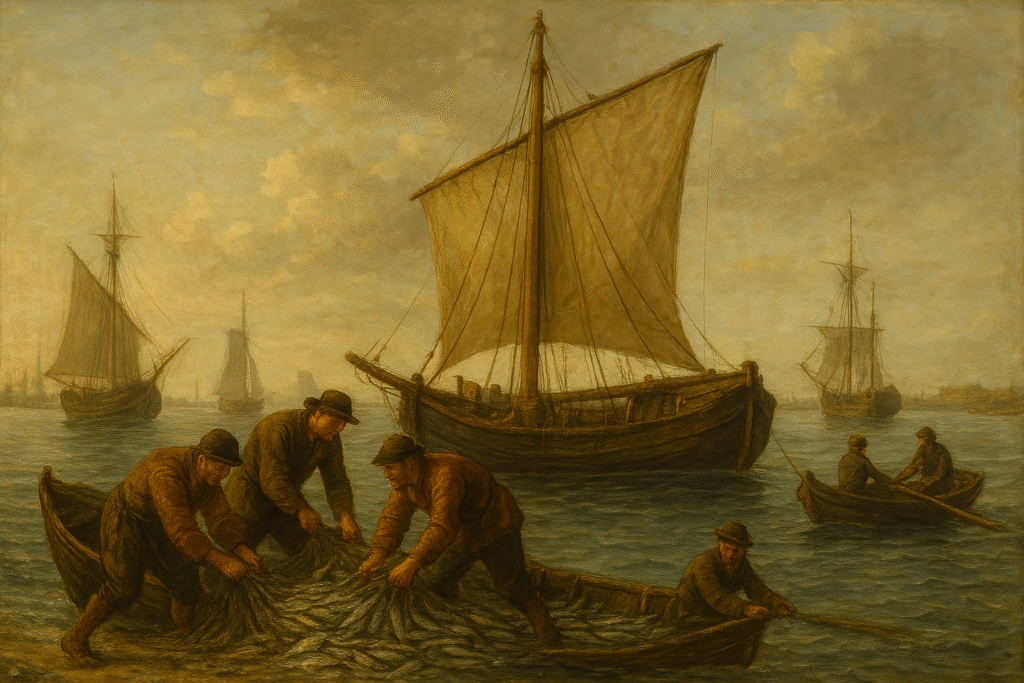
Dutch maritime tradition is synonymous to the image of humble Herring buss – a sea going Dutch and Flemish sea vessel used from 15th through early 19th century to catch and process Herring fishes at sea.
The development of the herring buss and its on board processing capabilities allowed Dutch fishermen to follow large shoals of herring far out into the North Sea. This enabled the Dutch to dominate the herring fishery during their Golden Age.
Each summer Dutch men in masses used to go to sea to harvest herring in the North Sea. These herring harvesting exercises were actually schools of discipline which brought perfection in many subsidiary works like – nets had to be hauled in unison, the catch be salted quickly, or sails to be trimmed against sudden squall.
From fishing crews grew the manpower that powered the Dutch republic’s trade. By the 17th century, Dutch fluyt ships carried Europe’s bulk cargo – grain, timber, salt – efficiently and cheaply. These Dutch sea men who once salted fish now manned voyages to the Baltic or East Indies.
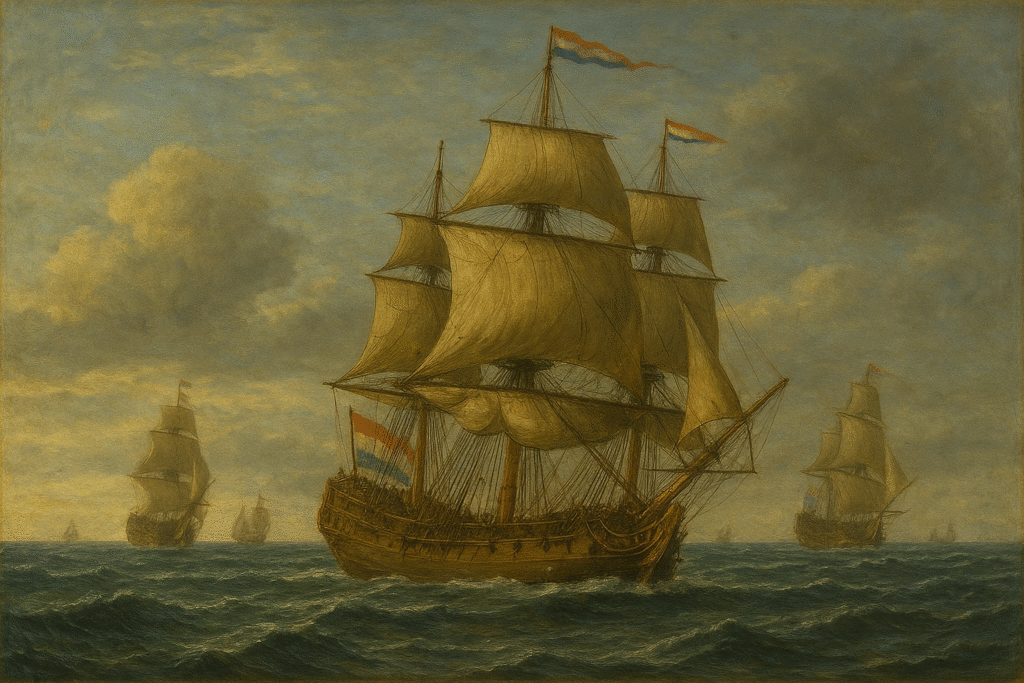
And then happens the emergence of the VOC (Dutch East India Company), which became almost a state of its own. Many young men crammed onto ships bound for Asia that Dutch sailors called themselves “herrings in a barrel”. Still thousands of Dutch men signed contracts to serve as sailors, clerks or soldiers in Asia. Some never returned, others came back with stories of Java, Ceylon or Japan.
Though their jobs were dangerous, their income was steadier than herring fishing in a bad season.
Interestingly, my curiosity and quest to know the secrets of emergence of Europe’s naval supremacy and to discover the inherent underlying maritime traditions responsible for such developments in these countries, is incomplete, without discussing England. So let us take a tour to England those days, and, its seafaring activities during 16th to 18th century.
England – Age of Privateers
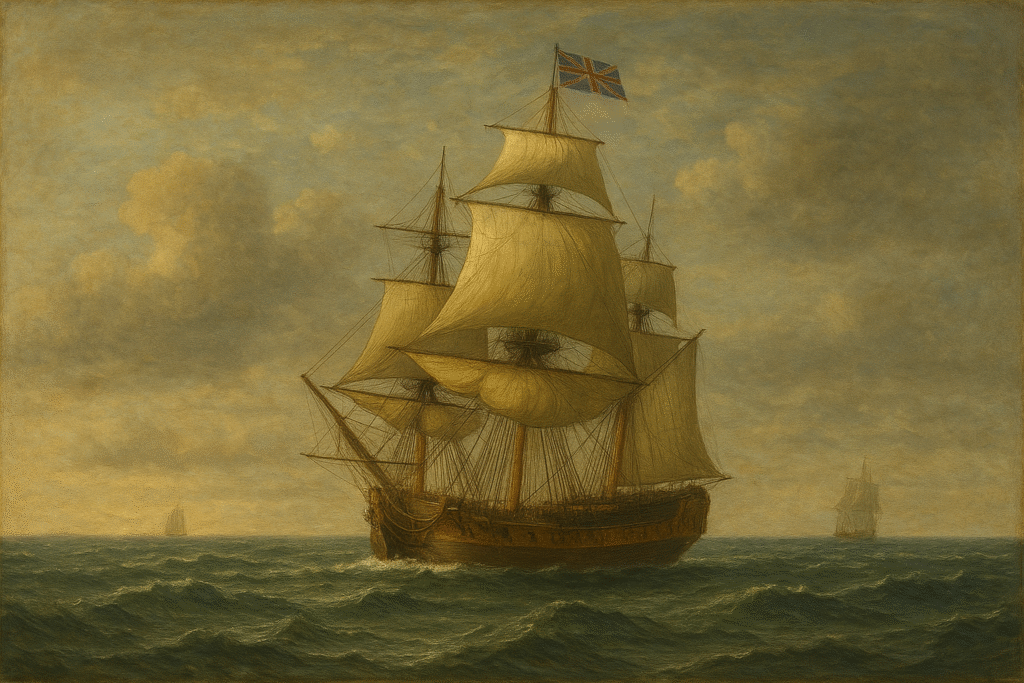
England’s story is different as compared to other coastal nations of Europe.
English people lived by the sea remaining almost unconscious about it. Though coastal trade and Cod fishing in the cold waters of Newfoundland trained the entire generations of hardy sailors, but, it was the age of privateering (?) that gave English sea men their distinct reputation in naval operations and voyages.
So what does it mean Age of Privateering ?
Privateering was the practice of privately owned ships being authorised by a government (through a letter of Marque) to attack and capture enemy vessels, especially merchant ships. The captured ships and goods (called prizes) were then distributed between the privateer, the crew and the crown.
Strange, but true; it was essentially- state sponsored piracy !
Spain considered English privateers nothing but pirates. For England, they were patriots and entrepreneurs serving the protestant cause against Catholic Spain.
Economic Motive of Privateering
- It was especially started under Elizabeth 1 (1558- 1609).
- England was not as wealthy as Spain or Portugal, who had huge colonial empires in Americas Africa and Asia. Privateering allowed England to disrupt Spanish treasure fleets returning from Americas.
- Profits from captured goods enriched sailors, merchants and even the Queen herself.
Outcomes of Privateering
- This built up a pool of experienced sailors, who later contributed to more formal naval operations like the fight against the Spanish Armada in 1588.
- Many famous English captains – Francis Drake, John Hawkins, Martin Forbisher, Walter Raleigh were privateers in their early career.
- Privateering actually laid foundation of professional navy in England.
- Loot from privateering also financed colonisation efforts and sustain a standing navy.
- Success of privateers boosted nation pride of England and weakened Spain’s aura of invincibility.
Yet England also cultivated science. By the 17th century, the Royal Society and the Greenwich Observatory trained navigators who combined mathematics with seamanship. This was also a fact about England which needs to be underlined.
Conclusion
It was the living web of maritime traditions that created the human resource for seafaring in Europe. Naval story of Europe is the story of those ordinary sea men, who already lived with sea, and carried sea in their blood.
References
- Glete, Jan. Warfare at Sea, 1500 – 1650: Maritime Conflicts and the Transformation of Europe.
- Paine, Lincoln. The Sea and Civilisation : A Maritime History of the World.
- Harland, John. Seamanship in the Age of Sail. London: Conwa, 1984.
Acknowledgement
This article was researched and developed with Open AI.





A story full of rare information. Waiting for more such posts.