
When Warmth Becomes a Way of Living: Hygge Lessons From Denmark and the World
Yes, many a time, it so happens that while searching for one thing you get some other valuable thing on the way. And, this was how, while browsing for some related information, my first encounter with this term “Hygge” happened. Further research about this Danish term revealed that Hygge is a Danish concept of finding contentment, coziness and well being in simple pleasures. Interesting! Now curiosity in me, to understand the concept and practice of Hygge, soars high. And this requires us to dive in to the typical ambience of Denmark – the land of Hygge.

It was almost 4 PM in Copenhagen, but the sky had already started dimming into the soft blue-grey that northern winters wear like a shawl. Inside a small apartment overlooking a canal, Sofie — a Danish schoolteacher — lit a single candle. The flame glowed against the windowpane, fighting the early darkness in its gentle but stubborn way.
On her table sat a wooden bowl of warm cinnamon pastries. A knitted blanket lay on the couch, waiting. Her two close friends arrived, brushing snow off their jackets, laughing softly. No one rushed. No one checked their phones. They simply sat together, talking about their week, sipping warm gløgg, and letting time slow down.
Sofie smiled as if saying, “This… this is hygge.”
It wasn’t an event. It wasn’t planned.
It was a moment — warm, simple, safe, and deeply human.
So, What is Hygge: Origin & Meaning
The word Hygge has its origin in Norwegian term ‘hugga’ – which means to comfort or to console. However it is among the people of Denmark where this tradition blossomed in to a lifestyle and became an identity of this great country.
Hygge actually means to generate a sense of cozy contentment and well being through enjoying the simple things in life. I think this ‘cozy contentment’ is comparatively a new but wonderful idea which comforts and heals our otherwise ruffled and troubled soul.
A clean cozy atmosphere built by presence of warm blankets on sofa, good books, food and drinks, a softly glowing warm candle, and presence of loved ones; followed by ongoing unhurried sessions of simple and light discussions – all this increases the happiness quotient in you. And interestingly, Denmark happens to be among top most countries having high happiness index.
When in Denmark, it is common to hear both Hygge and Hyggelig.
The term hyggelig is used to describe things that help generate the feel of hygge. And you will very soon discover the extent of penetration of hygge in Danish life when you hear talks like – “… that reading room is so hyggelig.”
Hygge is actually untranslatable Danish concept of warmth, comfort and well being.
If you understand it fully, you can notice the hygge feel in Denmark during moments when you come across locals wrapped in scarves holding steaming cup of coffee outdoors and look completely undeterred by sinking temperatures.
Candle lit homes, bars, deer spotting walks, bike ride along the canals, cozying up in a bookshop, or, catching a live jazz performance in a candle lit basement bar – all this is a manifestation of typical hygge vibe and it is very much Danish.
Hygge Parallels From Around the World: A Deep Dive Into Everyday Warmth
Below is a more detailed discussion of each culture, showing how humanity universally seeks comfort, slowness, and meaning.
Japan — Ichigo Ichie: The Sacredness of a Single Moment
In Japan, there’s a philosophy called ichigo ichie, meaning “one moment, one meeting.” Imagine a Japanese tea room with tatami mats, soft paper lamps, the sound of hot water poured with intention, and silence that is not awkward but soothing.
The Japanese tea ceremony isn’t about drinking tea — it’s about pausing long enough to notice life. This is hygge in its most mindful form.
China — The Art of Slow Tea & Communal Calm
Walk into a traditional Chinese house on a lazy afternoon and you may find three generations sitting around a wooden table, sipping warm oolong tea. There is no rush. No agenda. The tea is brewed slowly, poured with care, and consumed with gratitude.
Chinese tea gatherings are about: warmth, presence, family and the poetry of shared slowness.
Indian ritual of “chai ki chuski” during winter evenings, when family sits together, discussing life, surrounded by the smell of cardamom and ginger reminds a similarity with this.
Singapore — Kopitiam Mornings & the Comfort of Routine
In Singapore, the humble kopitiam (coffee shop) is a cultural sanctuary. People sit with: steaming Kopi, Kaya toast and soft-boiled eggs. The space is noisy yet comfortable — a stable morning ritual before the day begins. It’s a grounded coziness rooted in a sense of belonging.
Indian parallel to this is- the favorite chai stalls where people gather before work — sipping tea, reading newspapers, discussing politics, greeting familiar faces.
Italy — Dolce Far Niente: The Sweetness of Doing Nothing
Italy celebrates dolce far niente — the joy of being unproductive, unhurried. It looks like: sitting on a bench watching people pass, enjoying a slow meal, savoring a sunset with no reason, and letting yourself drift. It’s the luxury of time without guilt.
United States — Cozy Cabin Culture & Winter Warmth
In colder parts of the US, winters bring their own hygge rituals: fireplaces, hot chocolate, soft socks, indoor board games and warm, dim lighting.
Cabin culture celebrates comfort during harsh weather.
Me, Here in India
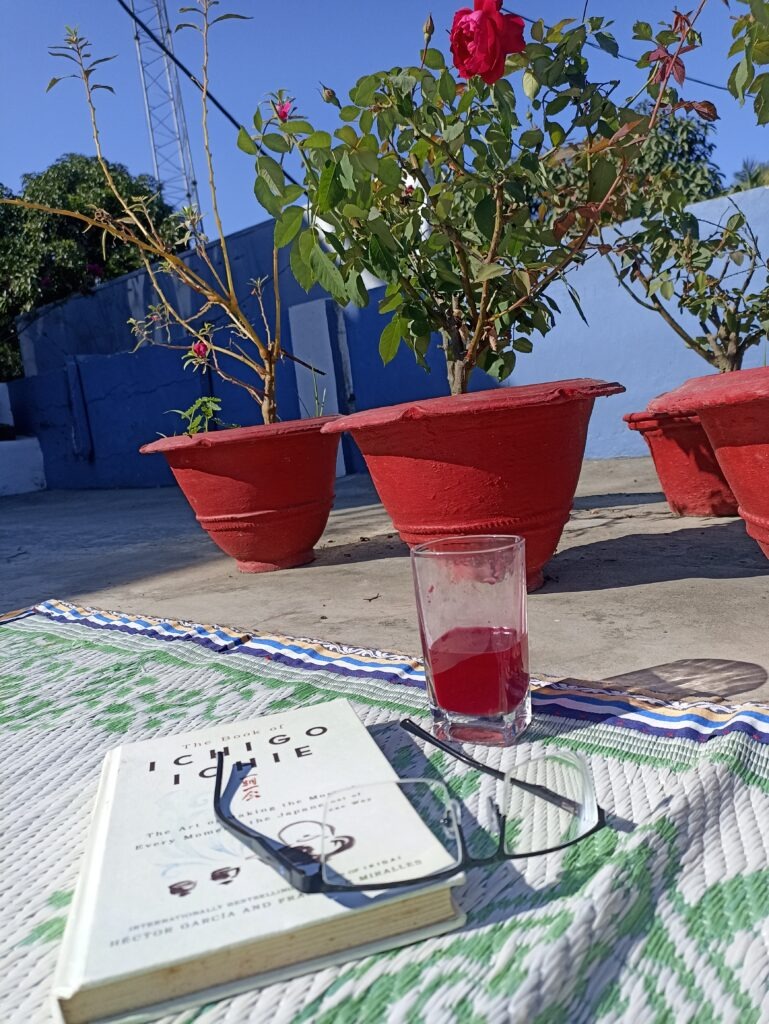
Interestingly enough, I, here in India, try to identify myself with Danish hygge in my own way – reading one of my favorite books in winter sun, sitting on mat laid besides the rose pots on the roof, and with sips of mixed juice of sugar beet, Indian gooseberry and carrot- in the same spirit, the Danish hygge philosophy endorses ! What do you say?
What Unites All These Cultures?
Whether it’s: Danish candles, Japanese silence, Chinese tea, Brazilian affection (cafuné) – the feeling is the same:
👉 Humans everywhere crave warmth, connection, and the magic hidden inside ordinary moments.