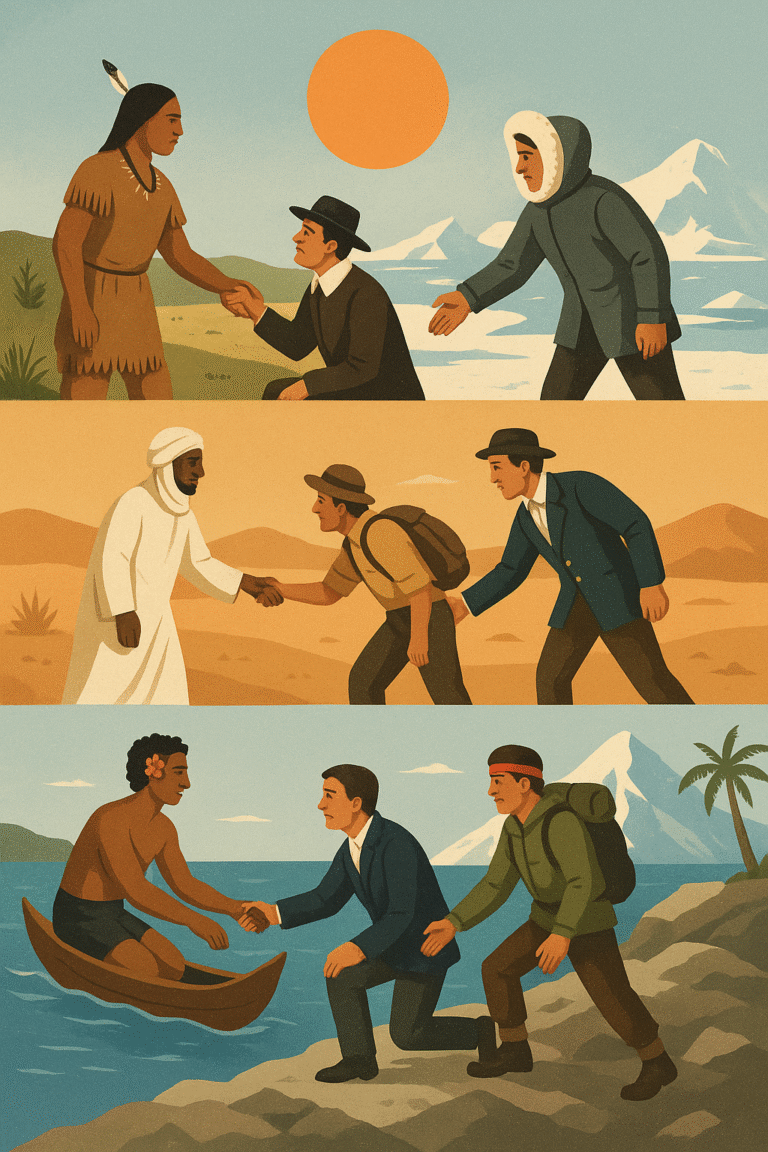
How Europe Emerged As Naval Superpower during 15th- 18th Century
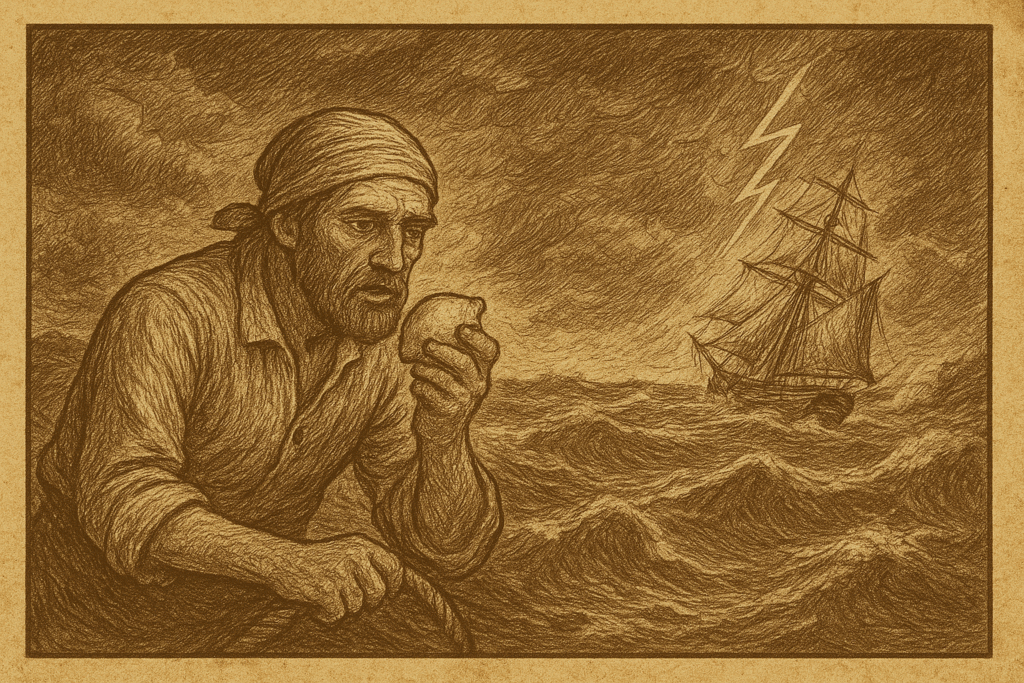
When we think of Europe today, images of fashion, art, modern infrastructure and old castles often come to mind. But between the 15th and 18th centuries, Europe became something even more formidable. It ruled the waves of Ocean waters across the globe. The Emergence of Europe as the Naval Superpower of the world in those times was a reality. Europeans had turned Oceans into highways of trade, conquest, and dreams—and it was European ships, not Asian, not African, that came to dominate them. But why? Why did Europe, a small peninsula on the western edge of Eurasia, become the master of the seas? The answer lies not just in ships and cannons but also in human ambition, greed, faith, and sheer courage.
Let us sail through this story together.
Geography : The Sea Was Never Away
Europe is essentially a peninsula of peninsulas—its jagged coasts dotted with bays, natural harbors, and rivers that run deep inland. From the fjords of Norway to the harbors of Lisbon and London, the ocean was always within their reach. Unlike great empires such as China or the Mughal Empire in India—where fertile land and inland wealth kept rulers looking inward—Europe was naturally poised to look outward.
For a fisherman in Portugal or a sailor in Venice, the sea was not a mystery but a livelihood. Generations grew up with seasalt in their veins and seawind in their faces. When better ships and navigational tools appeared, these people were the first to take risks across uncharted maritime waters.
The Historical Push: Crusades, Curiosity, and Competition
By the late Middle Ages (roughly 13th – 14th century), Europe had tasted both riches and humiliation. The Crusades had shown Europeans the wealth of the East—spices, silk, precious stones. Though banking families of Europe and its rising city states supplied money to fund the risky voyages, but, getting these goods meant dealing with Muslim middlemen in the Middle East. Goods from India and China passed through many hands, and each hand raised the price.
This created frustration—and a burning question: What if we could reach India and China directly, by sea? The desire of wealth and the sting of humiliation together created the energy that launched the Age of Exploration.
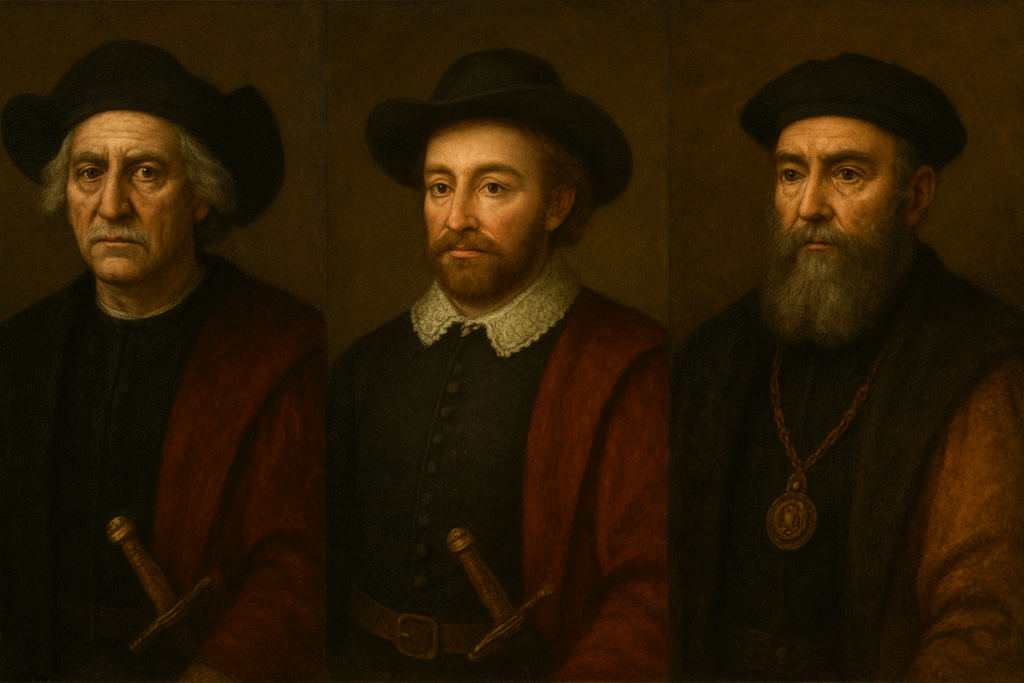
And thus, human ambition takes center stage. Think of Prince Henry the Navigator of Portugal, who never sailed far himself, but sponsored voyages down the African coast. Or Christopher Columbus, an Italian dreamer who convinced Spain’s monarchs to fund his daring westward voyage. These men were not just explorers; they were gamblers betting their lives on new horizons.
Literally, Europe’s riches had given it the sturdy wings, and, its humiliations (at hands of Muslim middleman of Middle east) had given it the opposite winds that pushed it over the oceans!
Meanwhile, within Europe itself, nations were competing fiercely. Portugal, Spain, England, France, and the Netherlands were like rival brothers, each unwilling to let the other control the world’s trade. Naval exploration became both a national duty and a personal ladder of glory.
Technology : Human Ingenuity at Sea
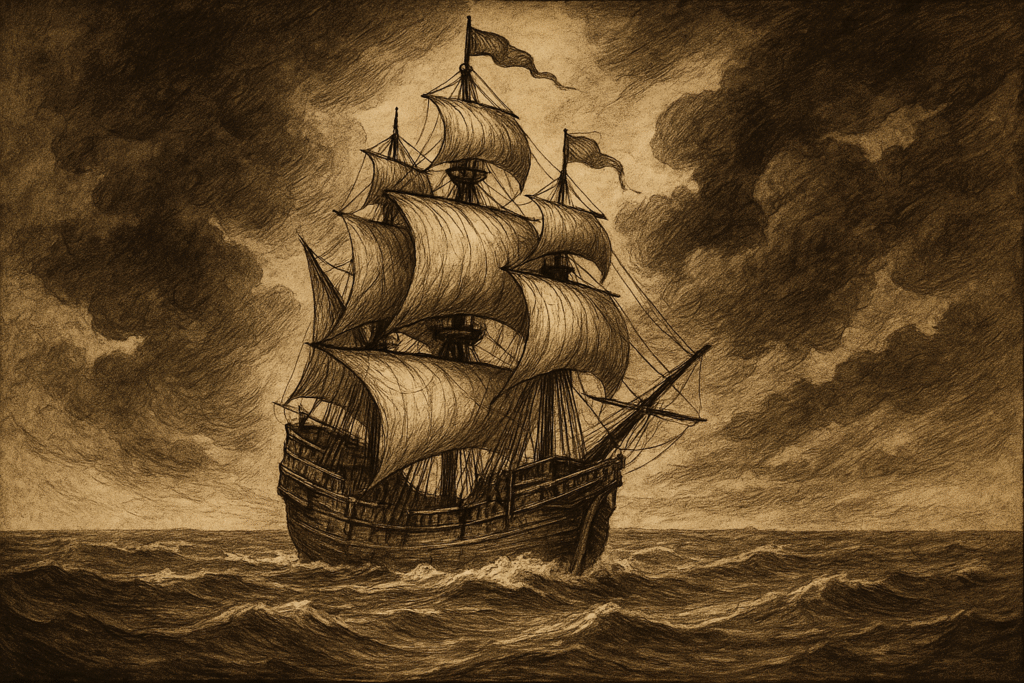
The leap was not possible without human ingenuity. Europeans learned from the Arabs how to use the astrolabe, adopted the magnetic compass from China, and developed their own ships—the Caravel and later the Galleon—that could withstand long voyages and carry heavy cannons.
But behind these inventions were countless unnamed shipbuilders, blacksmiths, and carpenters. Their hands carved wood, hammered iron, and stitched sails. Imagine a young boy in Lisbon working beside his father to build a caravel, dreaming that one day it might carry him across the ocean to unknown lands.
Technology gave courage form. A sturdy ship was more than wood—it was freedom, risk, and ambition.
Economics : Spices, Silver, and the Lure of Wealth
At the heart of Europe’s naval ambition was not simply curiosity but the hunger for wealth, for luxuries, for power. A few pinches of nutmeg or cloves from the Spice Islands could fetch a fortune in Europe. A bolt of silk or a bag of pepper was worth its weight in gold. Ships became floating treasure chests, carrying fortunes across seas.
And then came silver. From the mines of Potosí in South America to the streams of Mexico, Europe drained the New World of its precious metals. Spanish Galleons sailed home heavy with silver, feeding not just Spain but all of Europe’s economy. This flood of wealth financed wars, built palaces, and kept ships in constant motion.
Yet Behind These Shining Riches Lay Darker Human Stories
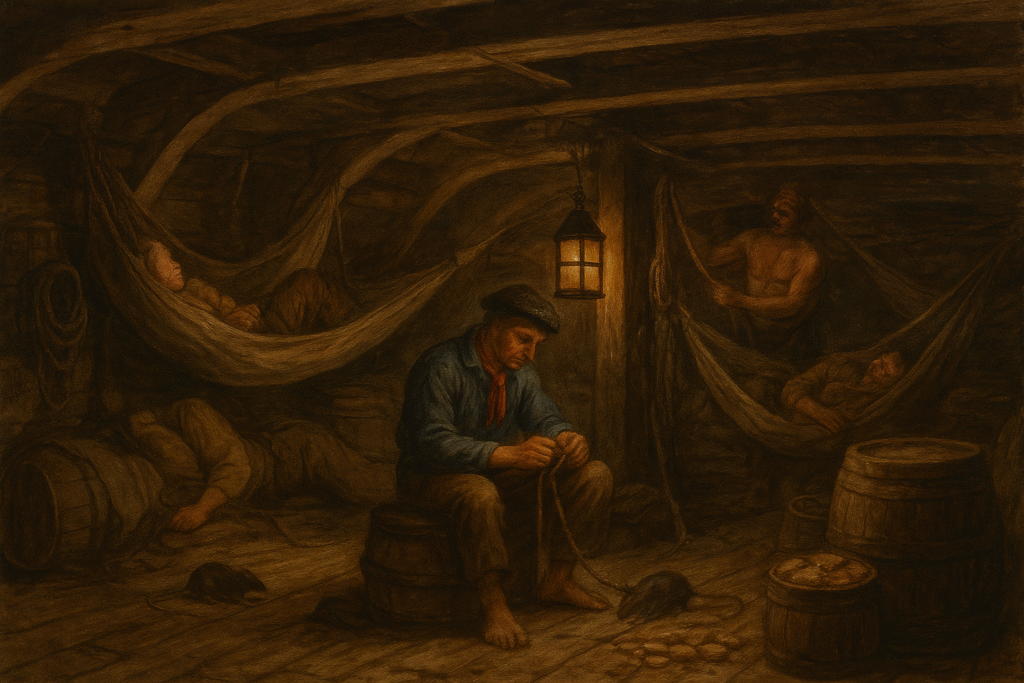
Behind the shining riches of Europe lay darker human stories: the toil of enslaved Africans on Caribbean sugar plantations, the forced labor of indigenous miners in South America, and the ruthless wars fought for monopoly over trade routes.
Europe’s mastery of the sea was not only about discovery—it was about domination.
Empire and Power: Flags on Foreign Shore
As wealth poured in, ambition grew sharper. No longer was it enough to trade; Europe wanted to control. Naval power allowed small nations—Portugal, the Netherlands, and later Britain—to project authority far beyond their size.
Think of a Dutch ship anchoring in Java, its captain negotiating with local rulers while cannons glistened in the background! Or the British East India Company, which began as a trading venture but soon wielded private armies, taking territories and ruling the millions. Thus flags of Europe followed ships, and the forts of indigenous rulers followed these flags. Amazing !
But even here, the story is deeply human. Ambitious young men from modest European towns suddenly found themselves lords in foreign lands. Merchants became governors; sailors became kings in miniature. “For the first time in history, oceans stitched together faraway continents into a single web of commerce—and Europe stood at the center of that web !”
Faith, Fear, and the Human Spirit
Not all was greed. Faith, too, played its part. Missionaries sailed alongside merchants, carrying the Bible to distant shores. Many believed they were spreading salvation, even as traders spread muskets and alcohol. Others feared the wrath of the unknown seas, whispering prayers to saints before setting sail.
For ordinary sailors, life was brutal. Ships were cramped, diseases rampant, food scarce. Many never returned from their voyages. Yet still they went—driven by hunger, by hope, by a dream of better fortunes. If kings and merchants dreamed of empire, sailors dreamed of survival and, perhaps, a little share of glory.
The Human Legacy of Europe’s Rule of the Waves
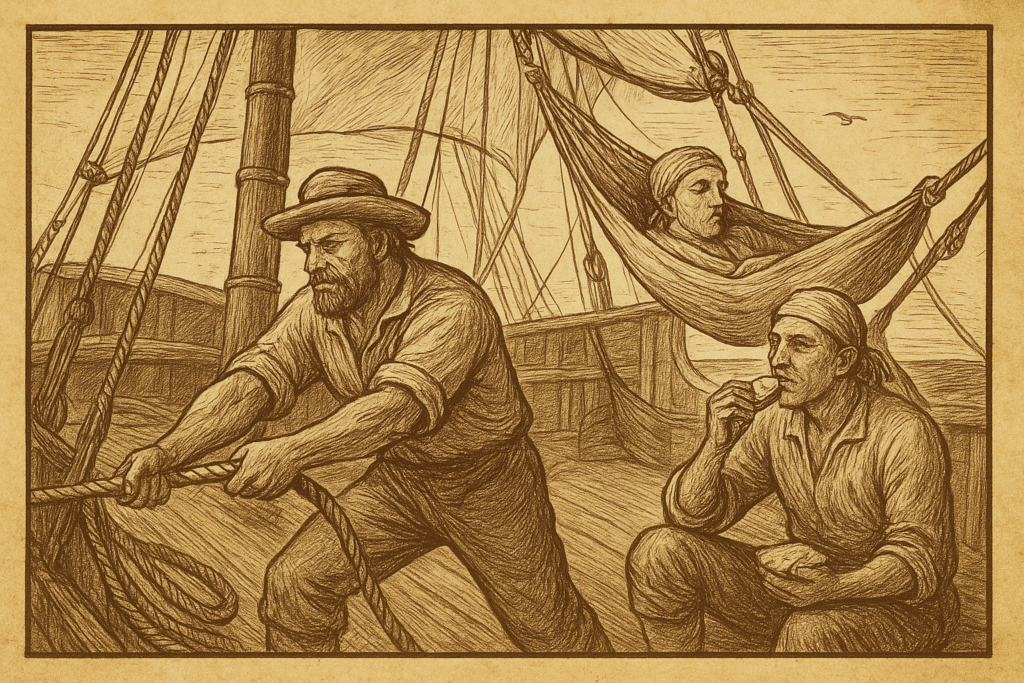
By the 18th century, Europe had done what no other region had: it made the oceans its stage. Trade, conquest, migration, and slavery—all flowed along sea lanes carved by European ambition.
This story is not a simple tale of triumph. It is also a story of suffering, of courage, of cruelty, and of resilience. It tells us that human beings—whether shipbuilders in Lisbon, merchants in Amsterdam, or enslaved men and women in the Caribbean—were all caught in the tides of a new global age.
Europe rose to rule the waves not because it was destined to, but because countless individuals, with their dreams, fears, and ambitions, pushed wooden ships into the unknown.
Conclusion : When We Look Back
When we look at Europe’s naval rise, we should not see only cannons, maps, and empires. We should also see human faces: the dreamer Columbus, the cautious Henry the Navigator, the nameless sailor scrubbing decks, the Indian trader watching foreigners seize his market, the African chained below deck on a slave ship.
The sea gave Europe its power, but it also revealed something timeless about us as humans: our restless desire to go further, to seek more—whether for wealth, faith, or sheer wonder.
And that, perhaps, is why the story of Europe’s rule of the waves is not just history. It is a mirror of ambition, a reminder of what we gain—and what we lose—when we dare to chase horizons.
References and Further Reading
- Olaudah Equiano, The Interesting Narrative of the Life of Olaudah Equiano (1789)
- Richard Hakluyt, The Principal Navigations, Voyages, Traffiques, and Discoveries of the English Nation (1598- 1600)
- Captain James Cook’s Journal (1768-79)
- Sir Richard Hawkins, Observations in His Voyage in to the South Sea (1622)
- Marcus Rediker, Between the Devil and the deep blue Sea : Merchant Seamen, Pirates, and the Anglo-American Maritime world, (1700-1750)
Acknowledgement
This article was researched and developed with the assistance of ChatGPT (Open AI).