What the Wilderness Whispered to Me : A Nature Story to Detox Your Thought Process
There are journeys that take us to destinations, and there are journeys that quietly rearrange things within us. They also drop hints about the lessons, nature is illustrating in a very subtle way (whispers of wilderness!). And one such journey happened to me last month, while heading towards North Bengal through north eastern regions of state of Bihar in North India.
Bihar plains are otherwise extremely hot during summer; but the regions of North Eastern Bihar bordering North Bengal have an specialty. Here, airmasses aloft, carry characteristic meteorological elements of Himalayas and Bay of Bengal. Entire region is lush green, wind is relatively cool and scenery so appealing and enchanting. A long drive in such a setting was a kind of refreshment rather than an any ordinary journey. It was a feast to the eyes and soul.
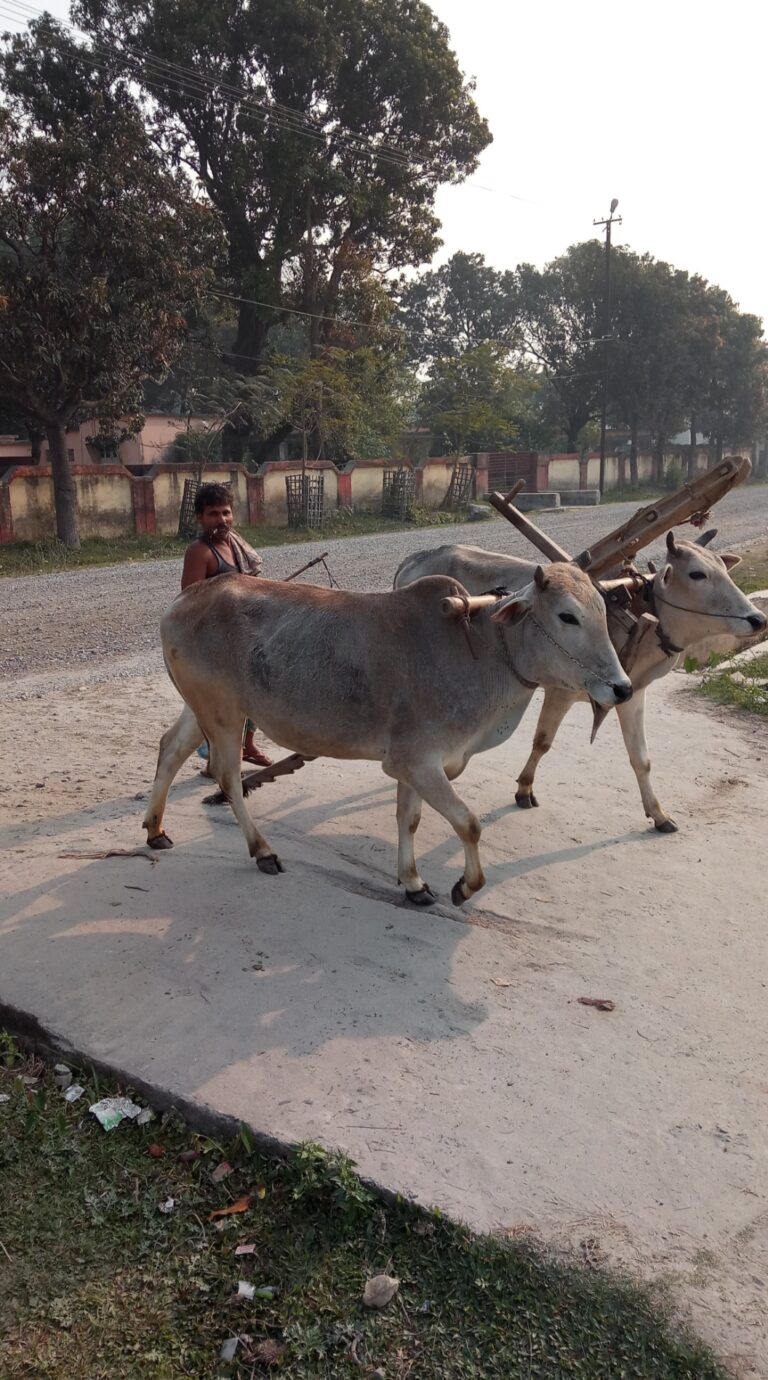
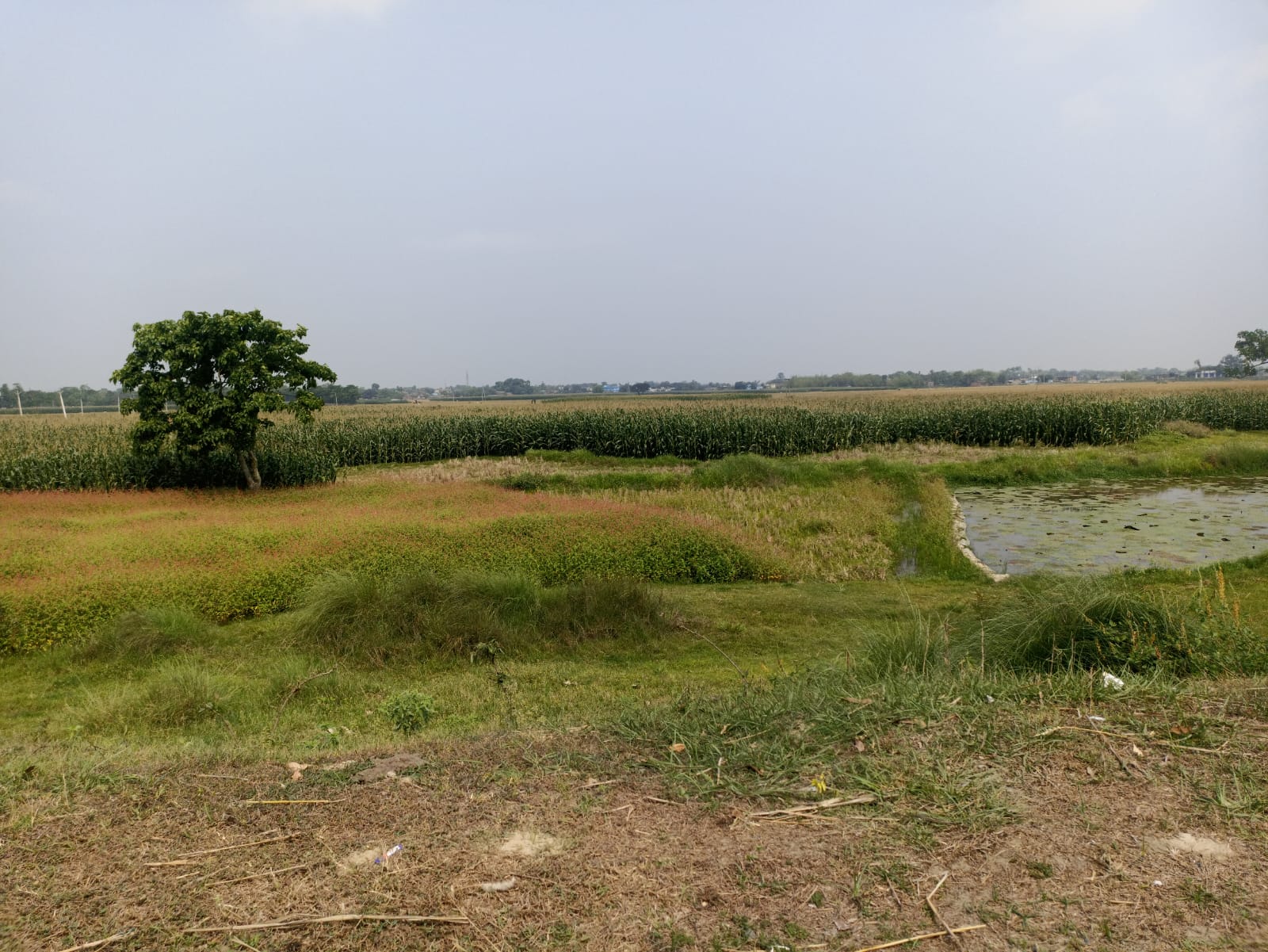
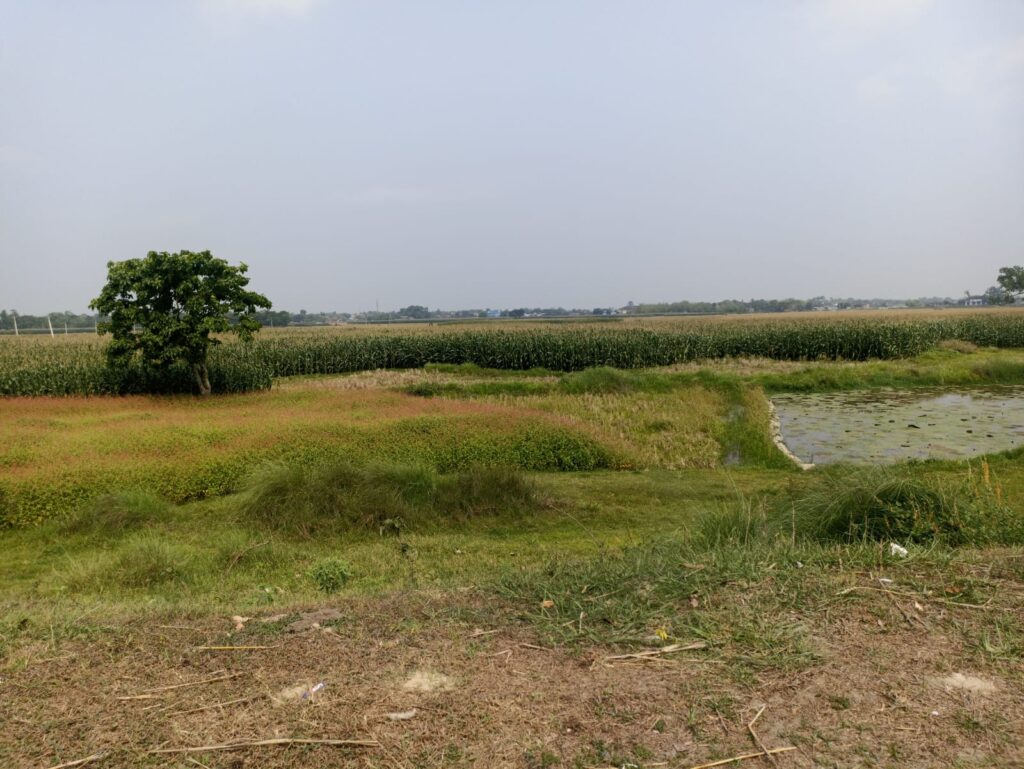
The state highway was zooming past through the countryside with fields stretched in patient order on either side—plots of maize standing upright like disciplined soldiers and wheat fields spreading their measured calm under an indifferent sky. The landscape was reassuring in its predictability. Agriculture has its own geometry: rows, boundaries, seasons, plans, harvests. Nature there seemed domesticated, persuaded into symmetry for the needs of human survival.
And then, unexpectedly, something interrupted the order.
At first, it was merely a stain of colour on the edge of vision. A strip of wild grass had erupted into clusters of delicate red blossoms. Not planted. Not curated. Not fertilized with intention. They had simply arrived.
A little distance away lay a quiet waterbody, where floating leaves sheltered makhana—fox nuts, cultivated patiently upon still waters. Juxtaposed to these disciplined farms and the calm aquatic enterprise stood this untamed gathering of grasses, almost rebellious in appearance, yet strangely soothing.
I found myself slowing down.
It was curious, really. Why should these wild flowers—unknown, unnamed, and economically insignificant—draw my gaze more insistently than acres of purposeful farming?
Why did they stay with me long after the road had moved on?
Perhaps because they had done something very rare. They had broken monotony. And in doing so, they had reminded me of something quietly urgent about life.
The Tyranny of the Planned Life
Human beings admire organization. We create calendars, routines, plans, and carefully engineered expectations. Much like the maize and paddy fields, we sow our days with intention. We wake at fixed hours, respond to obligations, perform responsibilities, and follow systems that civilization asks of us.
There is dignity in this order.
But there is also danger.
The danger is not discipline itself; the danger lies in becoming imprisoned by it.
Somewhere along the way, adults become specialists in confinement. We stop wandering mentally. We stop noticing details. We begin measuring worth only in outcomes: productivity, efficiency, usefulness. Even beauty becomes scheduled –
A planned holiday.
A designated sunset point.
An approved park for appreciating nature.
Yet the deepest enchantments of life rarely arrive by appointment.
They bloom unexpectedly—like those nameless red blossoms at the edge of cultivated certainty.
I could not identify the species of those grasses. They possessed no fame, no ceremonial status, no market value. Yet they possessed something else – Presence.
Their beauty seemed untouched by ambition.
No one had planted them to impress passersby.
No gardener arranged them.
No brochure celebrated them.
And perhaps that was precisely why they felt authentic. In a world obsessed with performance, the wild still remembers how to simply be.
The Wisdom of Growing Unplanned
The philosopher in me often loses arguments to the traveller in me. Theory may explain life, but travel ambushes us with feeling. Standing before that accidental burst of crimson, I felt an old realization return:
Not everything meaningful in life is organized.
Friendships are often accidental.
Love enters unscheduled.
Wisdom sometimes emerges from failure rather than planning.
Even history turns unexpectedly.
Civilizations rise believing permanence belongs to them, only to discover that unpredictability is nature’s oldest law.
The Japanese aesthetic of wabi-sabi speaks of beauty found in imperfection and impermanence. In many European traditions too, wild meadows evoke romance precisely because they resist geometry. The English countryside celebrates hedgerows and untamed blooms. East Asian painting often leaves deliberate emptiness, suggesting that restraint and irregularity are companions rather than enemies.
Perhaps humanity, across cultures, has always understood a truth we repeatedly forget:
Perfect order alone cannot nourish the soul.
We need interruption.
We need asymmetry.
We need the occasional wild flowering in our inner fields.
A Poem Hidden in the Grass
As I stood there, I was reminded of a line by the English poet William Wordsworth, whose poetry often transformed ordinary encounters with nature into spiritual awakenings:
“Come forth into the light of things,
Let Nature be your teacher.”
Wordsworth understood something modern life often refuses to admit: nature does not merely decorate existence—it educates us. But nature teaches gently. Never through sermons. Always through symbols.
That day, the red blossoms became teachers.
They seemed to whisper: Must every part of your life be organized? Must every hour justify itself? Must usefulness always outrank wonder?
These are uncomfortable questions for a civilization addicted to speed. We glorify busyness so thoroughly that idleness almost feels immoral. Yet some of the best insights of humanity were born not in haste, but in pauses.
Newton sat under a tree.
Buddha sat beneath one.
Poets wandered.
Artists stared at clouds long enough to understand something invisible.
The Courage to Be Wild
The red grasses also seemed to embody another forgotten virtue:
The courage to remain oneself.
Imagine their setting.
On one side stood maize—economically important, socially valued, cultivated with purpose. On the other side stood another food crop —indispensable to human life. And there they were, anonymous wild blooms growing without permission, comparison, or validation. What confidence nature possesses.
No wildflower apologizes for blooming where it can.
No river envies another river.
No hill suffers insecurity because mountains exist elsewhere.
Most memorable people we encounter in life are not the most polished ones. They are often the quietly original souls – Those who preserve wonder. Those who refuse complete domestication. Perhaps adulthood should not mean abandoning wildness. Perhaps maturity lies in balancing cultivation with spontaneity. To work diligently, yet laugh unexpectedly. To honour responsibility, yet wander occasionally. To live with structure, yet leave room for surprise.
A life entirely fenced becomes efficient—but rarely memorable.
A Quiet Invitation
As I resumed my journey, I realized that the photograph I had taken was never merely about a landscape.
It had become evidence.
Evidence that beauty often survives unnoticed.
Evidence that the extraordinary disguises itself as ordinary.
Evidence that life still offers surprises to those willing to pause.
Perhaps this article, too, is an invitation.
The next time you travel—or even walk through a familiar road—pause where nothing famous exists. Look toward the overlooked corners. Notice what grows without applause. Watch the unnoticed blossom. And perhaps ask yourself:
What forgotten wildness within me still waits to bloom?
Maybe you have postponed joy.
Maybe routine has quietly swallowed wonder.
Maybe responsibility has become so complete that surprise no longer enters your days.
If so, take a lesson from those nameless red blossoms. You need not uproot your life. Only loosen it a little. Leave one corner of yourself uncultivated. Allow an hour without purpose. Take the longer road once in a while. Read poetry unexpectedly. Watch clouds drift. Speak to old friends. Sit beside still water. And bloom where no one planned for you to bloom.