November Nostalgia: Fun, Flavor And Dreams in 1980s
Now when I start pushing my pen to write this piece, it is mid November of 2025; and the sparks of November nostalgia of 1980s; take hold of me completely.
November-December of 1980s: End of Our Academic Year
The November air of 1980s still lingers somewhere in my memory – crisp, fragrant with first hint of winter and alive with the echoes of my high school bell, coupled with clapping of full dress cricket practice sessions on Koshi Club playground during day and numerous badminton courts in full life till late evening at every corner of colony in this small Koshi River Valley Project township of Birpur, situated on Indian side of Indo-Nepal boarder, in the state of Bihar in India.

Those months of November and December were not just about the soft sun and chill in the air; they were the season of quiet excitement, warmth of hope, and the fragrance of new beginnings in the days to follow.
Annual exams were on — the last big challenge before we stepped into the next class. But unlike the anxiety that exams bring today, those exams carried an underlying joy. We were good at studies, and so every completed paper felt like a step closer to the vista of new books, new lessons, and of course new lessons of life.
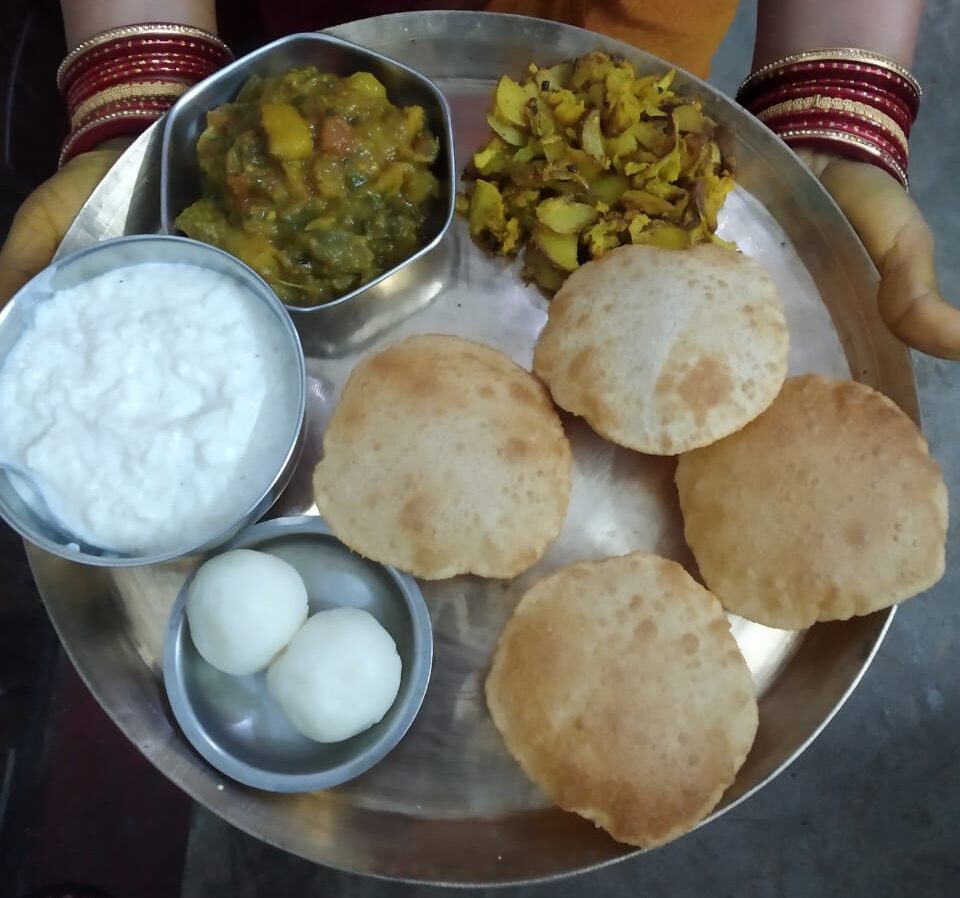
When the exams ended, the atmosphere at home would change. The morning rush of study and last-minute revisions and making tiffins and school bags ready; gave way to laughter and lazy breakfasts. Parents would beam with pride when results came, and boxes of sweets would appear at home. And I tell you these sweet – boxes would captivate the whole of me through their divine colour, flavour, and texture ! Chhena sweets almost made me mad for them! My mother would prepare special kheer with poori-aloo or Daal Poori and cauliflower- potato curry in dinner. All this felt as though the whole family celebrated my exam efforts, and the vacations that followed.
Another most exciting part was visiting the bookshop for the next class’s syllabus. That little shop, filled with the faint smell of paper and ink, was like a treasure chest to us. The glossy covers of new books, the neatly stacked notebooks tied with red thread, and those colored images inside the textbooks — they all held promises of new interesting chapters in science and humanities; and lovely poems and stories in literature books of Hindi, English and Sanskrit. All these felt like a new chapter of excitement is waiting to unfold.
Also, book shop was the place where we could see our distantly residing friends in their non formal dresses, their parents and also sometimes their siblings, their uncles and of course their vehicles if any.
That November Fair ( Mela) And Story of Roses, Butterflies And Honey Bees
When we were about to be free from school annual exams, a winter fair would spring to life in close proximity to our school; almost half a kilometer away. Everyone would commonly call it Mukhiya ji’s Mela (i.e. village headman’s fair); just because this village headman had allowed his post – harvested vacant land to be used for this fair every November.
After end of our annual exams, we used to take several rounds of cycle rides to this fair; whenever we had chance to go outside from home. In those days, video parlors were a new sensation. Many video parlors would show the latest movies which people couldn’t see in regular cinema halls. Though I never watched any movie in these parlors in Mela (fair), but would certainly visit their premises just to take glimpse of the movie posters they had displayed there.
For me, personally, the main attraction in this fair was its plants nursery corner; thanks to the fascination I had developed for planting roses in my small oval garden. Actually, my neighbor and uncle, popularly known as Gulab babu; was very much fond of gardening. And in his garden, a large space was dedicated for a big circular bed of roses. An Araucaria tree was grown at the center of this circle. Garden chairs lying under shadow of Araucaria tree and his little lovely steel betel case, day’s newspaper, calculator, and a binocular-all placed on a side table; impressed me a lot. November’s chill added charm to his garden and particularly to the roses planted there.
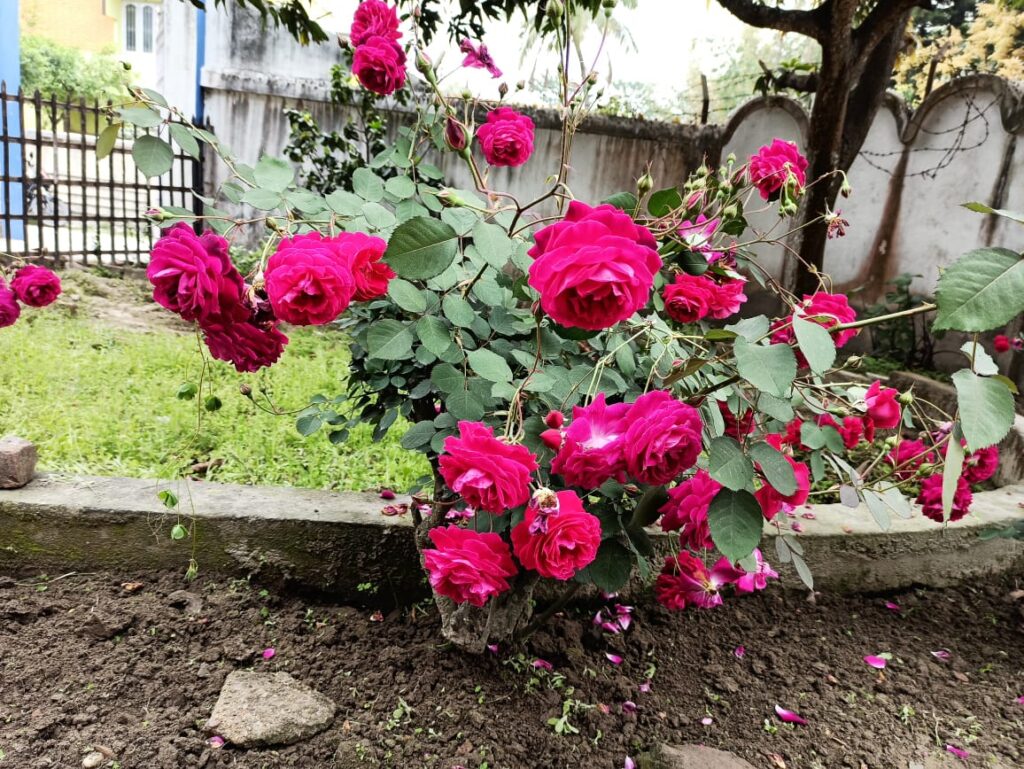
Roses in November are not the same roses of summer. Their petals grow thicker and colors deepen. Red roses become velvety wine, pink roses glow like dawn on a quiet river, and whites shine with the softness of winter moonlight. And the fragrance ? It becomes sweeter and more deliberate. It lingers in the air a little longer because November’s cool breeze carries scents tenderly, without haste.
Around these radiant roses, butterflies would glide like pieces of colored silk floating effortlessly through the garden. A yellow butterfly often paused on the rim of a rose petal, opening and closing its wings like someone breathing in sync with nature.
And then come the honey bees- who hover with a soft hum that blends beautifully with the silence of November mornings. Their presence is reminder that that the garden is alive and thriving. These honey bees would frequently cross over into my garden also; indicating the good health of my garden as well.
I still get amazed to remember the fascinating nomenclature these plant sellers at nursery used to label these roses with. One ochre colored rose was named Raja Ram Mohan Roy- the famous social reformer of 19th century in India ! I had seen his image portrayed in ochre colored attire, printed in my history text book. Another lovely red rose was named Nehru’s Rose!
I have a memory of a small rose plant that I had bought from nursery in the fare. I remember, I had placed a big boulder next to this small rose plant which had just started blooming. When the blooming roses dangled over this pale white boulder, my nature loving soul would lovingly stare at this beauty of contrast, unblinkingly.
Similarly, when the flower beds were watered, the soil darkened in to a rich wet color. For me it seems to produce a perfect contrast against the crisp green leaves and vibrant flowers above it. The moment you look at this contrast, an inexplicable pleasure fills the eyes and settles in the heart. Even you can experience the sweet contrast of scents spreading out of wet earth, green leaves, and fragrant flowers! However to notice and experience all these things you should have time to meet yourself.
But the roses, however magnificent, are not alone in this symphony of November. In the soft winter sunlight, petals of white chrysanthemums glow with a gentle halo. You can almost feel the peace they radiate – cool, soothing, almost meditative.
That Mellow Sun And Those Mouth Watering Chamchams, Gulabjamuns And Litti-Chokha
The November air suddenly feels cooler. The sun no longer feels blazed – it glows gently, as if filtered through a thick fog curtain. Elongated shadows in morning; announce that our hemisphere has tilted away from sun. Nature stands at a beautiful doorway where warmth and coolness shake hands politely.
During 1980s, our house, which in later decades had undergone massive modification, had a courtyard. A cot and a large mat found place here during the last week of November when Sun shine grew even softer and all the day we kept these cot and mat adjusting to get sun on them. Even our meals migrated to this courtyard. Now our courtyard has handed over its these functions to the roof.
While sitting in the sun in our courtyard of 1980s, we would love to tune our radio sets at appropriate hours to hear filmy songs. Elderly members of family had inclination for folksongs, which are in plenty in North Indian agrarian culture.
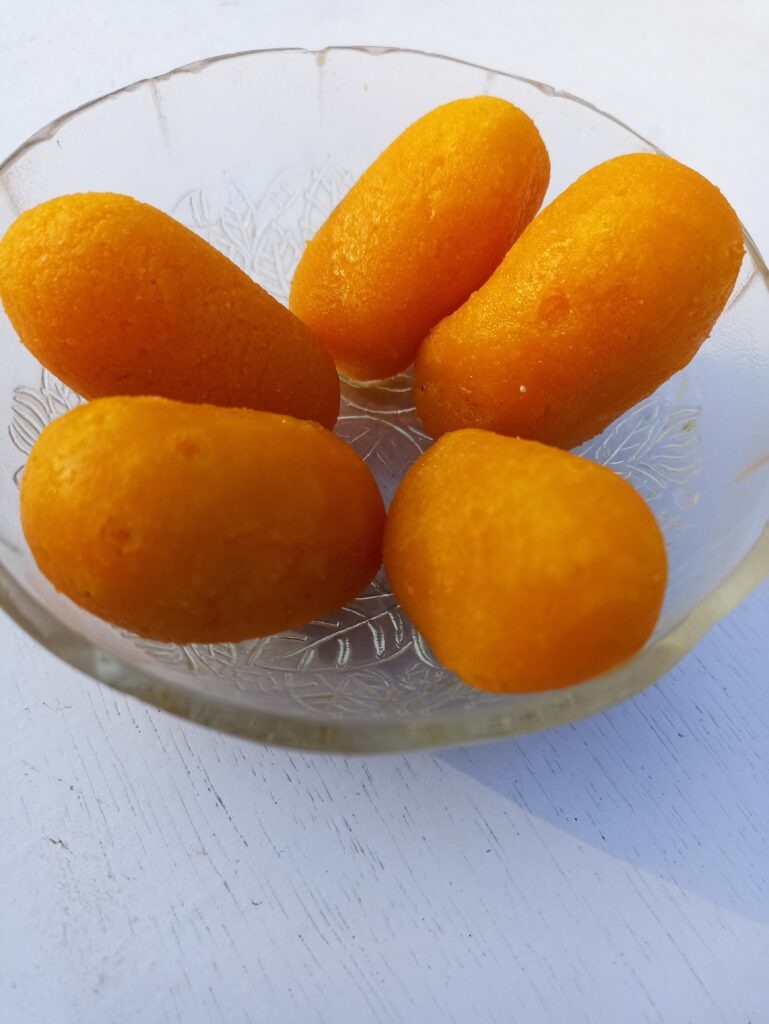
As for me, sitting in the sun; holding Chamcham sweet in one hand, and flipping through some monthly family magazine, or getting immersed in some favourite comics book, and enjoying the Chamcham sweet in bits, was my favourite time pass.
If you have never heard of chamcham—sometimes spelled chomchom—just imagine a little cloud of sweetness that decided to become solid for a while. It’s a Bengali milk dessert, soft enough to melt on the tongue but firm enough to pick up gently with your fingers.
Chamcham starts its life very humbly. Fresh milk is curdled to make soft cheese, known as chenna. This chenna is kneaded lovingly. Then it is shaped into small, smooth, oval material. Europeans might find them somewhat similar in size to a gnocchi, though chamcham feels lighter and silkier.
These little ovals are then simmered in a bubbling syrup of sugar and water. Over time they puff slightly, turning glossy, juicy, and fragrant. Their colour can vary:
- Snow-white,
- Light lemon yellow,
- Or sometimes a delicate orange, depending on tradition and flavouring.
It’s festive, it’s homely, and it carries that unmistakable charm of Indian sweets made by hand, with patience, and with a generous heart.
Let’s extend our sugary talks to royal Gulabjamuns. Gulabjamuns at local sweet shop, sat in a wide steel tray, soaked in a dark amber syrup that glistened like liquid sunshine, catching the slanting afternoon light or warm yellow bulbs of 1980s hanging over the counter.
The high school boy in me, when stepped in these sweet shops, the first whiff was enough to take hold of me entirely. A warm fragrance of cardamom, ghee, and caramelized khoya, rising with the mild steam of syrup , travelled straight to heart.
Placed on a small white plate, a pair of Gulabjamuns looked like little edible planets, round, velvety, and impossibly inviting. When the spoon went in, it sliced through effortlessly—a soft, spongy inside releasing a faint puff of sweetness, the syrup quickly pooling around the cut.
The first bite carried the comfort of warmth in a cold breeze – the warm sugary syrup rolling over the tongue and the texture melting before one had even finished saying “wah!”
For hungry high-schoolers of that era, it was not just a sweet—it was a reward, a celebration, sometimes even a small festival in itself. Walking back with cold hands but a warm stomach, one could feel November settling in, gently, deliciously.
After so much of sugary talks, a longing for some salted items is just natural. I am talking about the raw, rustic, rough and tough, delicious Litti & Chokha; a delicacy in Bihar plains.
In the November cool of Bihar, people would buy and collect a good stock of cow dung cakes to be used as fuel in many occasional cultural rituals as well as for baking Littis and for roasting vegetables for the purpose of making Chokha. Winter chill has already injected color, texture and flavor to Brinjals, new potatoes, coriander leaves, green chilies and garlic shoots which are grown in everyone’s kitchen garden. Wheat and roasted gram flour are in every home. And desi ghee is not a rare commodity in Bihar villages.
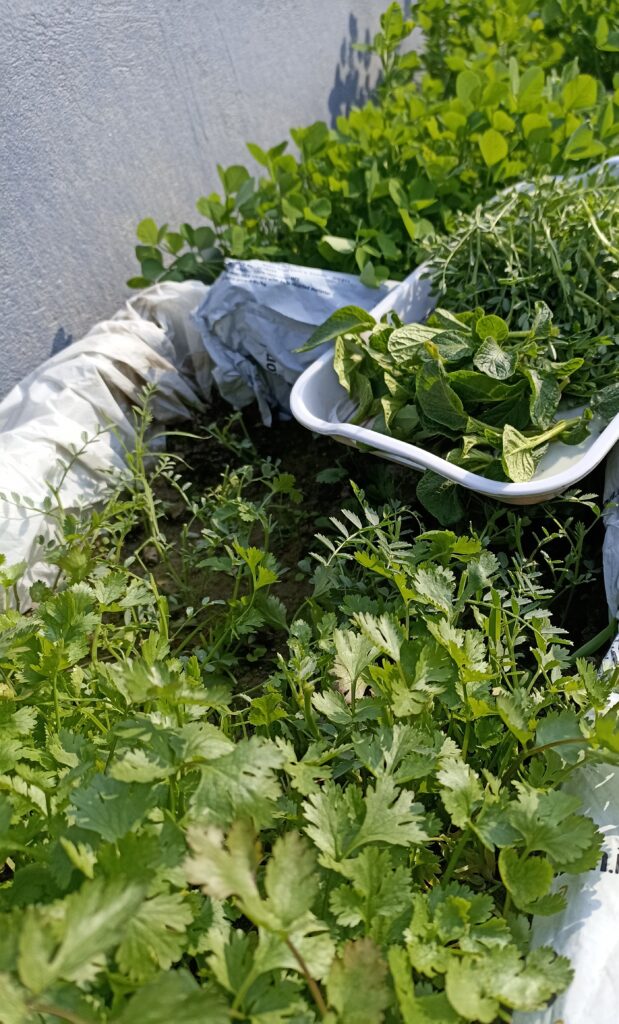
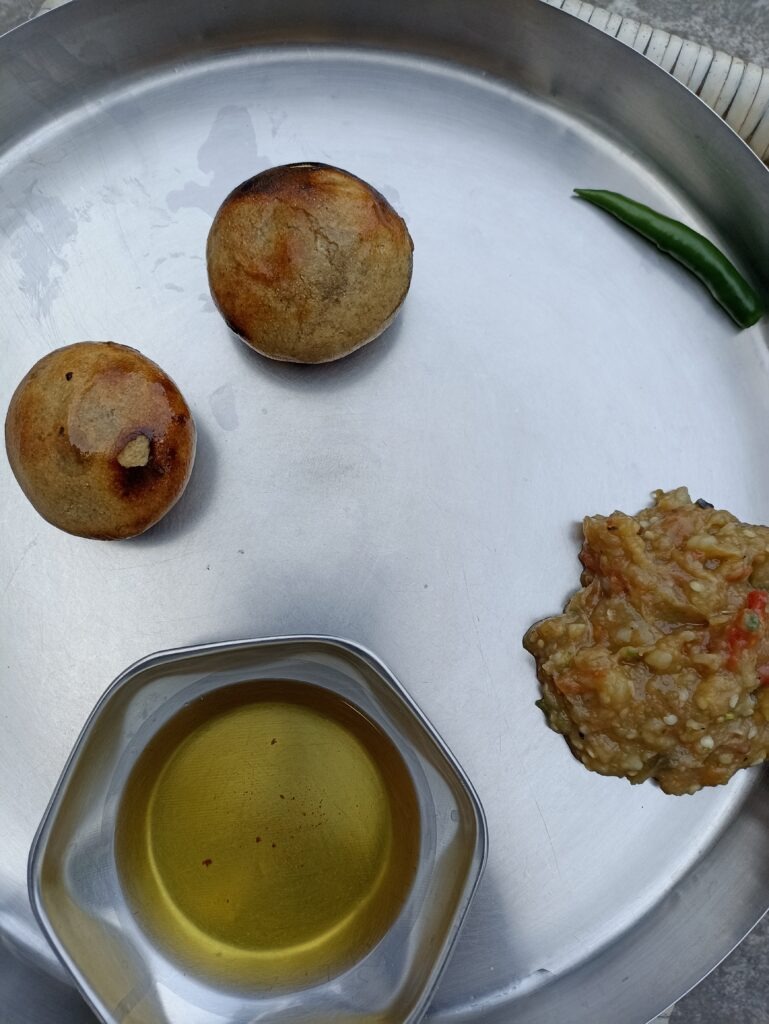
Now, wheat is kneaded first to reach a particular softness and consistency. Sattu (ground roasted grams) is slightly moistened with sprinkles of water and then mixed thoroughly with ingredients like salt, chopped green chilies and garlic. This mixed Sattu is stuffed inside the balls of kneaded wheat flour. Now, these stuffed wheat flour balls when baked in glowing heat of cowdung cakes, they turn into round, wheat-golden Littis.
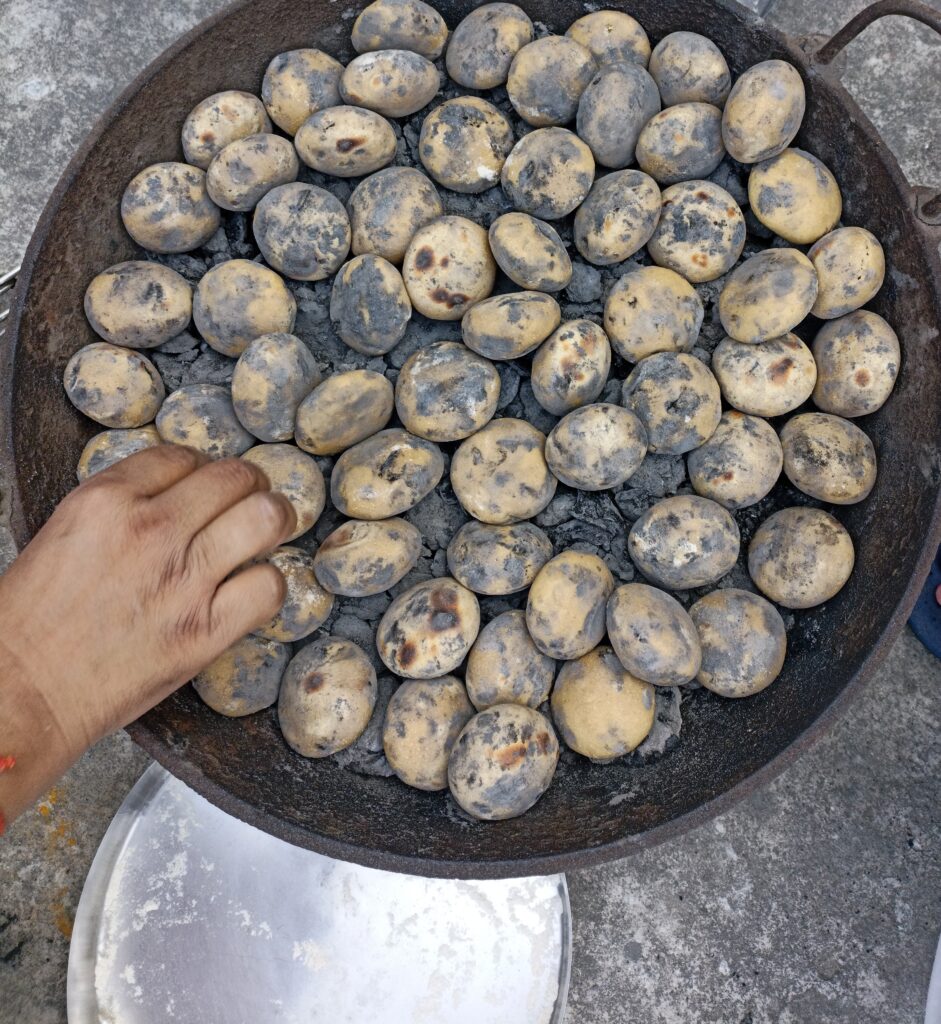
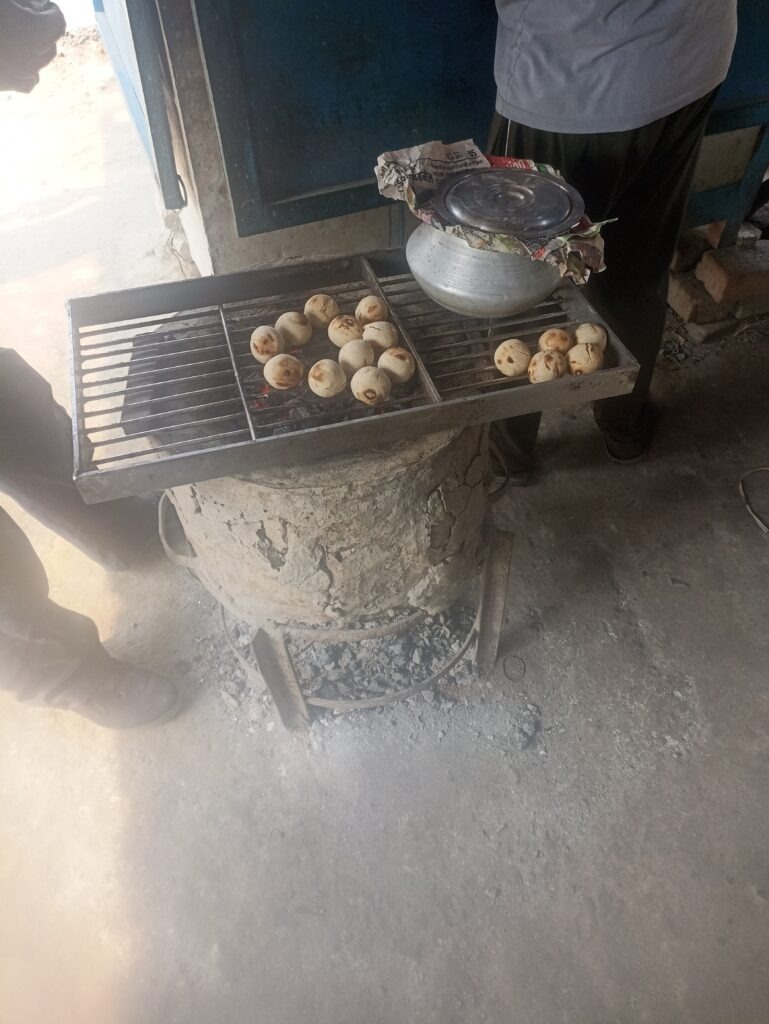
For a high school goer in the 1980s, this sight alone was enough to create an ache of longing. The charred wheat aroma mixed with the earthy scent of sattu, and a thin trail of smoke curled up in the November air, making the whole place feel like a winter picnic.
These littis are then taken off the glowing cow dung cakes heat. And now comes the magic moment: Littis are dipped one by one into a bowl of melted desi ghee, each Litti emerging with a glossy sheen, as if blessed by the season itself!
The first break of the litti released warm air—the kind that fogged your spectacles—and the sattu inside appeared crumbly, nutty, glowing with heat. You just press the crust of Litti with help of your fingers and thumb, and pull a chunk of comfortable size out of it. You then deep it in Chokha and spoon it out for final intake.
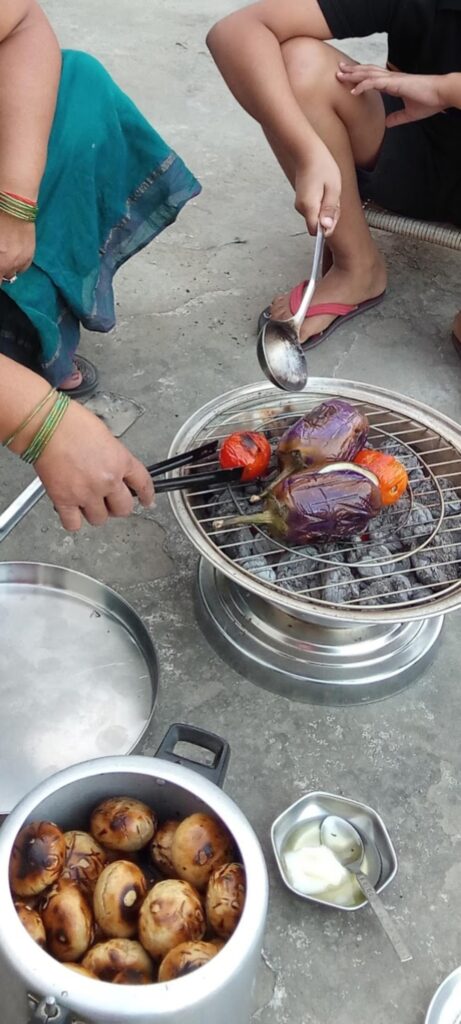
The first bite was always a moment of pure ceremony: the smokiness of the crust, the richness of ghee, the sharp mustard oil, and the tang of tomato; all meeting on the tongue. Litti–chokha was more than food—it was comfort, celebration, and a tiny rebellion against the everyday routine meal.
November: When Year Is About to End And Dreams to Begin.
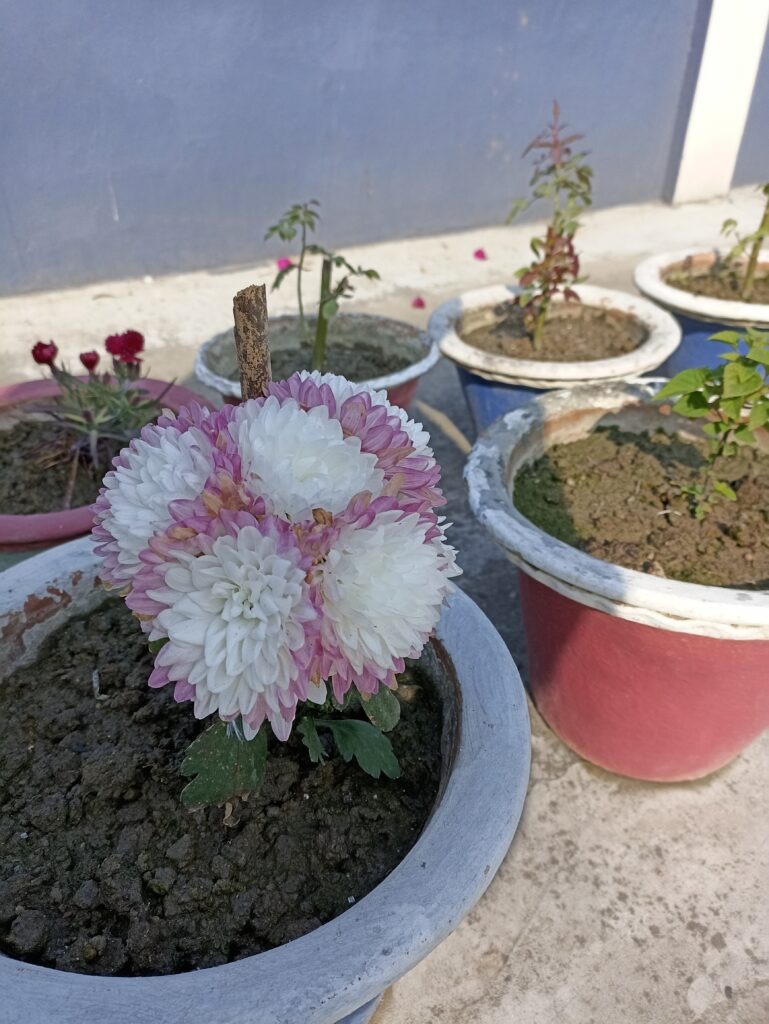
There is a particular fragrance in the air when November arrives in Bihar — part fog, part mist, part chill, part memory. That’s when my heart, as a schoolboy in Class 10, uses to grow restless with a strange joy even today !
Those carnival of colours and aromas in nearby winter fair, cycling through the cold breeze to visit this fair even twice a day, fairground smell of gulabjamuns, chamchams, samosas, and Jalebis, and buying a small rose plant to bring home, imagining it would bloom just as my new year would – almost leave me nostalgic even today.
Those were simple days, but their simplicity glows brighter now. That season — when the fog hugged the fields, and my bicycle creaked down the narrow road — it felt as though the whole world had paused to celebrate with me.

Waah! Brought back the memories of our childhood live.
Thanks dear for writing these words. You complement this story.